



Iraq's Prime Minister on Sunday announced a campaign to combat the severe impacts of climate change on the water-scarce country, including the planting of five million palms and trees.
Oil-rich but war-scarred Iraq suffers from extreme summer heat, frequent droughts, desertification and regular dust storms, problems that are all exacerbated by a heating planet.
Prime Minister Mohammed Shia Al Sudani told a climate conference that more than seven million Iraqis had already been affected by climate change and hundreds of thousands displaced by drought.
He cited challenges including “high temperatures, scarcity of rain and an increase in dust storms”, as well as shrinking green spaces, which all “threaten food, health, environmental and community security”.
Mr Sudani, who took office in late October, said his government was launching “a grand afforestation initiative, which includes planting five million trees and palm trees in all governorates of Iraq”.
In the spring of last year, Iraq was hit by about a dozen major sand or dust storms which blanketed Baghdad and other areas, causing breathing difficulties for thousands and forcing the closure of airports and schools.
Mr Sudani said the government was working on a wider “Iraqi vision for climate action”, speaking at a conference in the southern city of Basra attended by foreign ambassadors and UN officials.
The plan would include promoting clean and renewable energy, new irrigation and water treatment projects and reduced gas flaring, he said, without announcing details on funding or time frames.
Mr Sudani said Iraq was “moving forward to conclude contracts for constructing renewable energy power plants to provide one-third of our electricity demand by 2030".
Sudani also cited “efforts to preserve Iraq's rights in the waters of the Tigris and Euphrates rivers”, the two main waterways whose flows have been reduced, with Iraqi officials blaming dams upstream in Turkey and Iran.
“The unilateral water control in the upstream countries increases the vulnerability of countries challenged by the effects of climate change”, the Iraqi Prime Minister told the meeting in Basra.
-
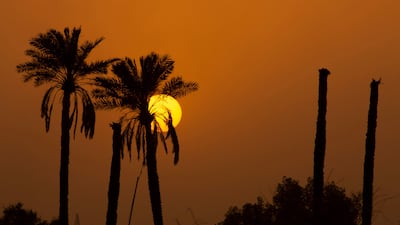
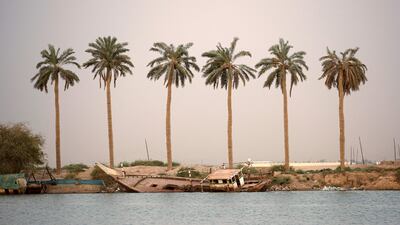
Once known as the 'country of 30 million palm trees', and home to 600 varieties of dates, Iraq's production of the fruit has been blighted by decades of conflict and environmental challenges, including drought, desertification and salinisation. All photos: AFP -

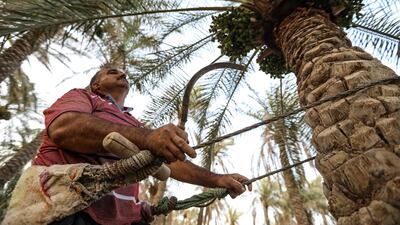
The Fadak plantation is a 500-hectare farm operated by the Imam Hussein Shrine in the nearby holy city of Karbala, in central Iraq. -
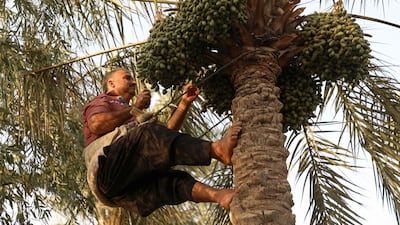
The grove is a repository for more than 90 date varieties from the Gulf and North Africa. The 2022 harvest is estimated to reach 60 tonnes, a threefold increase on 2021. -
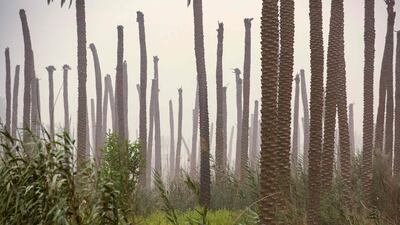
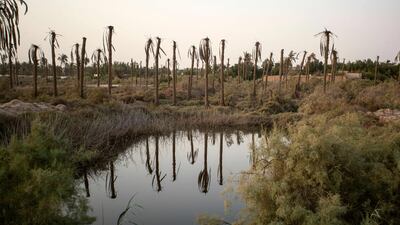
Poor-looking date palms in Basra region, once a centre of date production in southern Iraq. -
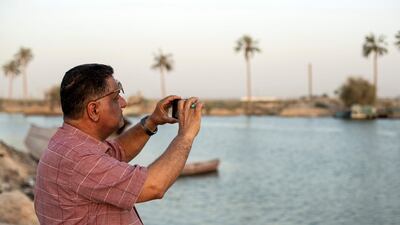
'It looks like a cemetery,' says agricultural engineer Alaa Al Badran. He says the number of palm trees in Basra has fallen from six million before the 1980 to 1988 Iraq-Iran War to less than three million today. -
Salinisation of the Shatt Al Arab River and surrounding land poses a huge challenge, Mr Al Badran says. Drip irrigation and desalination solutions are expensive. -
Iraq's Ministry of Agriculture says progress has been made in increasing date palm production, with numbers increasing from 11 million to 17 million in 10 years. -
While a 2010 initiative to boost date palm numbers ended eight years later due to lack of funds, officials expect it to be relaunched, as more money has now been made available. -
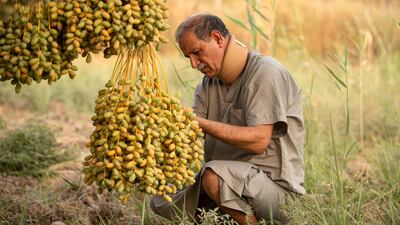
According to official figures, Iraq exported almost 600,000 tonnes of dates in 2021. They are the country's second largest export commodity after oil, according to the World Bank.


As part of the wider plan, the government cited the creation of green belts around cities to act as windbreaks against dust storms, in a country where 39 per cent of the territory is desert or affected by desertification.
Iraq was once dubbed “the country of 30 million palm trees”, but decades of conflict and failing public policies have ravaged the national symbol as urbanisation has shrunk traditional green spaces.
Lush palm groves that once protected large cities such as Baghdad or Karbala have given way to concrete neighbourhoods.
Mr Sudani pledged that Baghdad would soon organise a regional conference to strengthen co-operation and exchange expertise on combating climate change and other environmental pressures.
“I call on friendly countries and all United Nations organisations to support us in facing the effects of climate change”, he said.
Saudi Arabia, Iraq's wealthy neighbour, in 2021 announced a plan to plant 10 billion trees on its territory within a decade, as well as to plant 40 billion additional trees in collaboration with other countries.

