


When parts of Turkey and Syria were hit by a huge earthquake in 2023, the effects of the disaster were devastating.
The 7.8-magnitude quake on February 6 last year razed thousands of buildings across the two countries, killing more than 50,000 people.
Satellite images showed how the natural disasters also opened two cracks in the Earth's surface, with one stretching about 300km across southern Turkey.
Splits appeared across fields and roads, moving buildings by metres in either direction.
Images released by Maxar Technologies at the time showed how land along the fault line was split.
A year on from the disaster, the struggle goes on for survivors and the families of those still missing.
In the south-eastern Turkish city of Nurdagi, about 56km from the quake’s epicentre, few buildings were left untouched, with most destroyed or heavily damaged.
Before-and-after images of the countryside showed grasslands and highways split in two.

Land on either side of the ruptures moved in opposite directions, up to seven metres in some locations, according to data from the California Institute of Technology.
Villages and small towns above the fault line suffered some of the most severe shaking.
Satellite images from Altinuzum, a town in the Islahiye district of Turkey's Gaziantep Province, showed a scarred landscape, with green fields and buildings splintered by tremors.
A Reuters analysis of the population at the time estimated that the settlements built near the fault zone tended to have higher populations the closer they were to the rupture.
Many of the deaths caused by building collapses happened in larger cities, not near fault lines, data showed.
Margarita Segou, a seismologist with the British Geological Survey, said it was safer to build on mountainous rock than the soft soil of the plains, which tends to amplify ground motion.
Susan Hough, a seismologist at the US Geological Survey, said people often lived next to fault zones for resource reasons.
“If you are living along the base of the mountains, there may be more water there,” she said.
Lands cracked by earthquake in Turkey – in pictures
-

Cracks on a farm in Kahramanmaras, the epicentre of the first 7.8-magnitude earthquake, in south-eastern Turkey. AFP -
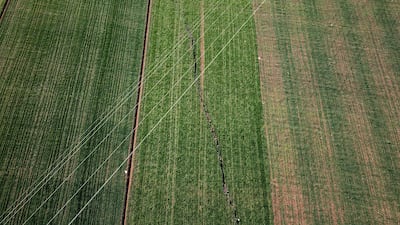
The ground has cracked open in various areas as a result of the earthquake in Turkey and neighbouring Syria. AFP -
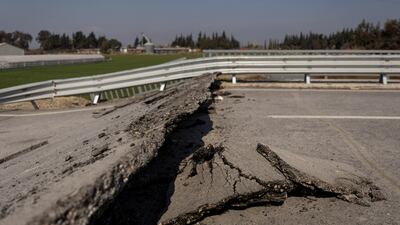
A motorway damaged by the quake, in Hatay, Turkey. Reuters -

A destroyed road near Koseli village, in Kahramanmaras. AP -
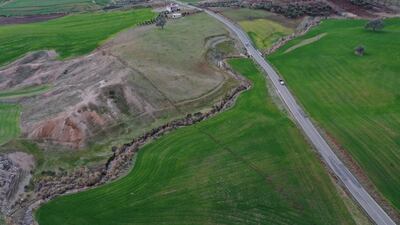
Grasslands and a motorway split in two, near Tevekkeli village, in Kahramanmaras. Reuters -
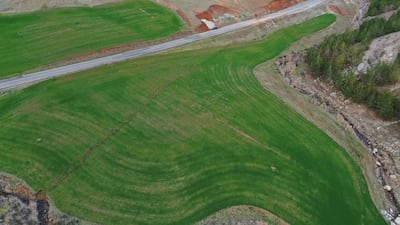
Cracks in the ground, near Tevekkeli village, in Kahramanmaras. Reuters -
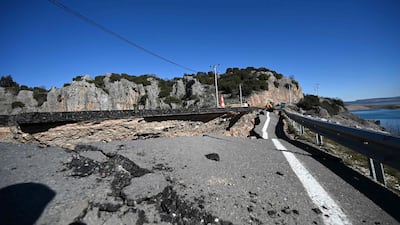
A road near the quake’s epicentre, in Pazarcik, Kahramanmaras. AFP -
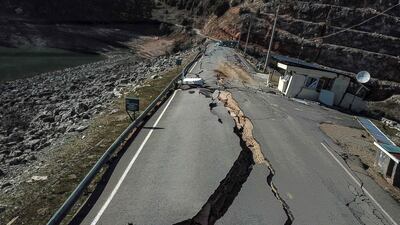
Land on either side of the ruptures moved in opposite directions up to seven metres in some locations, according to data from the California Institute of Technology. AFP -
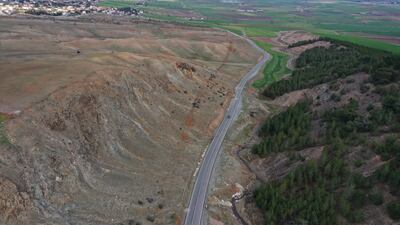
Villages such as Tevekkeli, above, and small towns directly above the fault line suffered some of the most severe shaking. Reuters -
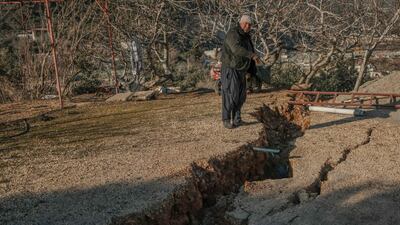
A resident shows the giant cracks next to his home in Nurdagi. AFP -
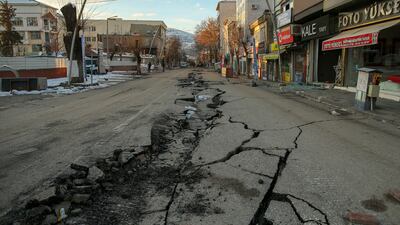
A damaged road in Golbasi, Adiyaman province. AP -
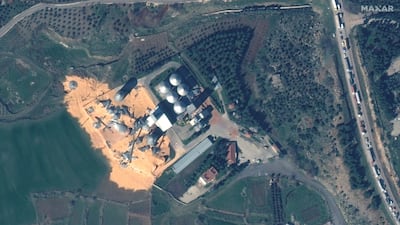
Grain silos damaged by the earthquake, in Nurdagi. Reuters -
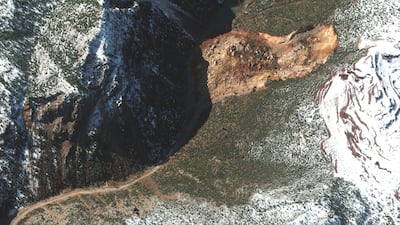
A blocked road after a landslide caused by the earthquake, in the Islahiye region of Turkey's Gaziantep. AP


In Demirkopru, a village in the hard-hit Hatay Province, pictures taken after the disaster showed lopsided houses and cracked pavements.
No one died in the village, situated 20km from the ancient city of Antakya, though some of its 1,000 residents were injured.
“The houses sank four metres,” Mahir Karatas, a 42-year-old farmer, told AFP. “The ground went up and down.”
In Tevekkeli, in the southern province of Kahramanmaras, boulders tumbled down hillsides on to roads.
Mehmet Temizkan said the tremors woke him in the early hours.

“With the initial panic, nobody knew whether we could leave home or whether we could survive. We lost hope. In the morning, when we saw what happened here, we said this must be the epicentre,” he told Reuters in the aftermath of the disaster.
In Antakya, residents said water rose from below ground and then stagnated. An ornately paved road was destroyed.
“Here, it became like an island,” Murat Yar, a 38-year-old roofer, told AFP.
“It went up, down, up, down, and then it slid down 30 metres. We saw water and sand gushing out.”
Residents were able to “jump out from the windows of their one and two-storey homes”, he said.

