


Follow the latest news on the earthquake in Turkey and Syria
The road from Gaziantep leading to Antakya, one of the areas in Turkey most devastated by the powerful earthquake that struck on Monday, is dotted with emergency camps for displaced people, and collapsed buildings.
It was not spared damage but the motorway to the destroyed city is busy as a stream of vehicles, slowly making their way to help survivors and bring supplies.
It usually takes two and a half hours to reach Antakya city. The trip now takes at least six hours.
“I left but I’m coming back now to bring some provisions”, one of the many drivers told The National, standing next to his car, which was stuck in the middle of a long queue.
Traffic is so heavy that police have been stopping cars to ease the congestion in Antakya.
“You’re going to Antakya as well? There is nothing left of the city,” he added as a warning.
On the road, the extent of the damage is jarring. In some places the ground suddenly opens like a wound; crashed cars are left untouched as if time froze.
Hatay devastated
The earthquake and its aftershocks hit Turkey’s Hatay province the hardest, particularly the provincial capital, Antakya, where more than 1,000 buildings are reported to have collapsed.
Survivors in the city, which was home to almost 400,000 people, say more than half the buildings were reduced to rubble.

Along the motorway, the sights offer painful reminders of Monday's tragedy ― a mosque with a missing minaret, a house leaning dangerously.
Emergency shelters — rows of white tents — and makeshift dwellings along the road, reveal the scale of a disaster that has affected as many as 13 million people across the country,
Some small villages close to Antakya have not been as badly hit. But, cut off from electricity, water and food because the road was inaccessible, their residents have nonetheless been affected.
They feel overlooked.
“We don’t have anything left, water, bread electricity, everything is missing and we have barely received anything, not even a tent”, said Mustafa, who lives in a small village near Antakya.
“But Antakya is where the devastation is”, he added.
“The city is done” said a young girl from the same village, making a sweeping outward movement with her arm as if she was flattening a tablecloth.
It is unclear why Antakya has been so severely devastated by the earthquake. Media have reported “pulverised” neighbourhoods in other cities, but none so badly damaged as Antakya.
The scale of destruction is clearer when viewed from space, with satellite images showing many tower blocks reduced to rubble.
Turkey’s Cumhuriyet newspaper has pointed the finger at business developer Servet Altas, who is reported to have built many of the destroyed buildings.
As of Wednesday, 21,000 emergency personnel were working in Hatay province, President Recep Tayyip Erdogan said during a visit to Kahramanmaras, the epicentre of the quake.
Mr Erdogan said the scenes of destruction in Antakya and Hatay were similar to those in Kahramanmaras.
“I saw the gravity of the situation [in Kahramanmaras] closely. And now the picture we are witnessing in Hatay is not much different.”
-
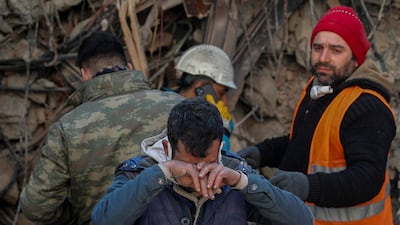
The brother of a survivor Gokhan Ugurlu, 35, who was pulled out of the rubble in Hatay, Turkey, reacts as a rescuer looks on. Reuters -
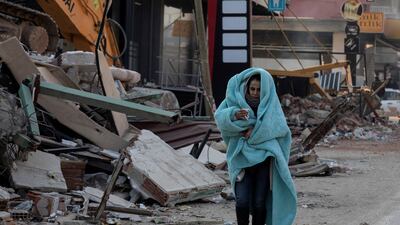
A woman walks past flattened buildings in a street in Hatay province, Turkey. Reuters -

A member of the army stands amid rubble in Kahramanmaras, Turkey. Reuters -
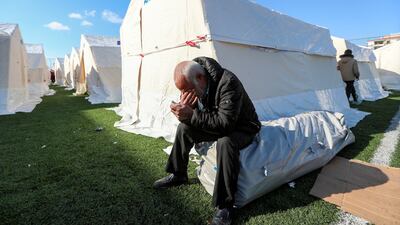
A man reacts while sitting outside a tent of a temporary accommodation centre set up on a football pitch in Gaziantep, Turkey. Reuters -
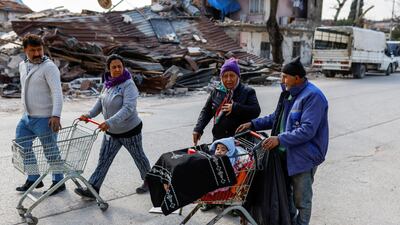
Earthquake survivors walk on a street in Hatay, Turkey. Reuters -
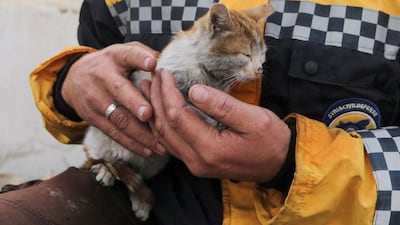
A White Helmets volunteer holds a rescued cat in the rebel-held town of Jandaris, Syria. Reuters -
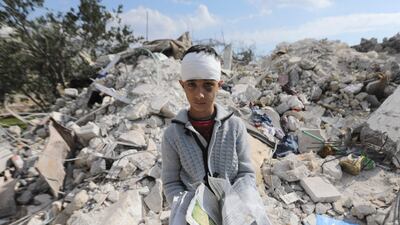
A Syrian boy, who lost his family in the deadly earthquake, stands amid the rubble of his family home in Jindayris. AFP -
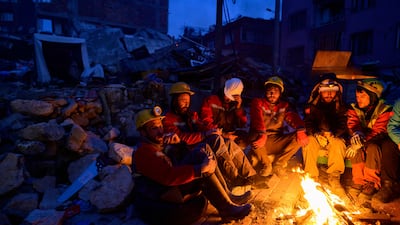
Rescuers sit by a bonfire in Hatay, Turkey. AFP -
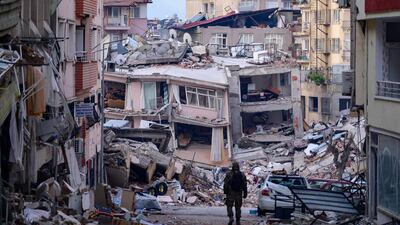
A Turkish soldier walks among destroyed buildings in Hatay. AFP -
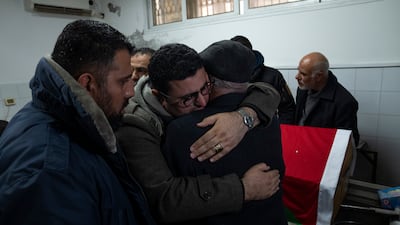
Relatives of Palestinian doctor Yusuf Darabeh, who died when the earthquake hit Turkey, comfort each other. AP Photo -
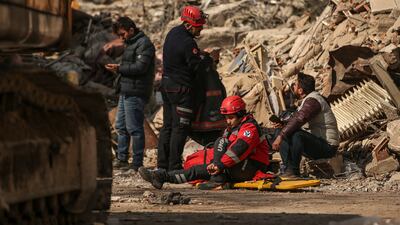
People stand by a collapsed building in Kahramanmaras, southern Turkey. AP Photo -
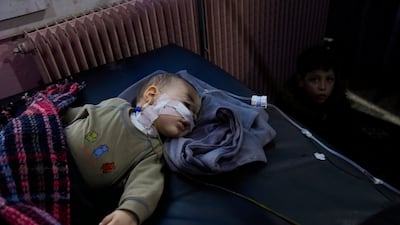
A child, injured in the earthquake, is treated at hospital in Bab Al Hawah, Syria. AP Photo -
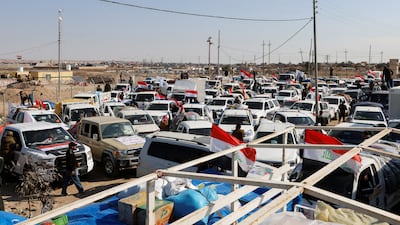
Vehicles containing aid from Hashid Shaabi (Popular Mobilization Forces) on the Iraqi side of the Iraq-Syria border. Reuters -
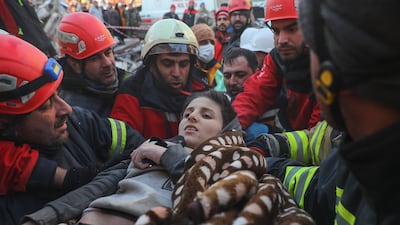
Rescuers carry Muhammed Alkanaas, 12, to an ambulance after five days under the rubble in Antakya, Turkey. AP -
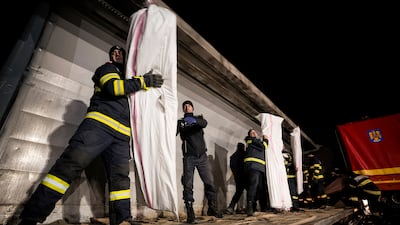
Romanian firefighters load a Turkey-bound train with emergency aid near Bucharest. AP -
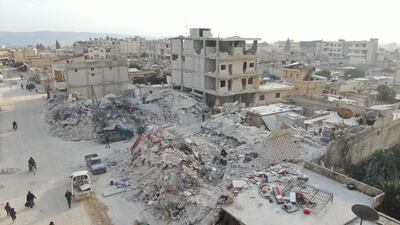
Collapsed buildings in Jandaris, Syria. Reuters -
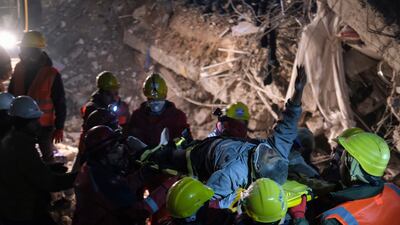
Abdulkerim Nano, 67, is rescued after five days under the rubble in in Kahramanmaras, Turkey -
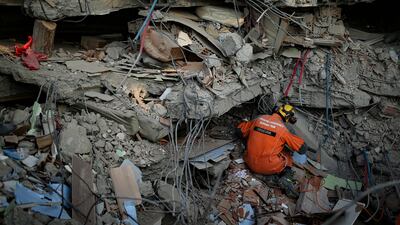
A Turkish rescue worker checks a collapsed building in Adiyaman. AP -
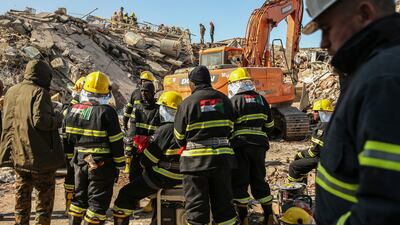
Rescuers in Adiyaman, Turkey. AP -
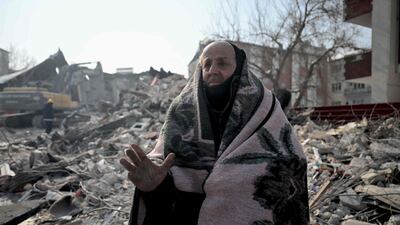
A resident in front of his collapsed building in the Elbistan district of Kahramanmaras. AFP -

Syrian refugees shelter in a public market in the Islahiye district of Gaziantep, Turkey. AP -
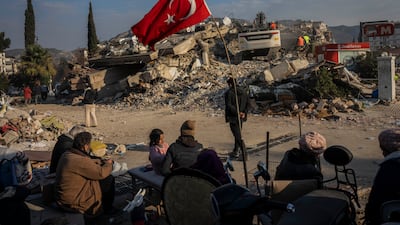
A family wait for the bodies of their relatives to be recovered in Antakya, Turkey. AP -
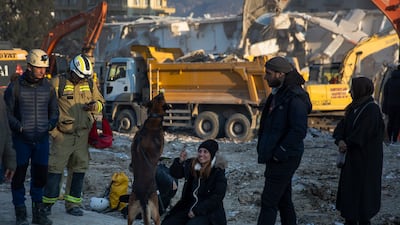
A woman plays with a sniffer dog in Antakya, Turkey. AP -

Collapsed buildings in Antakya, Turkey. AP -
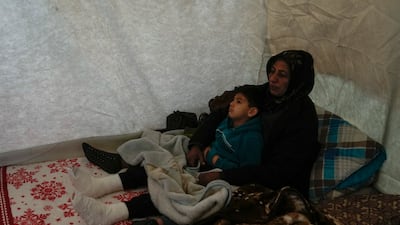
A Syrian woman takes care of her nephew Hasan Goayid, eight, in Islahiye district, Gaziantep. AP -

A Syrian child in a tent in the Islahiye district. AP -
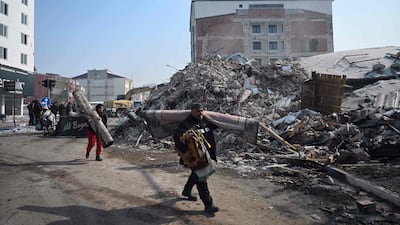
Collapsed buildings in the Elbistan district of Kahramanmaras. AFP -
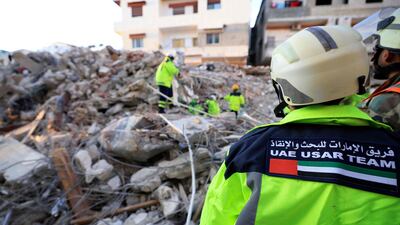
Emirati rescuers sift through the rubble of a collapsed building in the regime-controlled town of Jableh, northwest of the Syrian capital. AFP -
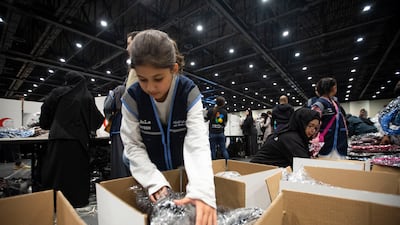
Volunteers at the Emirates Red Crescent 'Bridges of Goodness' campaign at the South Hall, Dubai Exhibition Centre at Expo City. Leslie Pableo for The National -
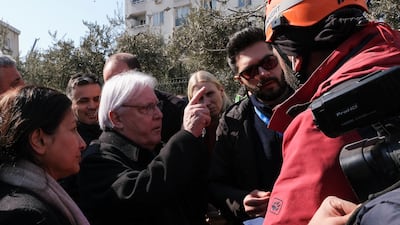
Martin Griffiths, UN Under Secretary General for Humanitarian Affairs and Emergency Relief Co-ordinator, in Maras, Turkey. Reuters -

Rescuers give water to a dog after a rescue operation in Hatay, southern Turkey. AP -
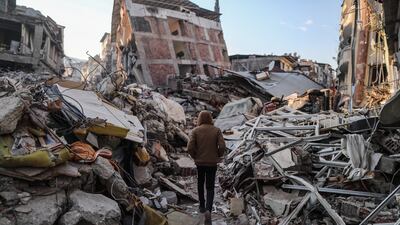
A deadly earthquake struck southern Turkey and northern Syria on February 6. EPA -
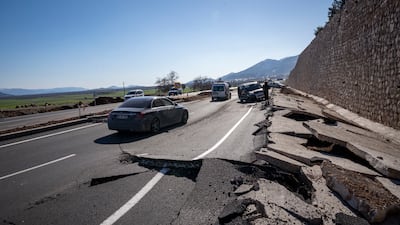
Fissures from the earthquake have crumpled the highway near Islahiyeh in Southern Turkey. Matt Kynaston / The National -
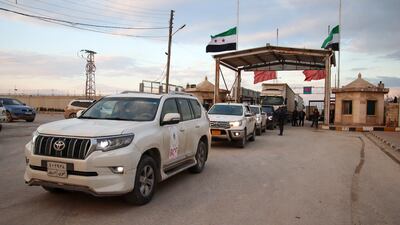
A Kurdish charity's aid convoy enters Syria through the Bab Al Salama crossing with Turkey, in the northern province of Aleppo. AFP -
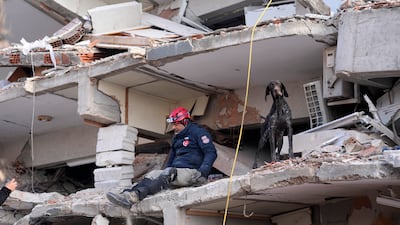
A rescuer with a sniffer dog searches in a destroyed building in Antakya, southern Turkey. AFP -
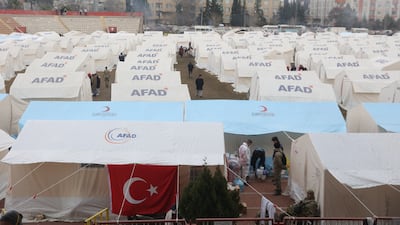
A makeshift camp erected in a stadium in the city of Kahramanmaras, southern Turkey. EPA -
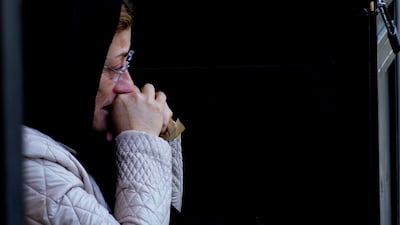
A woman mourns Turkish Cypriot victims of the earthquake, during a funeral procession in the Turkish occupied area in north-east coastal city of Famagusta, Cyprus. AP -
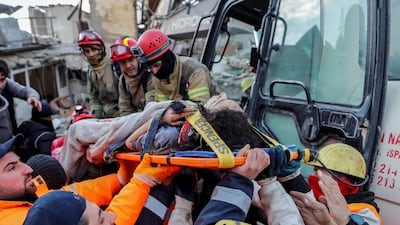
Rescuers carry survivor Rabia Ofkeli, 27, from the rubble in Hatay, southern Turkey. Reuters -
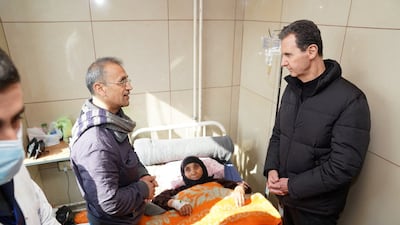
Syrian President Bashar Al Assad visits Aleppo university hospital. Reuters -
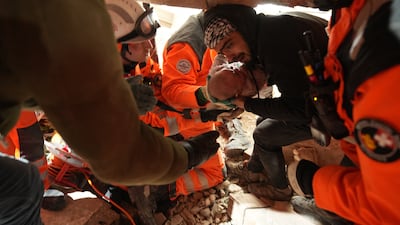
Members of the Swiss rescue team with a four-month-old girl, Abir, who was pulled out from the rubble in Antakya. AFP -
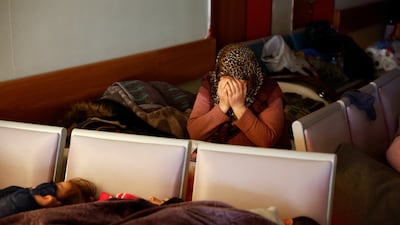
Survivors at a hospital in Kahramanmaras, Turkey. Reuters -
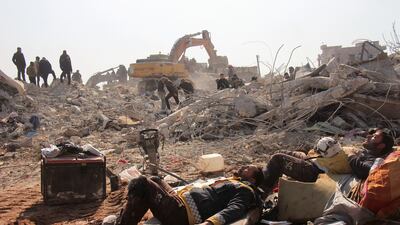
Members of the White Helmets during the fifth day of rescue operations in Jandaris, Syria. Reuters -
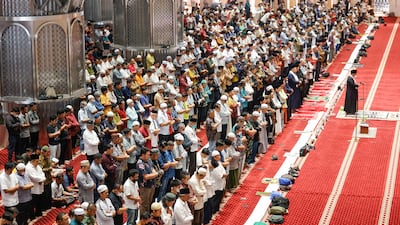
Indonesian Muslims perform a prayer for the victims at Istiqlal grand mosque in Jakarta. EPA -
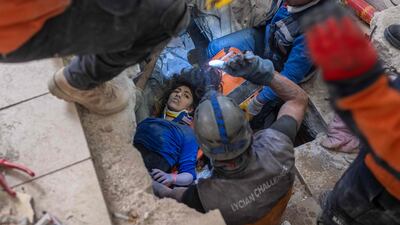
Emergency personnel conduct a rescue operation to save Melda, 16, from beneath the rubble of a collapsed building in Hatay, southern Turkey. AFP -
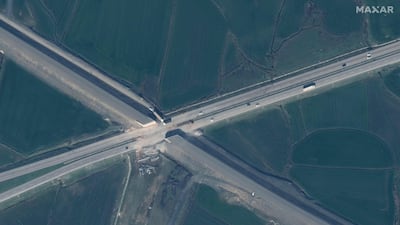
The earthquake caused a railbed overpass to collapse in Nurdagi, Turkey. AFP -
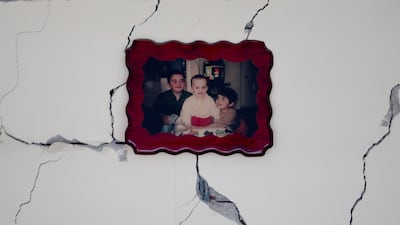
A framed picture on the cracked wall of a collapsed building in Kahramanmaras, south-eastern Turkey. EPA -
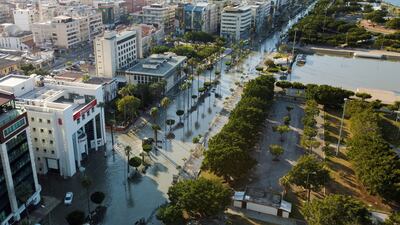
A coastal area of Iskenderun, Turkey, was flooded after the quake. Reuters -
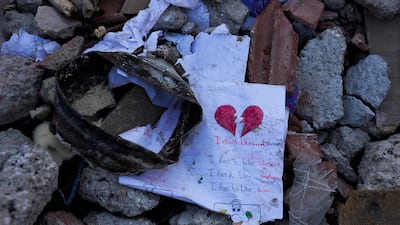
A sheet of paper lies among the rubble in Elbistan. AP -
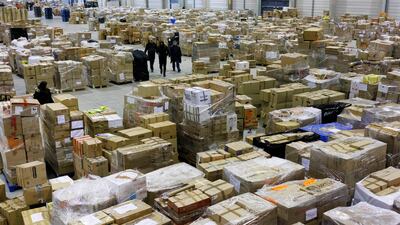
Relief supplies destined for earthquake survivors in Turkey, at a warehouse in Schoenefeld, near Berlin, Germany. AP -
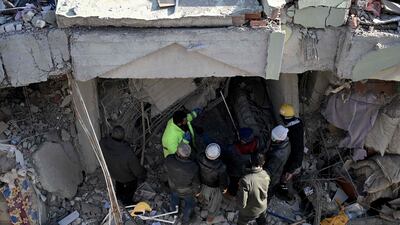
Rescuers search for survivors in the rubble of collapsed buildings in Kahramanmaras, three days after the earthquake struck. AFP -
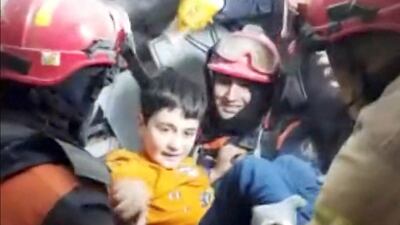
Rescuers with a child pulled out from under the rubble. Reuters -
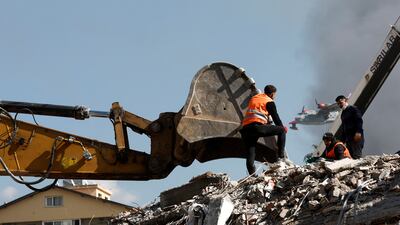
Rescuers rest on top of rubble as an aircraft drops water over a fire at the port in the quake-stricken town of Iskenderun. Reuters -

A rescue worker in Kahramanmaras, three days after a 7.8-magnitude earthquake struck south-east Turkey. AFP -
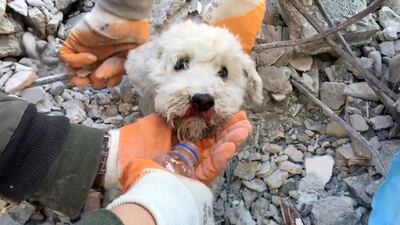
People try to pull out a dog trapped beneath the rubble in Iskenderun, Turkey. Reuters -
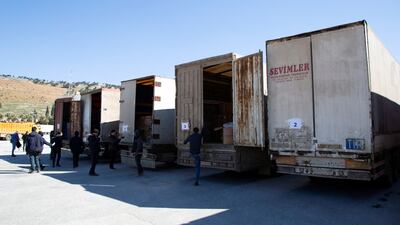
Lorries carrying humanitarian aid wait at Bab Al Hawa crossing on the Turkey-Syria border. Reuters -
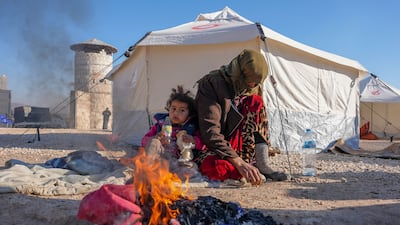
Syrians warm up by a fire outside a makeshift tent near the rebel-held town of Jindayris in Syria. AFP -
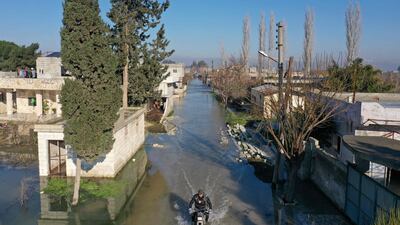
A dam on the Orontes river in Syria's rebel-held Idlib province collapsed after the quake, flooding the neighbourhood. AFP -
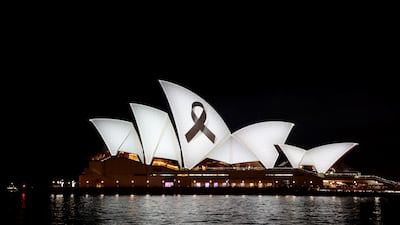
The sails of the Sydney Opera House lit with a black ribbon in remembrance and mourning of the earthquake victims. Getty -
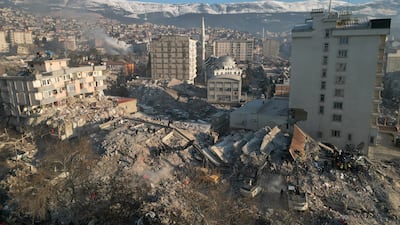
Smoke billows amid an expanse of collapsed and damaged buildings in Kahramanmaras, Turkey. Reuters -
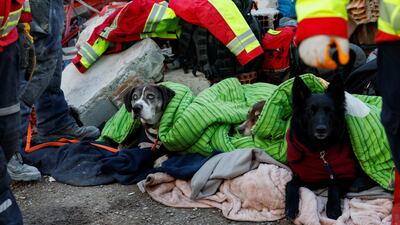
Dogs of the German International Search and Rescue team rest between operations in Kirikhan, Turkey. Reuters -
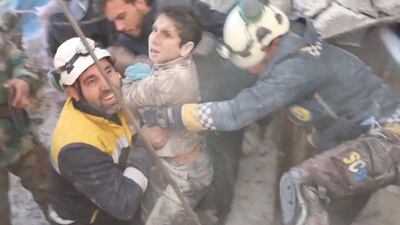
White Helmets volunteers rescue a child trapped beneath the rubble in Jandaris, Syria. Reuters -
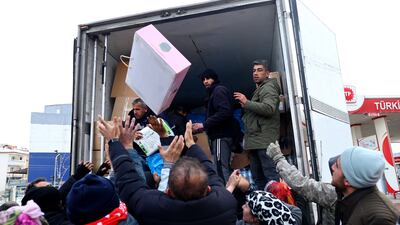
People gather to collect food and humanitarian aid in the Elbistan district of Kahramanmaras, south-east Turkey. EPA -
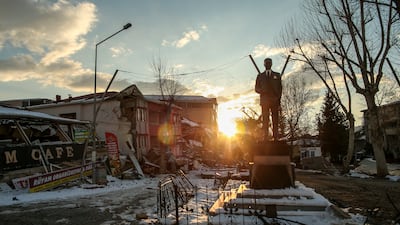
The statue of Mustafa Kemal Ataturk, founder of modern Turkey, is surrounded by damaged buildings in Adiyaman province. AP -
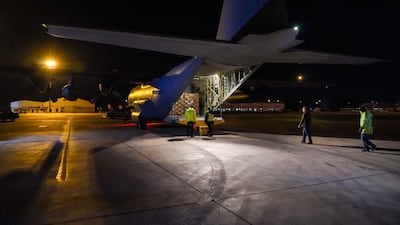
A plane carrying humanitarian air sent for earthquake survivors lands in Damascus. Mahmoud Rida / The National -
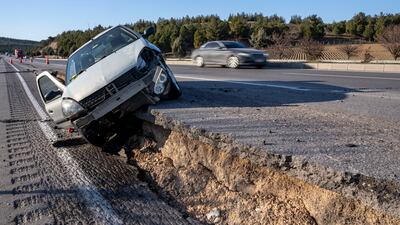
Motorway fractured by earthquake causes car crash near Kahramanmaras, Turkey. Matt Kynaston / The National -
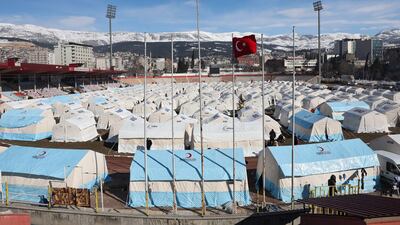
A tent camp has been set up at a stadium in south-eastern Turkish city of Kahramanmaras to shelter families whose homes were destroyed in the quake. AFP -
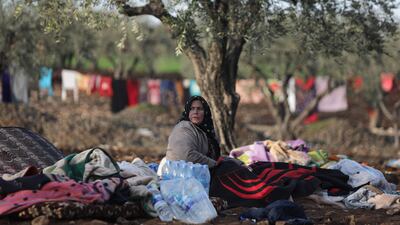
A displaced Syrian woman rests under a tree in a field on the outskirts of the rebel-held town of Jindayris. AFP


Displaced residents and relatives searching for loved ones under the rubble say rescue teams have yet to arrive, with some appealing on social media for advice on how to operate cranes needed to lift the rubble.
Bodies were laid in rows, at a hospital car park in the city, as morgues reached capacity, another grim milestone in a tragedy that shows no sign of abating.
Monday's earthquake is now confirmed as deadlier than the 9.1 magnitude earthquake that struck Japan in the spring of 2011, killing over 18,000 people.
Additional reporting by Holly Johnston in Abu Dhabi.

