

At least seven people were killed and 10 were injured in a shooting at a synagogue on the outskirts of East Jerusalem on Friday, amid an escalation of violence in the region.
Police said that a Palestinian gunman arrived at about 8.15pm and opened fire, shooting a number of people before he was killed by police.
The shooting took place as worshippers attended Shabbat services on International Holocaust Remembrance Day.
There was no immediate claim of responsibility for the attack, which police described as a “terrorist incident”.
The Magen David Adom emergency response service reported a total of 10 gunshot victims, including a 70-year-old man and a 14-year-old boy.
Israeli media said the gunman was a Palestinian resident of East Jerusalem but there has been no official confirmation.
The synagogue is located in the Neve Yaakov settlement in occupied East Jerusalem's eastern sector, which was annexed by Israel after the 1967 Middle East War.
Speaking to the media at the scene, Israel police commissioner Kobi Shabtai called it "one of the worst attacks we have encountered in recent years."
Images taken in the immediate aftermath of the attack showed a number of victims lying on a road outside the synagogue being tended to by emergency workers.
Israel's extreme-right National Security Minister Itamar Ben-Gvir arrived at the scene shortly after the incident. Police could be seen dismantling a white vehicle believed to have belonged to the gunman.

Prime Minister Benjamin Netanyahu said he had held a security assessment and decided on “immediate actions”, without elaborating.
Mr Netanyahu said he would discuss a further response with his Security Cabinet on Saturday night, after the end of the Shabbat, and called on the public not to take the law into their own hands.
Dozens of Palestinians gathered at several locations across the Gaza Strip in spontaneous demonstrations to celebrate the East Jerusalem attack.
“The operation in Jerusalem is a natural response to the occupation’s crime in Jenin,” said Hazem Qasim, spokesman of Hamas, which rules the Palestinian territory.
Earlier on Friday, Israeli jets struck Gaza in retaliation for rocket attacks that set off alarms in Israeli communities near the border.
Palestinians also marched in anger as they buried the last of 10 people killed in the Jenin refugee camp by Israeli security forces a day earlier.
The US condemned the incident, which occurred days before a visit to the region by Secretary of State Antony Blinken.
“This is absolutely horrific,” State Department spokesman Vedant Patel told reporters.
-
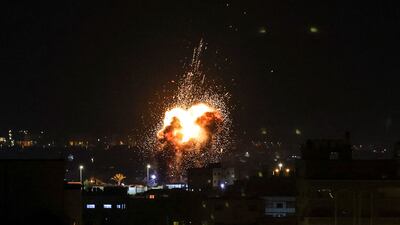
Fire and smoke rise above buildings in Gaza City after Israel launched air strikes. AFP -
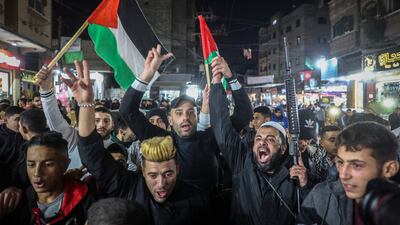
Palestinians demonstrate in the Jabalia refugee camp following an Israeli raid. AFP -

Palestinians burn tyres and wave the national flag during a protest against the raid. AP -
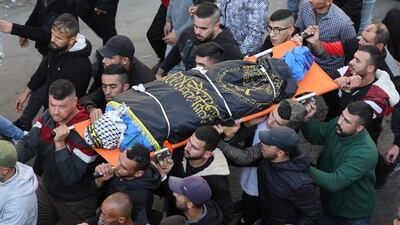
The funeral of one of the victims of the Israeli raid. AFP -
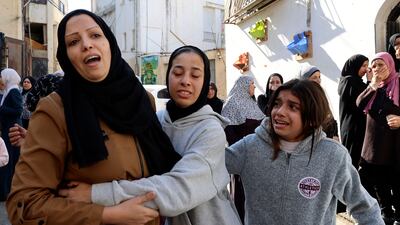
Relatives mourn during the funeral in the occupied West Bank. AFP -
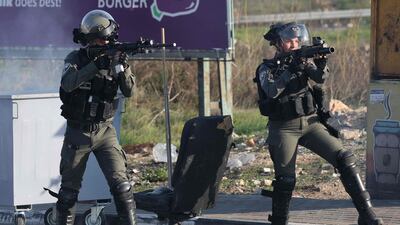
Israeli soldiers aim at Palestinians protesting over the expropriation of their land near the Jewish settlement of Beit El. AFP -
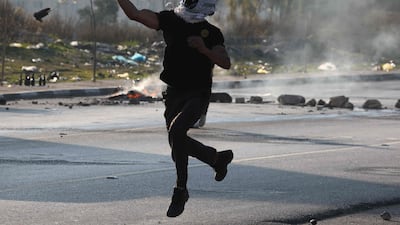
A protester throws a stone at Israeli forces during the demonstration. AFP -
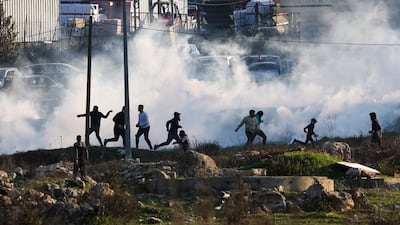
Israeli forces fire tear gas to disperse demonstrators near Beit El in the occupied West Bank. AFP -
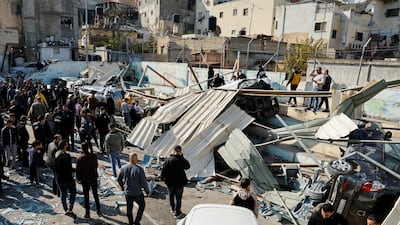
Palestinians inspect the damage following the Israeli raid in Jenin. Reuters -
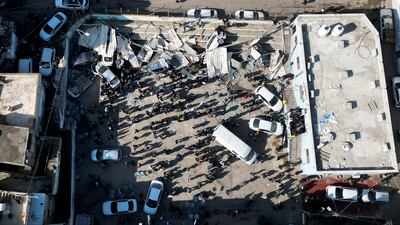
An elderly woman was among those killed in fighting with Israeli troops. Reuters -
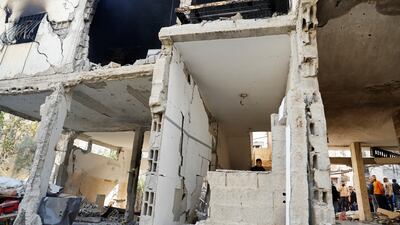
The operation in the flashpoint town is the deadliest Israeli raid in recent months. Reuters -
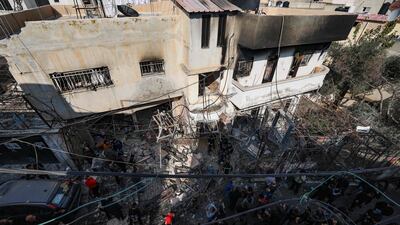
People gather around a building damaged and burned by Israeli troops during the raid. AFP -
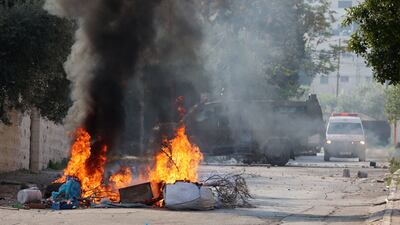
An ambulance drives past an Israeli military vehicle as smoke rises from a fire set by Palestinian demonstrators. AFP -
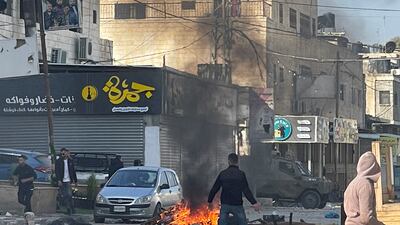
Palestinian stone-throwers gather amid confrontations with Israeli troops during a raid in Jenin in the occupied West Bank. Reuters -

Israeli military vehicles during the raid in Jenin. Reuters -

Palestinians run for cover. AFP -
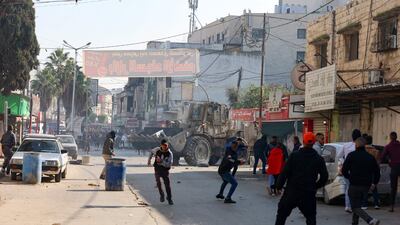
Palestinians in Jenin confront Israeli forces. AFP -

A Palestinian hurls a canister during the raid in the occupied West Bank. Reuters -
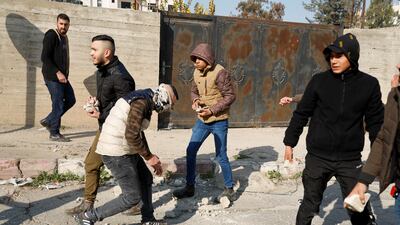
Palestinian stone-throwers gather amid the raid in Jenin. Reuters


“We condemn this apparent terrorist attack in the strongest terms. Our commitment to Israel's security remains ironclad, and we are in direct touch with our Israeli partners.”
Mr Patel said there would be no change in the travel plans of Mr Blinken, who plans to meet the leaders of Israel, the Palestinian Authority and Egypt starting on Sunday.
President Joe Biden asked his national security team to "offer all appropriate support in assisting the wounded and bringing the perpetrators of this horrible crime to justice," White House Press Secretary Karine Jean-Pierre added.
"The United States will extend our full support to the government and people of Israel," she said in a statement.
UN Secretary-General Antonio Guterres said he was "deeply worried" by the current escalation of violence and urged "utmost restraint" on Friday, UN spokesman Stephane Dujarric said in a statement.
"The Secretary-General strongly condemns today's terrorist attack," Mr Dujarric said. "It is particularly abhorrent that the attack occurred at a place of worship, and on the very day we commemorated International Holocaust Remembrance Day."
Britain's foreign secretary, James Cleverly, joined in on the chorus of condemnation.
"To attack worshippers at a synagogue on Holocaust Memorial Day, and during Shabbat, is horrific. We stand with our Israeli friends," he said in a statement on Twitter.
The United Arab Emirates also strongly condemned the attack, in a statement issued by the foreign ministry.
Months of violence in the West Bank have heightened fears that the already unpredictable conflict may spiral out of control, triggering a broader confrontation between Palestinians and Israel.
The latest violence began under the previous coalition government and has continued following the election of Mr Netanyahu's new right-wing administration, which includes ultranationalist parties that want to expand settlements in the West Bank.

