


In a flurry of speeches looking to reassure the public, Egypt's President Abdel Fattah El Sisi has defended his government’s economic policies and insisted the country will weather the financial times ahead.
While Egypt is being hit by the same rising food and fuel costs that have pushed global inflation up, critics have also laid the blame for bleak economic projections on flagship government projects.
The economy has been the one issue Mr El Sisi, 68, has invested considerably more time and effort in than anything else in his eight years in office. The former general has pushed hard to modernise Egypt after decades of stagnation and negligence.
Despite this, the Egyptian pound has fallen by a total of 51 per cent against the dollar since last March, annual inflation hit 21.3 per cent in December. Coupled with a shortage of foreign currency, that has meant shortages on shelves and the government announcing deep spending cuts.
-
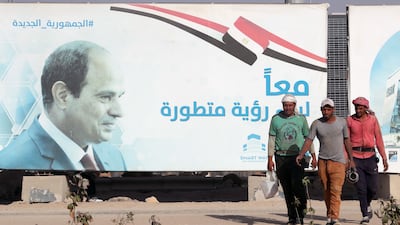
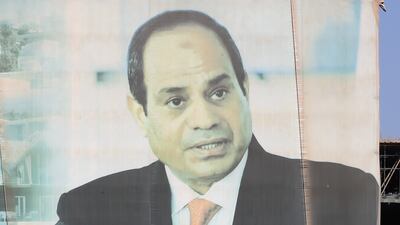
An advertising hoarding with a picture of Egyptian President Abdel Fattah El Sisi in the new administrative capital. All photos: EPA -
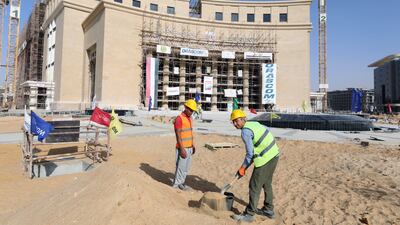
The new city is located about 45 kilometres east of Cairo. -
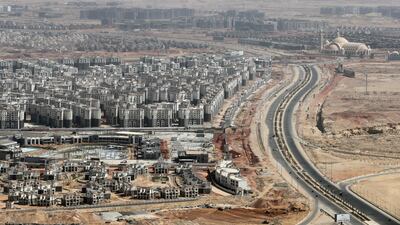
It will include a presidential compound, government ministries, offices, hotels, retail outlets, residential areas, sports centres, schools and universities, a monorail, a giant park and the 35-kilometre Green River. -
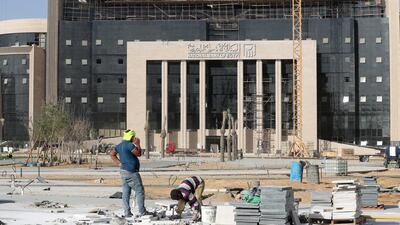
Egyptian workers at a construction site in front of the new National Bank building in the new capital. -
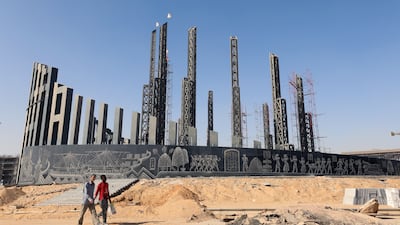
Construction began in 2015, in partnership with China State Construction Engineering Company. -
The central business district is being constructed over an area of more than 500,000 square metres. -

The new city will also have a diplomatic quarter, the largest Christian cathedral in the Middle East and a state of the art culture and arts centre. -

The ministries' area in the new capital. -

The city will have a population of 6.5 million when fully inhabited. -
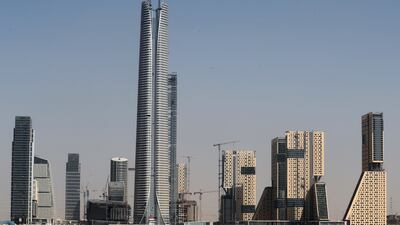
It will include the 385-metre Iconic Tower, which is set to be the tallest building in Africa. -

The new capital is part of a development drive that has taken place since Mr El Sisi assumed power in 2014. -
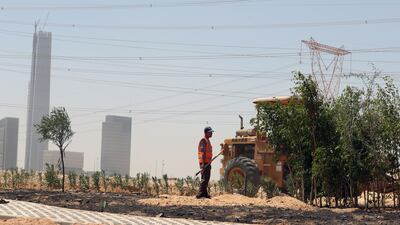
This development drive has led to the construction of a dozen new cities, thousands of kilometres of new roads, mega housing projects and initiatives to turn desert into farmland.


But Mr El Sisi remains steadfast in the face of the worst crisis since taking office, vigorously defending his policies, counselling Egyptians not to worry and stressing the importance of not changing track.
“I assure you in all honesty and objectivity that we will, despite all the difficulties, go forward, not just to pull through this crisis but to build a magnificent future, God willing,” he said last week, a day after his government devalued the pound for the third time since March.
An economic meltdown in the most populous Arab nation of 104 million people would send shock waves through the Middle East, where Egypt is regarded as instrumental to regional security and stability, Mr El Sisi has frequently warned. He has also warned it could also unleash a wave of migration to Europe and embolden extremists.
Mr El Sisi has also sought to project a business-as-usual image in recent weeks, engaging in lengthy televised discussions on issues like a new family law, government help for Egyptians with special needs and upgrading Cairo's run-down zoo.
He blames Egypt's economic woes on the fallout from Russia's war in Ukraine and the coronavirus pandemic.
But the severity of the situation has prompted some economists and commentators, including former deputy prime minister Ziad Bahaa El Deen, to openly question the government’s policies. Such criticism would have been unthinkable before Mr El-Sisi partially relaxed media regulations last April.

“It's difficult this time around because a lot of people are frustrated,” said Michael Hanna, a Middle East expert and the New York-based director of the North America programme at the International Crisis Group.
“It will likely be hard for (current) policies to be abandoned wholesale and muddling through might well be the way forward.”
Authorities have taken a host of measures to try and cut costs and raise funds, such as dimming street lights and making tourists pay for train journeys in foreign currency. Under a draft family law, couples who wish to wed would have to pay a yet-unspecified fee before they can tie the knot.
The unprecedented criticism of the government's economic policies started off cautiously, perhaps mindful of how the authorities would react, but it has become outspoken in recent weeks.
“It is no longer feasible to deal with the current economic crisis as a temporary emergency that can be dealt with through an international loan, making available some food items or new measures to encourage investment,” Mr Bahaa El Deen wrote in late December.
“The way out of our current crisis will not materialise unless we introduce a genuine change to the economic path we took in past years and to steer away from the directions that are no longer suited for the present time and circumstances.”

Mustapha Kamel El Sayed, a widely respected political science professor at Cairo University, suggested that the president should lighten his workload and delegate more to his government.
“The responsibilities shouldered by the president of the republic should be reduced so that he gives his full attention to foreign policy, defence and national security,” he wrote.
Amr Adeeb, perhaps the most popular Arab talk show host, expressed his frustration.
“The government must know that we're living in punishing times,” he said. “Since you are the government, you must give me an example of your austerity and then I will be prepared to suffer. It must tell us that it had stopped doing certain things to help us.”
Mr El Sisi has agreed to some major reforms.
As part of a $3bn bailout deal with the IMF ― which has called for “critical” structural reforms ― Egypt has agreed to “level the playing field between the public and private sector” including military-owned companies.
This, the deal says, includes selling assets in “non-strategic sectors” and all state-owned entities will need to submit twice-yearly accounts to the Finance Ministry in a bid to improve transparency.

The president has also acknowledged the gravity of the situation while confidently defending his policies.
He says the projects have created millions of jobs and kept the economy afloat during the crippling impact of the coronavirus pandemic.
“We are doing well, thanks be to God, although we are suffering. We are suffering, yes, but we should not be scared or worried,” he said earlier this month.
Significantly, the severity of the economic crisis and rising prices have not triggered the kind of street unrest seen in the past.
A call for a day of street rallies on November 11 to protest the economy went unheeded.
And this week, the pound appears to have settled around 30 to the dollar as the Central Bank signalled a return to Egypt's once-lucrative debt market by foreign investors attracted by a favourable exchange rate.
Mr El Sisi, a workaholic with an eye for detail, has also sought to debunk corruption allegations, capitalising on the enduring popular trust in his leadership.
“When it comes to money, stay out of it. I know how to handle it,” he recently said.

