


The defence ministers of Syria, Turkey and Russia met in Moscow after Turkish President Recep Tayyip Erdogan said he had proposed the meeting to his Russian counterpart Vladimir Putin.
Earlier this month, Mr Erdogan said that ministerial-level gatherings among the three nations should be arranged, to eventually end with a trilateral meeting involving himself, Mr Putin and Syrian President Bashar Al Assad.
Turkey and Syria have had no official diplomatic ties in 11 years, since the war in Syria began.
The meeting between Russian Defence Minister Sergei Shoigu, Turkey's Hulusi Akar and Syria's Ali Mahmoud Abbas, was held in a “constructive atmosphere”, Turkish state news agency Anadolu reported.
The three officials discussed “ways to resolve the Syrian crisis, the problem of refugees and joint efforts to combat extremist groups in Syria”, the Russian and Turkish defence ministries said.
They “noted the constructive nature of the dialogue held in this format and the need to continue it in the interests of further stabilising the situation” in Syria and the region, Russia's defence ministry said.
Syria also said that the heads of intelligence from Syria and Turkey met in Moscow.
Turkey was considered to be a safe haven for the millions of Syrian refugees escaping the war and the Assad regime.
It now hosts about four million Syrian refugees, but anger and xenophobia towards them has recently worsened, The National previously reported.
-
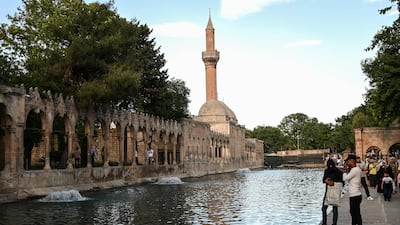
A severe economic downturn in Turkey is making life difficult for the country's population of 3.7 million Syrian refugees. All photos: AFP -

Syrian refugee Ahmad Ibrahim, 31, poses inside his textile shop in Sanliurfa, Turkey. Inflation has surged and the value of the Turkish lira has dropped. -
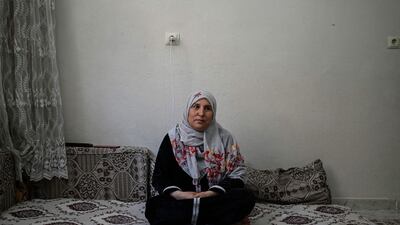
Samira, 43, hears the same message from Turkish politicians on television day and night: Syrian refugees like her must return home. But her home near Damascus is still not safe, she says. -

Refugees fear they will be used as a scapegoat for Turkey's problems in the 2023 electoral campaign, as President Recep Tayyip Erdogan faces rising public anger over their presence. -
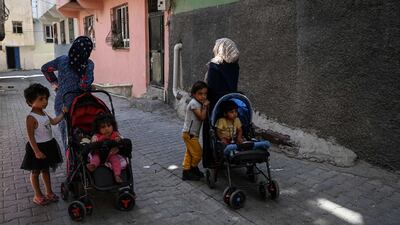
Despite pressure from opposition parties, Mr Erdogan has promised that Turkey will not force Syrian refugees back and 'will not throw them into the lap of murderers'. But his assurances are not allaying their fears. -
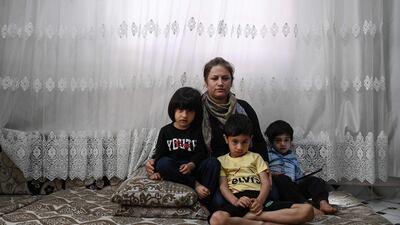
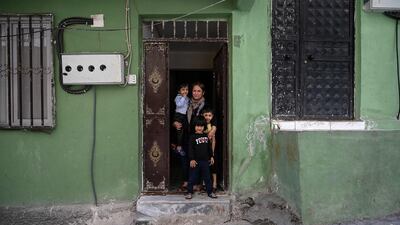
Fatima Ibrahim, in her early 30s, married a Syrian refugee after fleeing to Turkey nine years ago. The economic fallout is hitting them equally as hard as the Turks, she said. 'Employers pay us less, so locals are annoyed, blaming us for accepting a wage less than theirs,' she said, sitting next to her three young sons. -
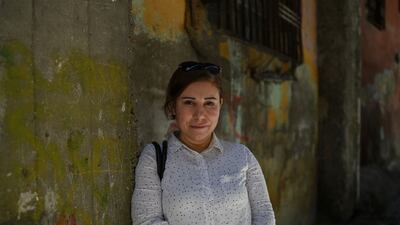
Haifa, 39, English teacher from Aleppo, is fluent in Turkish after nine years here, and avoids speaking Arabic in public so as not to attract attention. 'I want to keep myself safe. Political issues affect us more than the economy,' she said. -
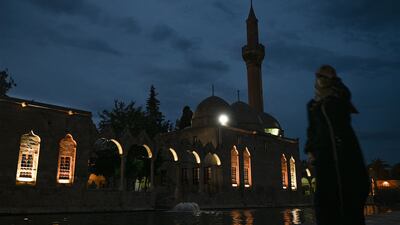
Since 2016, the Turkish army has launched military operations in Syria, battling outlawed Kurdish militants and ISIS extremists. -
Haifa said: 'Some people tell us 'go back to your country, you're having fun while our soldiers are dying there. You think it is easy to leave everything behind you? Your memories, your house, everything. You cannot even visit your mother or father's grave.'


Turkey has also been alluding to warmer ties with the Syrian government much to the dismay of the opposition that rejected Turkey's calls for the normalisation of ties with the Assad regime.
Protests broke out in August after comments by Turkey's Foreign Minister Mevlut Cavusoglu on reconciliation with Syria.
“There will be no permanent peace otherwise,” he said at the time.
Russia is a staunch backer of the Assad regime but has been mediating between Turkey and Syria, and other parties to the conflict.
Turkey recently launched a military operation against Kurdish targets near Syria's northern border, after a terror attack in Istanbul killed six last month.
Ankara blamed Kurdish militants for the attack, but the US-backed Syrian Democratic Forces denied any responsibility and called for an international investigation into the incident.

