

Tunisia's new constitution, which gives President Kais Saied greater power, has come into effect after the electoral commission announced the final results of last month's referendum.
Voters overwhelmingly approved the new constitution with 94.6 per cent in favour in the poll on July 25, the electoral board said on Tuesday.
“The constitution comes into force with the announcement of the final results, its promulgation by the president and its publication in the official journal,” AFP quoted the electoral board's president Farouk Bouasker as saying.
The charter was approved by just over 2.6 million people, Mr Bouasker said.
The turnout was considered low at 30.5 per cent.
Mr Saied's move against a system that emerged after the 2011 overthrow of autocrat Zine El Abidine Ben Ali was welcomed by many Tunisians.
-
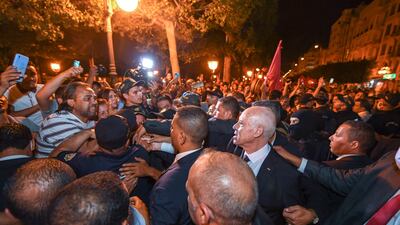
Tunisian President Kais Saied (2-R) celebrating with his supporters the almost certain victory of the 'yes' vote in a referendum on a new constitution, after the projected outcome was announced in Tunis. EPA -
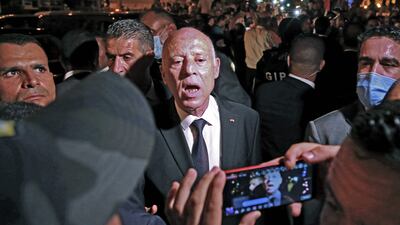
President Kais Saied celebrates with his supporters on Habib Bourguiba Avenue, Tunis. The referendum was on a new constitution that strengthens the powers of the head of state. AFP -
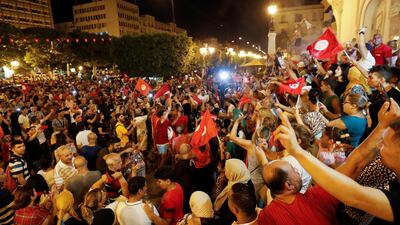
President Kais Saied supporters celebrate. Reuters -
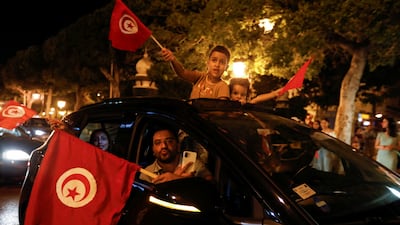
President Kais Saied supporters celebrate in Tunis after the exit poll indicates voters backed Tunisia's new constitution. Reuters -

Farouk Bouasker, president of the Independent Higher Authority for Elections, in Tunis. AFP -
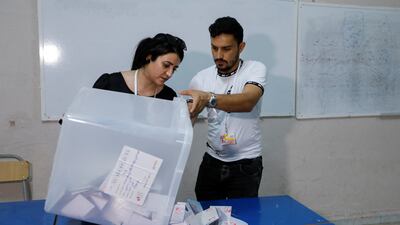
Members of the election committee open the ballot box at a polling station in Tunis. Reuters -
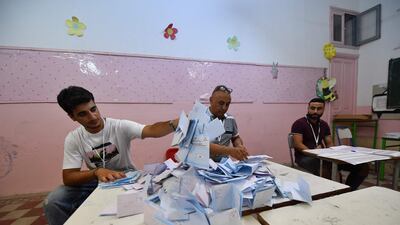
Employees of the Independent Higher Authority for Elections begin counting the ballots. AFP -
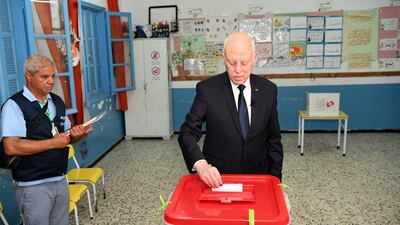
Tunisia's President Kais Saied casts his ballot at a polling station in Tunis in the country's referendum on a new constitution. Reuters -
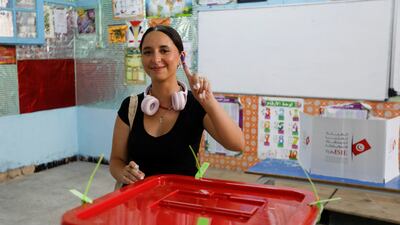
A woman shows her ink-stained finger at a polling station during a referendum on a new constitution in Tunis, Tunisia. Reuters -

A Tunisian woman votes during a referendum on the draft constitution put forward by the country's president at a polling station in the Ben Arous region near Tunis. AFP -

A woman shows her ink-stained finger as she holds the Tunisian flag at a polling station in Tunis. Reuters -
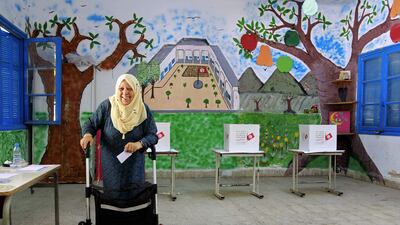
A Tunisian woman votes during the referendum in the Ben Arous region near Tunis. AFP -
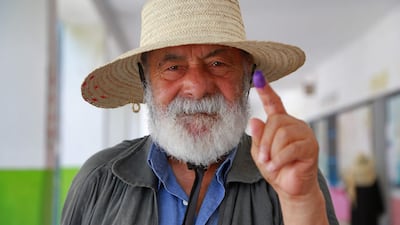
A Tunisian man votes during the referendum at a polling station in the Ben Arous region near Tunis. AFP -
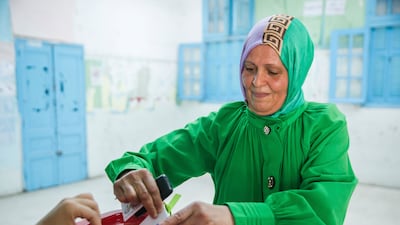
A woman casts her vote at a polling station in Tunis. AP -
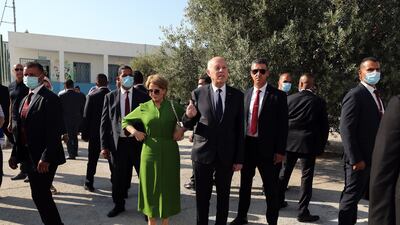
Mr Saied leaves the polling station with his wife. Tunisia is holding a referendum on a new draft constitution proposed by the president to replace the 2014 constitution. EPA -
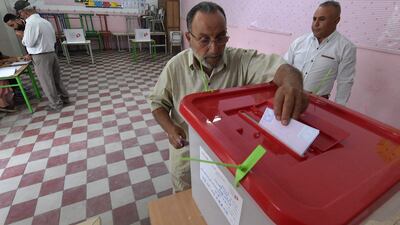
Tunisians go to the polls on Monday to vote on a draft constitution proposed by President Kais Saied. Here, a vote is cast at a polling station in the capital, Tunis. AFP -
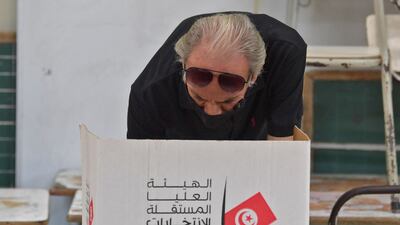
Some Tunisians see the constitutional referendum as a vote for or against President Kais Saied, whose powers would increase if the new charter is approved. AFP -
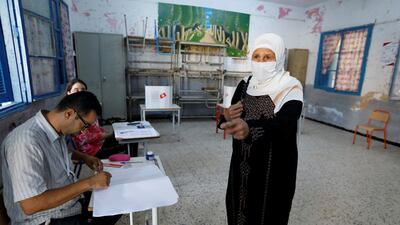
People cast their ballots at a polling station in Tunis on a referendum on a new constitution for Tunisia. Reuters -
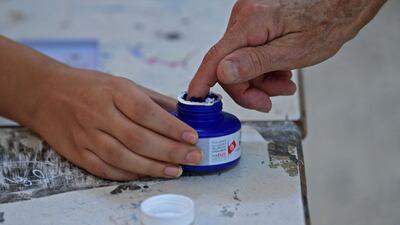
In a polling station in the Ariana district of Tunis, a citizen dips his finger in ink after taking part in a referendum on a draft constitution. AFP -
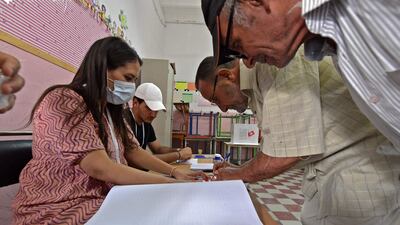
Tunisians vote in a referendum on a draft constitution put forward by the country's President Kais Saied. The text has proved to be controversial and citizens have their say on Monday. AFP -
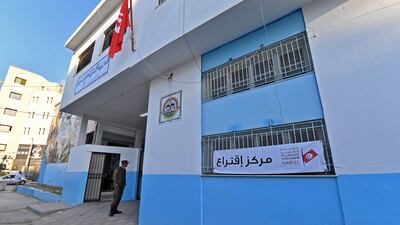
A member of Tunisian security forces stands guard outside a polling station in Ariana district of Tunis. AFP -
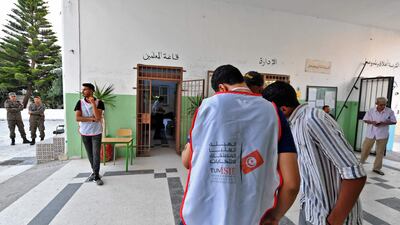
Tunisian election staff assist voters at a polling station in the Ariana district as citizens vote on a new constitution. AFP -
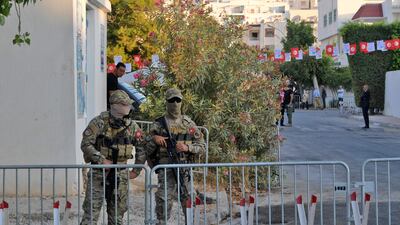
Members of Tunisian security forces stand guard outside a polling station in Ariana district of Tunis. AFP


Tunisia is mired in crisis with growth of just 3 per cent, with almost 40 per cent of young people jobless and four million people out of a population of nearly 12 million in poverty.
For weeks the heavily indebted country has been negotiating a new loan with the International Monetary Fund, hoping to obtain $4 billion, and also the chance to open other avenues of foreign aid, mainly European.
The new text puts the president in command of the army and allows him to appoint a government without parliamentary approval.
He can also present draft laws to parliament, which will be obliged to give them priority.
A second chamber is created within Parliament to represent the regions and counterbalance the assembly itself.

