Stargazers in Turkey - in pictures
-
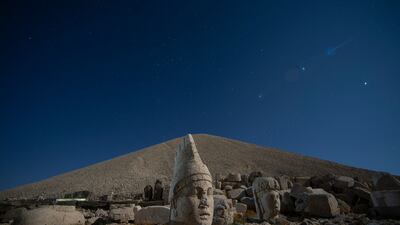
Stargazers gather to watch the Perseid meteor shower on top of Mount Nemrut in south-eastern Turkey. All photos: AP -

Hundreds spent the night at the Unesco World Heritage Site for the annual meteor show that stretches along the orbit of the comet Swift–Tuttle. -

Perched at an altitude of 2,150 metres, the statues are part of a temple and tomb complex that King Antiochus I of the ancient Commagene kingdom built as a monument to himself. -

A 50-metre-high man-made mound — the presumed tomb of Antiochus — sets the background. -

The ancient site that includes 10-metre-high, seated statues of Antiochus surrounded by ancient Gods including Zeus and Apollo, was discovered in 1881 by a German engineer. -

Excavations began there in the 1950s. -

Son of the founder of the Commagene kingdom, Antiochus reigned between 64 and 38 BC, until he was deposed by the Romans. -

The kingdom spanned an area from the eastern edge of the Taurus mountains to the Euphrates River. -

People climb up to the ancient site to see jaw-dropping sunrises and sunsets. -

The meteor shower coincided this year with a full moon, which dimmed the meteors but provided its own beauty for those watching.


Most popular today

