

Israeli Prime Minister Naftali Bennett has vowed that Iran will not go unpunished for instigating attacks through its proxies.
Only a week after the assassination in Tehran of a Islamic Revolutionary Guards Corp (IRGC) colonel, Mr Bennett made the remarks in a speech that featured a strong condemnation of Iran’s rulers.
He accusing them of failing to “improve the lives of the Iranian people”, of using deadly force against protesters and misleading the International Atomic Energy Agency.
IAEA chief Rafael Grossi last week said talks to revive the 2015 nuclear deal had reached a “very difficult juncture”,
-
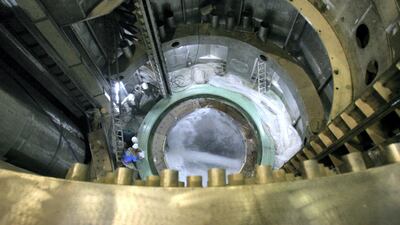
Russian contractors work at the Bushehr nuclear reactor site in 2007. The plant opened four years later. Bloomberg -
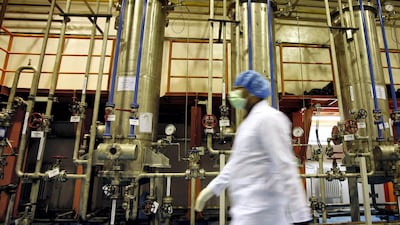
An Iranian technician at the International Atomic Energy Agency inspects the country's Isfahan plant in 2007. Tehran is no longer co-operating with the agency at nuclear sites across the country. EPA -

Workers wait to begin constructing a second reactor at the Bushehr nuclear power plant in 2019. AFP -
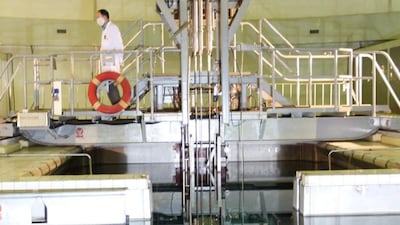
A metal-encased rod with 20 per cent enriched nuclear fuel is inserted into a reactor in Tehran in 2012. AFP -
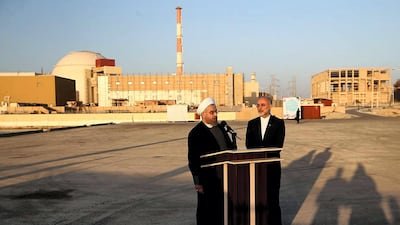
Fomer Iranian President Hassan Rouhani and the country's Atomic Energy Organisation chief Ali Akbar Salehi speak at the Bushehr nuclear site in 2015. AFP -
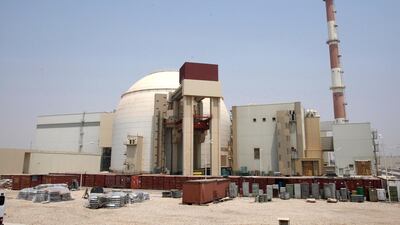
Iran's Bushehr nuclear plant has been restarted. EPA -
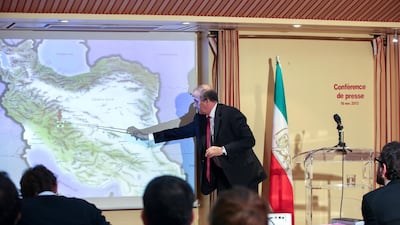
Mehdi Abrichamtchi, chairman of the Peace and Security Committee at the National Council of Resistance of Iran, shows journalists the location of a secret nuclear site in Iran in 2013. AFP -
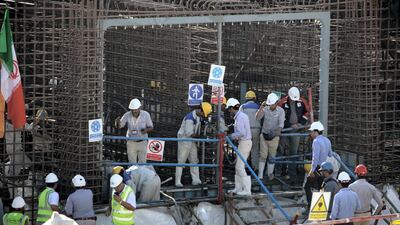
Workers prepare to begin the construction of a second reactor at the Bushehr site. AFP


The deal, a revival of the Joint Comprehensive Plan of Action which allowed UN inspectors to monitor Iran’s nuclear programme in exchange for the West relaxing sanctions, has been hampered by months of stalled negotiations.
Rising tension in the region could cause difficulties for any final agreement, especially since opponents of the deal insist Iran cannot be trusted unless it halts paramilitary activity through proxy forces in countries including Iran, Syria, Iraq and Yemen.
Iran has blamed Israel for the killing of Hassan Sayad Khodai, one of a string of high-profile assassinations in Iran since 2007 which have been blamed on Israeli intelligence and usually involve scientists working on Iran’s nuclear programme as the victims.
Khodai was accused by Israel of plotting attacks against its citizens worldwide, and was shot dead at the wheel of his car by two people on a motorcycle. The tactic echoed previous killings in Iran focused on IRGC-linked figures.
Iran's semi-official ISNA news agency said members of an Israeli intelligence service network had been discovered and arrested by the IRGC immediately after the Tehran shooting.
Mr Bennett's office, which oversees intelligence agency Mossad, has declined to comment on the assassination.
However, in broadcast remarks to his ministers on Sunday, the prime minister accused Iran of repeatedly seeking to damage Israeli interests.
"For decades, the Iranian regime has practiced terrorism against Israel and the region by means of proxies, emissaries, but the head of the octopus, Iran itself, has enjoyed immunity," he said.
"As we have said before, the era of the Iranian regime's immunity is over.
"Those who finance terrorists, those who arm terrorists and those who send terrorists will pay the full price."
Iran has promised to retaliate for Khodai's death and pointed the finger at Israel.
Mr Bennett’s speech also took aim at what he called "state terror" in Iran, used against peaceful protesters. At least five people were shot dead in demonstrations in western Iran last week, while fresh protests ensued after the collapse of a building in Abadan that killed 29 people.
The prime minister said that instead of investing in infrastructure and food security, Iran was instead spending funds on building new weapons including drones. On Saturday, Iranian state media released images of a vast underground base that serves as a hangar for drones. The IRGC said the secret base proved Iran’s research on unmanned aircraft was “unstoppable”.

