Sweeping US sanctions imposed on Tehran have badly affected Iran’s economy and worsened the humanitarian situation in the country, a United Nations special envoy said on Wednesday.
According to Alena Douhan, the UN special rapporteur on unilateral coercive measures, the sanctions have affected Iran’s main export groups, banks, several companies and citizens, and pharmaceutical and food production.
Iranian opposition and human rights activists also blame poor governance and the use of the country's limited resources to support proxies in the region for deteriorating living conditions.
Former president Donald Trump pulled the US out of the nuclear deal between Iran and world powers in 2018, citing Iran's continued missile development and regional meddling. He re-imposed US sanctions lifted under the deal and introduced new, tougher measures against Tehran.
The nuclear deal had granted Tehran sanctions relief in exchange for strict curbs on its nuclear programme. Talks in Vienna to revive that deal — something the Biden administration is trying to do — have stalled.
Ms Douhan, a Belarusian who was appointed in 2020 and reports to the UN Human Rights Council, said the “sanctions have been substantially exacerbating the humanitarian situation in Iran”.
The measures have led to inflation and growing poverty, and depleted state resources for dealing with the basic needs of people with low incomes and other vulnerable groups, Ms Douhan told reporters at a press conference in Tehran.
She said people suffering from “severe diseases, disabled people, Afghan refugees, women-led households and children” were particularly affected by the sanctions.
She urged countries that imposed unilateral sanctions against Iran, especially the US, to remove them.
European negotiators said there is an agreement on the table to revive the nuclear deal and that the US and Iran need to endorse it. Washington and Tehran are reportedly at odds over the removal of the US terrorist designation of Iran's Islamic Revolutionary Guard Corps.
The negotiations neared agreement in March before Russia demanded that its trade with Iran be exempted from western sanctions over its war in Ukraine, which added another obstacle to a final announcement.
Despite the deadlock, officials say the urgency to close the deal has grown as Iran’s controversial nuclear programme has rapidly advanced.
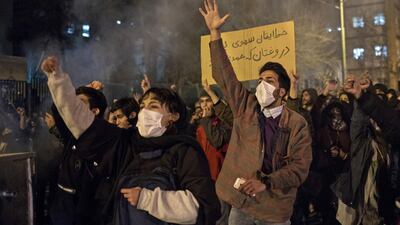
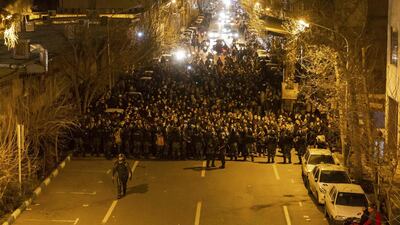
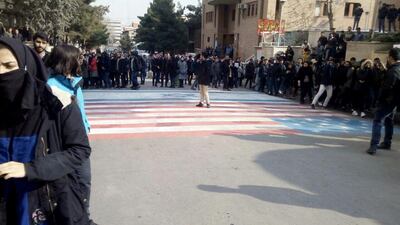
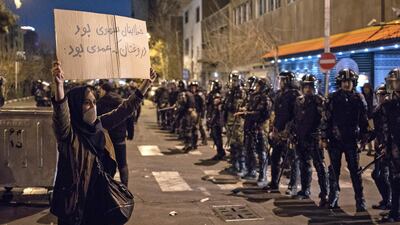
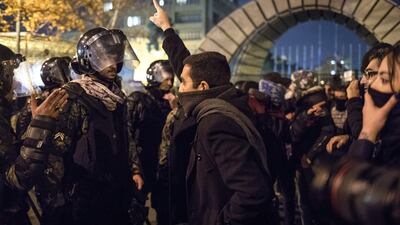
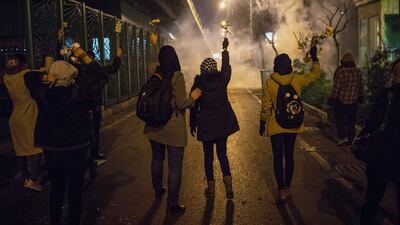
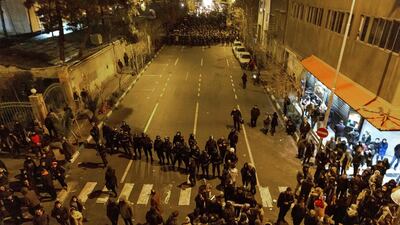
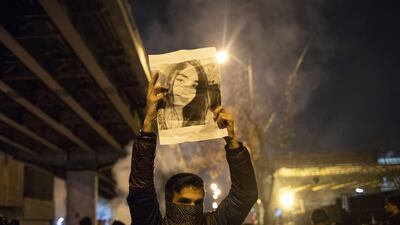
In recent weeks, public anger over worsening economic conditions has mounted in Iran following price hikes of food staples under a new policy to amend the food subsidy system. Scattered protests have erupted in several provinces, with Iranian state media acknowledging nearly two-dozen arrests.
Bus drivers in Tehran seeking a 10 per cent pay increase walked off the job on Monday, paralysing parts of the capital, and teachers have gone on strike in cities and towns across Iran in the past few months to demand more pay and better working conditions.
In July last year, mass protests were held in Khuzestan province against a severe water shortage. amid accusations the government was diverting water to drill for oil.
The government denied this and blamed the water scarcity problem on sanctions that blocked imports of water pumps, as well as climate change.
Oil workers at dozens of companies staged strikes last year in a protest over low pay and poor working conditions.
And in 2019 what began as scattered protests over a surprise increase in fuel prices quickly spread into some of the biggest demonstrations in the 40-year history of the republic.
Independent researchers and opposition activists accuse the Iranian regime of making economic and living conditions worse by allocating money from already cash-strapped state coffers to fund its proxies and allies in the region.
In the absence of official accounting, it is not clear exactly how much financial support Iran has given to the Syrian regime, the Houthis in Yemen and Hezbollah in Lebanon.
But in 2020, the former head of parliament's National Security and Foreign Policy Committee, Heshmatollah Falahatpisheh, told local media that Iran had probably paid between $20 billion and $30bn to Syria since the start of the civil war in 2011.
Syrian state media have also highlighted Iran’s reconstruction of some of Syria’s power plants, gas pipelines and communications networks, which could cost billions of dollars.
The US has accused Iran of giving the Houthi rebels in Yemen significant military support, mirroring a financial and military strategy that has been the mainstay of its Lebanese ally Hezbollah. Iran has rejected the accusations.

Zodi%20%26%20Tehu%3A%20Princes%20Of%20The%20Desert
%3Cp%3E%3Cstrong%3EDirector%3A%20%3C%2Fstrong%3EEric%20Barbier%26nbsp%3B%3C%2Fp%3E%0A%3Cp%3E%3Cstrong%3EStarring%3A%20%3C%2Fstrong%3EYoussef%20Hajdi%2C%20Nadia%20Benzakour%2C%20Yasser%20Drief%3C%2Fp%3E%0A%3Cp%3E%3Cstrong%3ERating%3A%3C%2Fstrong%3E%204%2F5%3C%2Fp%3E%0A
Your rights as an employee
The government has taken an increasingly tough line against companies that fail to pay employees on time. Three years ago, the Cabinet passed a decree allowing the government to halt the granting of work permits to companies with wage backlogs.
The new measures passed by the Cabinet in 2016 were an update to the Wage Protection System, which is in place to track whether a company pays its employees on time or not.
If wages are 10 days late, the new measures kick in and the company is alerted it is in breach of labour rules. If wages remain unpaid for a total of 16 days, the authorities can cancel work permits, effectively shutting off operations. Fines of up to Dh5,000 per unpaid employee follow after 60 days.
Despite those measures, late payments remain an issue, particularly in the construction sector. Smaller contractors, such as electrical, plumbing and fit-out businesses, often blame the bigger companies that hire them for wages being late.
The authorities have urged employees to report their companies at the labour ministry or Tawafuq service centres — there are 15 in Abu Dhabi.
Specs
Engine: Electric motor generating 54.2kWh (Cooper SE and Aceman SE), 64.6kW (Countryman All4 SE)
Power: 218hp (Cooper and Aceman), 313hp (Countryman)
Torque: 330Nm (Cooper and Aceman), 494Nm (Countryman)
On sale: Now
Price: From Dh158,000 (Cooper), Dh168,000 (Aceman), Dh190,000 (Countryman)
Why are asylum seekers being housed in hotels?
The number of asylum applications in the UK has reached a new record high, driven by those illegally entering the country in small boats crossing the English Channel.
A total of 111,084 people applied for asylum in the UK in the year to June 2025, the highest number for any 12-month period since current records began in 2001.
Asylum seekers and their families can be housed in temporary accommodation while their claim is assessed.
The Home Office provides the accommodation, meaning asylum seekers cannot choose where they live.
When there is not enough housing, the Home Office can move people to hotels or large sites like former military bases.
Infiniti QX80 specs
Engine: twin-turbocharged 3.5-liter V6
Power: 450hp
Torque: 700Nm
Price: From Dh450,000, Autograph model from Dh510,000
Available: Now
Mercer, the investment consulting arm of US services company Marsh & McLennan, expects its wealth division to at least double its assets under management (AUM) in the Middle East as wealth in the region continues to grow despite economic headwinds, a company official said.
Mercer Wealth, which globally has $160 billion in AUM, plans to boost its AUM in the region to $2-$3bn in the next 2-3 years from the present $1bn, said Yasir AbuShaban, a Dubai-based principal with Mercer Wealth.
“Within the next two to three years, we are looking at reaching $2 to $3 billion as a conservative estimate and we do see an opportunity to do so,” said Mr AbuShaban.
Mercer does not directly make investments, but allocates clients’ money they have discretion to, to professional asset managers. They also provide advice to clients.
“We have buying power. We can negotiate on their (client’s) behalf with asset managers to provide them lower fees than they otherwise would have to get on their own,” he added.
Mercer Wealth’s clients include sovereign wealth funds, family offices, and insurance companies among others.
From its office in Dubai, Mercer also looks after Africa, India and Turkey, where they also see opportunity for growth.
Wealth creation in Middle East and Africa (MEA) grew 8.5 per cent to $8.1 trillion last year from $7.5tn in 2015, higher than last year’s global average of 6 per cent and the second-highest growth in a region after Asia-Pacific which grew 9.9 per cent, according to consultancy Boston Consulting Group (BCG). In the region, where wealth grew just 1.9 per cent in 2015 compared with 2014, a pickup in oil prices has helped in wealth generation.
BCG is forecasting MEA wealth will rise to $12tn by 2021, growing at an annual average of 8 per cent.
Drivers of wealth generation in the region will be split evenly between new wealth creation and growth of performance of existing assets, according to BCG.
Another general trend in the region is clients’ looking for a comprehensive approach to investing, according to Mr AbuShaban.
“Institutional investors or some of the families are seeing a slowdown in the available capital they have to invest and in that sense they are looking at optimizing the way they manage their portfolios and making sure they are not investing haphazardly and different parts of their investment are working together,” said Mr AbuShaban.
Some clients also have a higher appetite for risk, given the low interest-rate environment that does not provide enough yield for some institutional investors. These clients are keen to invest in illiquid assets, such as private equity and infrastructure.
“What we have seen is a desire for higher returns in what has been a low-return environment specifically in various fixed income or bonds,” he said.
“In this environment, we have seen a de facto increase in the risk that clients are taking in things like illiquid investments, private equity investments, infrastructure and private debt, those kind of investments were higher illiquidity results in incrementally higher returns.”
The Abu Dhabi Investment Authority, one of the largest sovereign wealth funds, said in its 2016 report that has gradually increased its exposure in direct private equity and private credit transactions, mainly in Asian markets and especially in China and India. The authority’s private equity department focused on structured equities owing to “their defensive characteristics.”
Company%20profile
%3Cp%3E%3Cstrong%3ECompany%20name%3A%3C%2Fstrong%3E%20Fasset%0D%3Cbr%3E%3Cstrong%3EStarted%3A%20%3C%2Fstrong%3E2019%0D%3Cbr%3E%3Cstrong%3EFounders%3A%3C%2Fstrong%3E%20Mohammad%20Raafi%20Hossain%2C%20Daniel%20Ahmed%0D%3Cbr%3E%3Cstrong%3EBased%3A%3C%2Fstrong%3E%20Dubai%0D%3Cbr%3E%3Cstrong%3ESector%3A%20%3C%2Fstrong%3EFinTech%0D%3Cbr%3E%3Cstrong%3EInitial%20investment%3A%3C%2Fstrong%3E%20%242.45%20million%0D%3Cbr%3E%3Cstrong%3ECurrent%20number%20of%20staff%3A%3C%2Fstrong%3E%2086%0D%3Cbr%3E%3Cstrong%3EInvestment%20stage%3A%3C%2Fstrong%3E%20Pre-series%20B%0D%3Cbr%3E%3Cstrong%3EInvestors%3A%3C%2Fstrong%3E%20Investcorp%2C%20Liberty%20City%20Ventures%2C%20Fatima%20Gobi%20Ventures%2C%20Primal%20Capital%2C%20Wealthwell%20Ventures%2C%20FHS%20Capital%2C%20VN2%20Capital%2C%20local%20family%20offices%3C%2Fp%3E%0A
AL%20BOOM
%3Cp%20style%3D%22text-align%3Ajustify%3B%22%3E%26nbsp%3B%26nbsp%3B%26nbsp%3BDirector%3AAssad%20Al%20Waslati%26nbsp%3B%3C%2Fp%3E%0A%3Cp%20style%3D%22text-align%3Ajustify%3B%22%3E%0DStarring%3A%20Omar%20Al%20Mulla%2C%20Badr%20Hakami%20and%20Rehab%20Al%20Attar%0D%3Cbr%3E%0D%3Cbr%3EStreaming%20on%3A%20ADtv%0D%3Cbr%3E%0D%3Cbr%3ERating%3A%203.5%2F5%0D%3Cbr%3E%0D%3Cbr%3E%3C%2Fp%3E%0A
JOKE'S%20ON%20YOU
%3Cp%3EGoogle%20wasn't%20new%20to%20busting%20out%20April%20Fool's%20jokes%3A%20before%20the%20Gmail%20%22prank%22%2C%20it%20tricked%20users%20with%20%3Ca%20href%3D%22https%3A%2F%2Farchive.google%2Fmentalplex%2F%22%20target%3D%22_blank%22%3Emind-reading%20MentalPlex%20responses%3C%2Fa%3E%20and%20said%3Ca%20href%3D%22https%3A%2F%2Farchive.google%2Fpigeonrank%2F%22%20target%3D%22_blank%22%3E%20well-fed%20pigeons%20were%20running%20its%20search%20engine%20operations%3C%2Fa%3E%20.%3C%2Fp%3E%0A%3Cp%3EIn%20subsequent%20years%2C%20they%20announced%20home%20internet%20services%20through%20your%20toilet%20with%20its%20%22%3Ca%20href%3D%22https%3A%2F%2Farchive.google%2Ftisp%2Finstall.html%22%20target%3D%22_blank%22%3Epatented%20GFlush%20system%3C%2Fa%3E%22%2C%20made%20us%20believe%20the%20Moon's%20surface%20was%20made%20of%20cheese%20and%20unveiled%20a%20dating%20service%20in%20which%20they%20called%20founders%20Sergey%20Brin%20and%20Larry%20Page%20%22%3Ca%20href%3D%22https%3A%2F%2Farchive.google%2Fromance%2Fpress.html%22%20target%3D%22_blank%22%3EStanford%20PhD%20wannabes%3C%2Fa%3E%20%22.%3C%2Fp%3E%0A%3Cp%3EBut%20Gmail%20was%20all%20too%20real%2C%20purportedly%20inspired%20by%20one%20%E2%80%93%20a%20single%20%E2%80%93%20Google%20user%20complaining%20about%20the%20%22poor%20quality%20of%20existing%20email%20services%22%20and%20born%20%22%3Ca%20href%3D%22https%3A%2F%2Fgooglepress.blogspot.com%2F2004%2F04%2Fgoogle-gets-message-launches-gmail.html%22%20target%3D%22_blank%22%3Emillions%20of%20M%26amp%3BMs%20later%3C%2Fa%3E%22.%3C%2Fp%3E%0A
Jurassic%20Park
%3Cp%3E%3Cstrong%3EDirector%3A%20%3C%2Fstrong%3ESteven%20Spielberg%3Cbr%3E%3Cstrong%3EStars%3A%3C%2Fstrong%3E%20Sam%20Neill%2C%20Jeff%20Goldblum%20and%20Richard%20Attenborough%3Cbr%3E%3Cstrong%3ERating%3A%3C%2Fstrong%3E%205%2F5%3C%2Fp%3E%0A
The bio:
Favourite film:
Declan: It was The Commitments but now it’s Bohemian Rhapsody.
Heidi: The Long Kiss Goodnight.
Favourite holiday destination:
Declan: Las Vegas but I also love getting home to Ireland and seeing everyone back home.
Heidi: Australia but my dream destination would be to go to Cuba.
Favourite pastime:
Declan: I love brunching and socializing. Just basically having the craic.
Heidi: Paddleboarding and swimming.
Personal motto:
Declan: Take chances.
Heidi: Live, love, laugh and have no regrets.