


After months of build-up and an estimated hundreds of thousands of government dollars spent for what was hailed as the Arab world’s first electronic referendum, Tunisia’s e-survey to inform a new constitution has produced more questions than answers.
Two days before the close of the National Consultation, a survey designed to hear out the political, economic and social hopes, fears and frustrations of the Tunisian people, just over 447,000 of Tunisia’s 12 million citizens had responded.
The consultation was meant to be a referendum not only on a new constitution but on the man calling for one – a grand plebiscite to give President Kais Saied a mandate to rewrite the 2014 constitution. The landmark document was composed over three years after the country's 2011 revolution, through excruciating rounds of negotiations in a constituent assembly and nationwide dialogue.
“The future of Tunisia is in the hands of Tunisians and it is their intensive participation that will pave the way towards a new stage in the history of Tunisia based on the real popular will and not on fake legitimacy,” Mr Saied said in January at the consultation’s launch.
Instead, the electronic survey, riddled with bugs and lacking transparency and information security, was met with a collective shrug by the Tunisian people.
“Consultation? What consultation?” Lina, 43, who was out for a coffee in downtown Tunis on a recent afternoon said when asked if she had participated. Despite the billboards, radio ads and a constant barrage of text messages sent to individual phone numbers, she said she hadn’t heard much about it.
“Why would I answer questions about a country I’m planning on leaving?” said 18-year-old Anass, who said he wanted to cross the Mediterranean Sea to look for work in Italy or France, as some 28,000 of his countrymen have done in the past year.
Since its inception in January, critics have found fault with the survey – the Arabic-language slogan of which reads “Your Opinion, Our Decision” – on several fronts.
“This has never been an official process mentioned in official decrees,” putting its legitimacy in question, said Amine Ghali, the director of Al Kawakibi Democracy Transition Centre. “The process is entirely non-transparent. We don’t know how it is being run, we don’t know how the results will be reported or used, and we have questions about the protection of personal data.”
After system-wide bugs riddled the survey during its soft launch, Wassim Msalmi, a digital security analyst in Tunis, said its information security – or lack thereof – raised considerable red flags.
When analysing dozens of Tunisian government websites, his firm found regular data breaches and a lack of encryption, a worrying sign for the e-survey. “People are sharing personal information alongside their views and that information is not protected,” he said.
In order to take part, Tunisians must sign in with their national identification number, and confirm their registration through a phone number assigned to that ID. Many people in the country’s poorer places do not have personal mobile phones, or regular access to the internet, making it harder to have their say. The trend was confirmed by numbers that show less than 1 per cent participation in rural regions such as Tatouine.
Less than one-quarter of respondents, according to the survey’s own published statistics, are women; fewer than 20 per cent are under the age of 30, the country’s largest demographic and the one whose interests Mr Saied has claimed to represent.
Many critics found the questions themselves wanting for context or explanation. “Do you prefer a presidential system, a parliamentary system or a mixed system?” one question asks, without definitions of the two former options or details of what the latter might include.
Despite the paltry turnout, in January Mr Saied confidently declared that the people wanted a presidential system, in line with his own political views.
Mr Saied has staked the legitimacy of his consolidation of power on what he claims is the people’s will. His campaign slogan, “The People Want”, echoed through his rhetoric in the days after he dismissed parliament and sacked his previous government last July. Early polling showed considerable support for his moves.
But as the months have worn on with little political or economic progress to show for his one-man rule, Mr Saied’s popularity has fallen. Shortages of staple foods such as flour and semolina, compounded by the war in Ukraine, have put hunger, not politics, at the forefront of many people’s minds.
Food shortages in Tunisia - in pictures
-
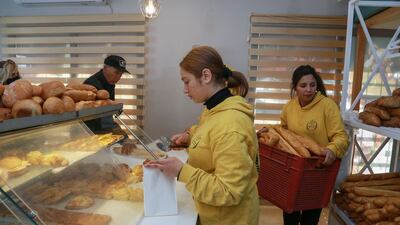
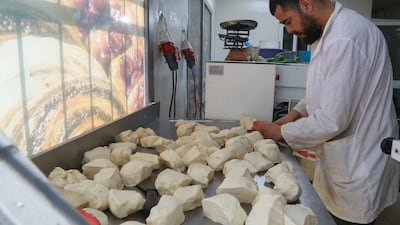
Workers at a bakery in the Tunisian capital, Tunis. The war between Russia and Ukraine, both wheat suppliers for Maghreb countries, has sent prices of flour and semolina soaring. All Photos: AFP -
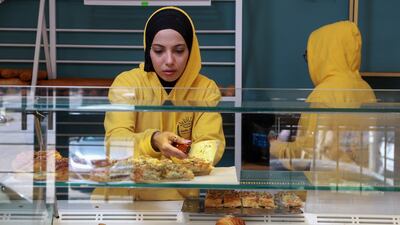
A staff member arranges baked goods at the bakery, which is not subsidised by the Tunisian state. -
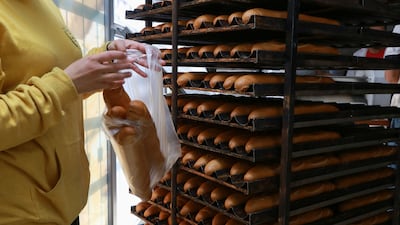
Flour prices have also risen as people stock up for the Muslim fasting month of Ramadan in April. -
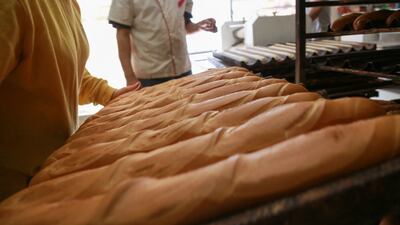
Tunisia imports almost half of the soft wheat used to make bread from Ukraine. -
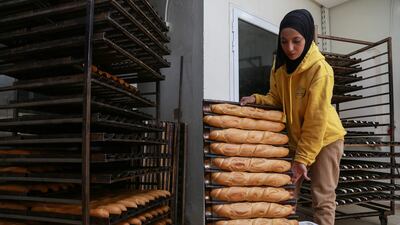
Authorities say the North African country has enough supplies to last three months. -
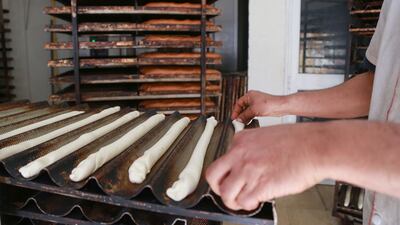
Food prices were on the rise in North Africa even before Russia invaded Ukraine more than two weeks ago. -
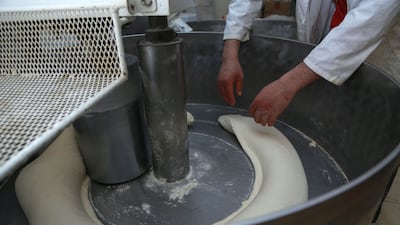
To keep prices affordable and avoid a repeat of bread riots that erupted in the 1980s, Tunisia subsidises staples like sugar, semolina and pasta. -
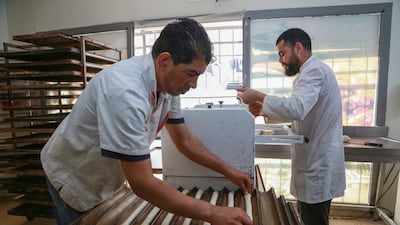
For the past decade, Tunisia has set the price of a baguette loaf of bread at six US cents. -
Some in the region fear the Russian invasion could lead to hunger and unrest, with memories of how rising food prices played a role in several Arab uprisings in the last decade. -
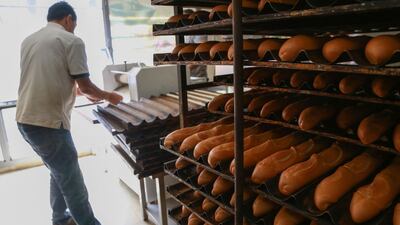
The price of sugar, which is also important in the baking industry, has also surged in Tunisia. -
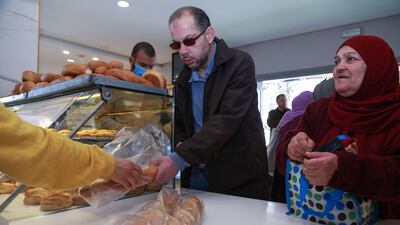
A staff member serves customers at the bakery. Libya, Morocco and Algeria are also facing wheat price increases.


After Mr Saied offered free internet for a weekend before the close of the survey to those who took part, many scoffed on social media that if he truly wanted a good turnout, he should offer a free bag of semolina to each respondent.
Mr Ghali, the democracy advocate, fears the president may claim Tunisians have spoken and rewrite the constitution to his own liking.
“This shouldn’t be the sole means to consult with the people,” he said, “and it shouldn’t be a substitute for a negotiation or a dialogue between political forces – the unions, civil society and political parties”.
He says the next months will bring even bigger questions than those asked by the survey, as Mr Saied undertakes to draft a new constitution, which he will put to a referendum on July 25.
"Who will draft the new constitution with him, and how will they be selected? Will they use the results of this survey to form the document? It's all very unclear."

