
An armed convoy affiliated with Libya's new interim prime minister has turned back from its advance towards Tripoli after the UN warned of clashes as armed groups gathered near the capital.
Fathi Bashagha, who was sworn in by Parliament a week ago, is seeking a way to take office after the incumbent refused to cede power.
An attempt to install Mr Bashagha in the capital could ignite fighting between armed factions that support him, and others that back Abdul Hamid Dbeibah, who says he will leave office only after an election.
Mr Bashagha had said on Tuesday that he would arrive in Tripoli within two days, promising to take over the government there peacefully.
Military officials said the convoy set out from Misurata but was unable to find a route into Tripoli without meeting opposition from factions that back Mr Dbeibah, Reuters reported.
Mr Bashagha's office said the convoy was “a security force” not seeking a war, and that it returned to its previous base on Thursday in response to demands from international and regional friends.
A witness outside Tripoli, who was on the main coastal motorway heading towards Misurata, revealed that there were military vehicles and fighters stationed in places along the road but said traffic was moving normally and there was no sign of clashes.
-
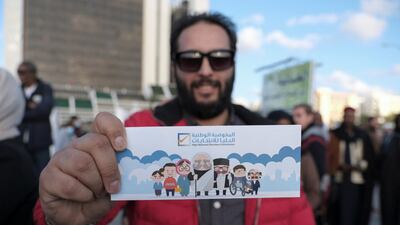
A man shows his electoral card during a protest against the postponement of the Libyan presidential election initially planned for December 24, 2021, in Benghazi, Libya. Reuters -
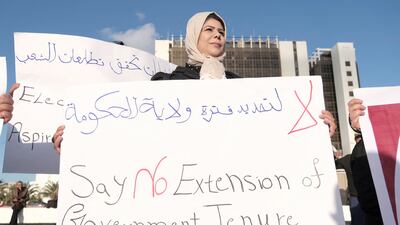
A woman holds a banner during a protest against the delay to the Libyan presidential election, in Benghazi, Libya, on December 24, 2021. Reuters -
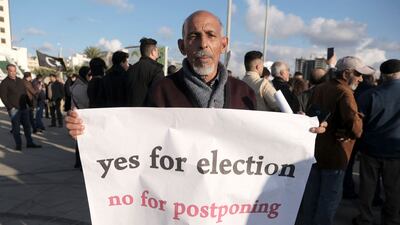
A man protests against the postponement of the Libyan presidential election, in Benghazi, Libya. Reuters -
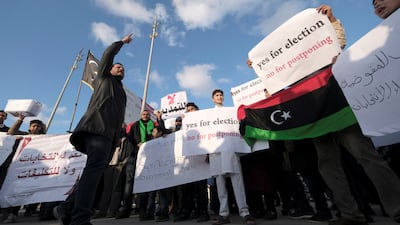
A demonstration against the postponement of the Libyan presidential election, in Benghazi, Libya. Reuters -
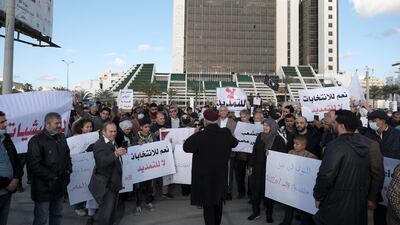
A protest in Benghazi, Libya, against the delaying of the presidential election. Reuters -
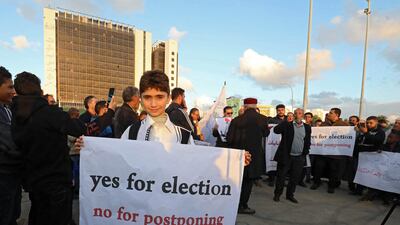
Libyans in Benghazi demonstrate against the postponement of elections. AFP -
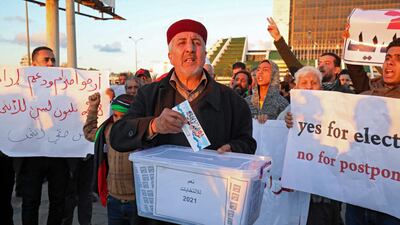
Libyans demonstrate against the postponement of elections, in the city of Benghazi. AFP


The US ambassador to Libya, Richard Norland, tweeted that he had spoken to Mr Bashagha and “commended him on his willingness to de-escalate tensions today and seek to resolve the current political disagreement through negotiations, not force".
The UN Libya mission had voiced concern at what it called “reports about the mobilisation of forces and movement of large convoys of armed groups that have increased tensions in and around Tripoli".
Libya has enjoyed a rare period of comparative calm since the collapse of a 14-month assault on Tripoli during the summer of 2020 by eastern forces in the civil war, leading to a peace process backed by the UN.
That process included the creation of Mr Dbeibah's interim government with a mandate to unify state institutions that had been divided for years between rival governments in east and west, and to oversee the run-up to national elections.
-
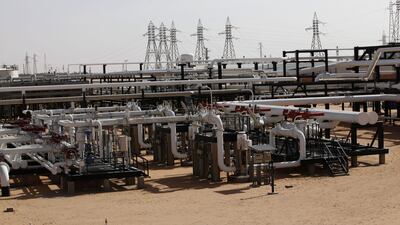
Libya's National Oil Corporation said armed militias had stormed Al Sharara oilfield on Saturday. Reuters -
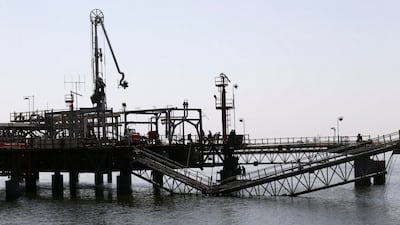
Libya’s oil production returned to about 1 million barrels a day earlier this month. Reuters -
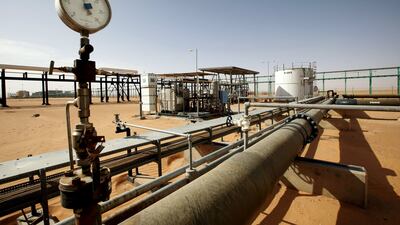
Al Sharara oilfield pumps out about 350,000 barrels per day. Reuters -
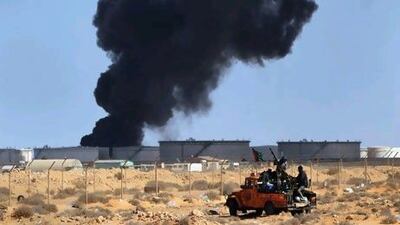
Smoke from a damaged oil facility darkens the sky in Ras Lanuf, Libya. The country's oil facilities were damaged during the civil war. Getty Images -
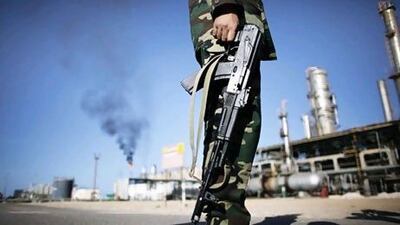
After Libya's civil war, experts were pessimistic about the recovery of its oil sector. AFP -

A Libyan oil worker at a refinery inside the Brega oil complex in Libya. -
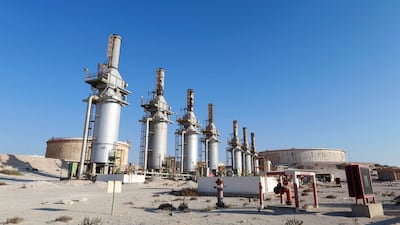
A pipeline at the Zueitina oil terminal, west of Benghazi. Reuters


However, the election process collapsed in December shortly before the scheduled vote and rival factions have argued over the right path forward.
Libya's parliament, which mostly took the eastern side during the civil war, declared that Mr Dbeibah's term of office had expired and announced a new transitional period under Mr Bashagha's new government and no elections until next year.
Mr Dbeibah has announced plans to hold an election in the summer.

