


Live updates: follow the latest news on Russia-Ukraine
Turkish President Recep Tayyip Erdogan on Wednesday marked a “turning point” with Israel, as Ankara hosted its president for the first time in 15 years.
“Our common goal is to revive political dialogue between our countries based on respect for mutual sensitivities and interests. That is critical for regional peace,” Mr Erdogan said.
Following talks in Ankara, the Turkish capital, Israeli President Isaac Herzog said the future relationship will be “judged by deeds reflecting a spirit of mutual respect”.
While the Israeli president’s trip was months in the making, the Russian invasion of Ukraine was high on the agenda as both countries are involved in mediation efforts.
“We cannot remain indifferent to such human suffering, and I welcome any endeavour that will lead to the end of the bloodshed,” Mr Herzog said, thanking the Turkish president for his engagement on Ukraine.
Turkey cut diplomatic ties after Israeli forces stormed a ship in 2010 which was leading a flotilla to Gaza, killing 10 Turkish civilians.
Those on board the vessel had tried to break an Israeli blockade imposed on the Palestinian enclave, which remains in force.
Relations were restored about six years later, only for Ankara to recall its diplomats in 2018 after Israeli soldiers killed dozens of Gazans in border protests.
In November, Turkey released an Israeli couple held for days on spying charges after they photographed Mr Erdogan’s Istanbul residence.
Although Mr Herzog’s role is largely ceremonial, he has been an advocate for renewed relations since taking office in July.
-
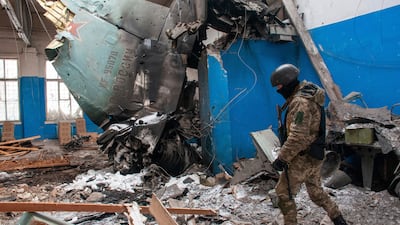
A Ukrainian serviceman walks past the vertical tail fin of a Russian Su-34 bomber lying in a damaged building in Kharkiv, Ukraine. AP Photo -
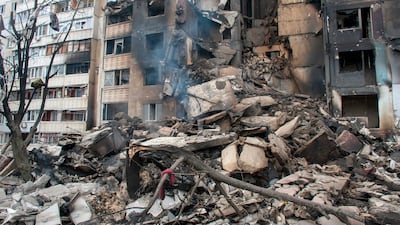
An apartment building damaged after shelling in Kharkiv, Ukraine. AP Photo -
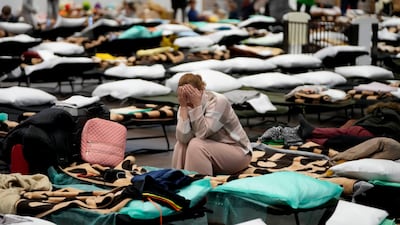
A woman puts her head in her hands as she sits on a cot in a shelter, set up for displaced persons fleeing Ukraine, inside a school gymnasium in Przemysl, Poland. AP Photo -
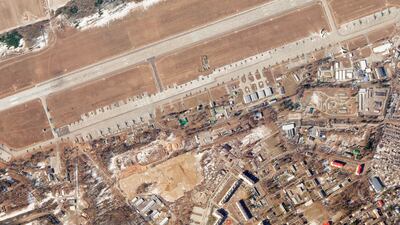
Belarussian and suspected Russian helicopters on the flight line at Machulishchy Air Base outside Minsk, Belarus. AP Photo -
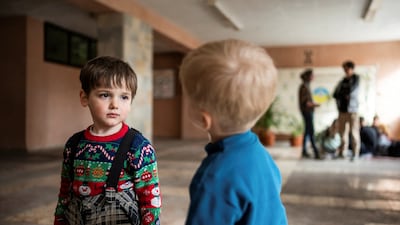
Children look on as people fleeing Russia's invasion of Ukraine shelter in a school, in Drohobych, Ukraine. Reuters -
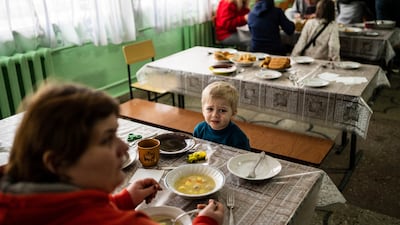
Families eat in the shelter. Reuters -
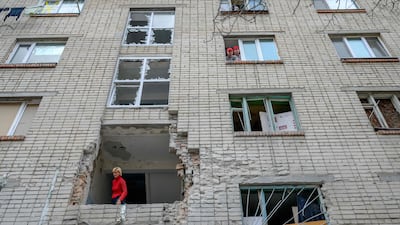
A woman looks out from a building damaged by Russian shelling in Mykolaiv, 100 kilometres away from Odesa, western Ukraine. AFP -
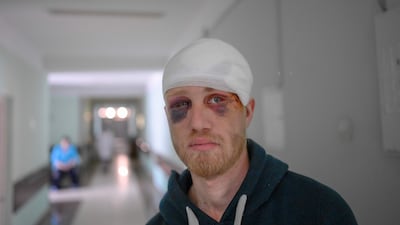
A wounded Ukrainian man waits in the corridor of the central hospital of Mykolaiv. AFP -
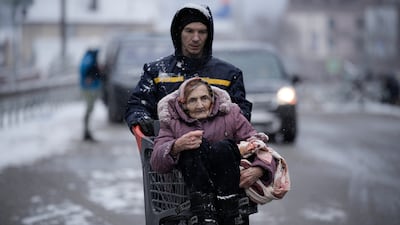
An elderly woman is carried in a shopping cart after being rescued from Irpin, on the outskirts of Kyiv, Ukraine. AP -
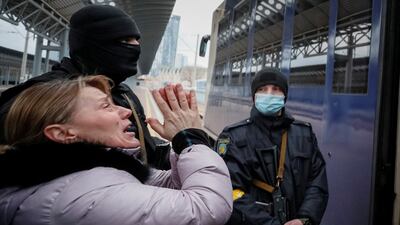
A woman reacts as a train carrying children from Kyiv's Central Children's Hospital leaves the Ukrainian capital on its way to Lviv. Reuters -
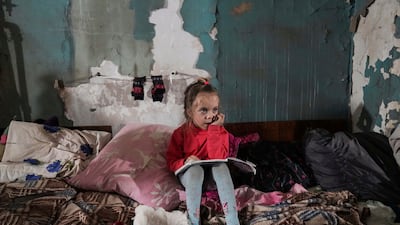
A girl sits in an improvised bomb shelter in Mariupol, Ukraine. AP -
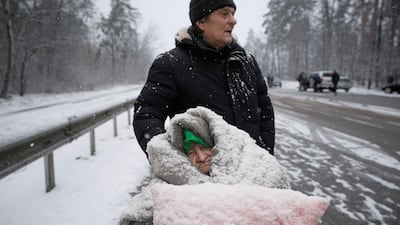
An elderly woman is coated in snow as she sits in a wheelchair after being rescued from Irpin. AP -
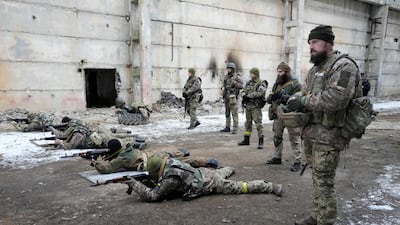
Belarusian volunteers take part in military exercises at the Belarusian Company base in Kyiv. AP -
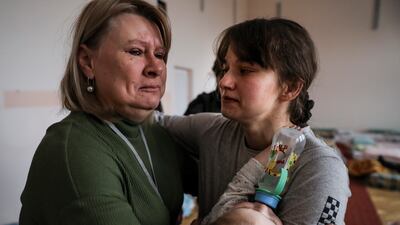
Lessa, left, director of a nursery school turned into a refugee shelter, cries as she hugs Olega, who arrived from Kyiv with her baby, near Lviv. EPA -
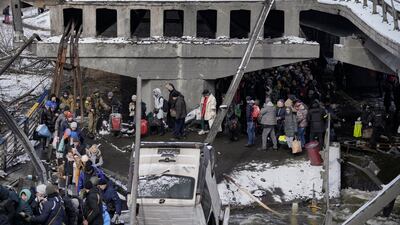
Ukrainians pass a damaged bridge as they flee from Irpin. AP -
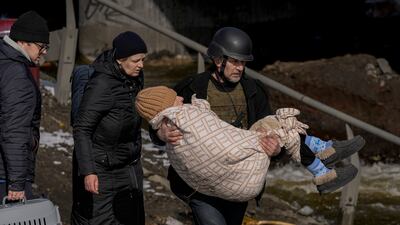
A man carries an elderly woman as people continue to leave Irpin. AP -
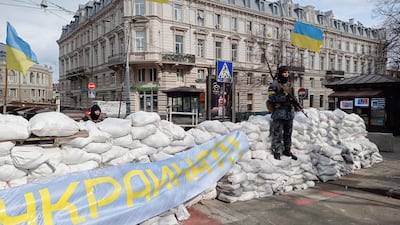
A soldier stands on a barricade made of sandbags in central Odesa, Ukraine. Reuters -
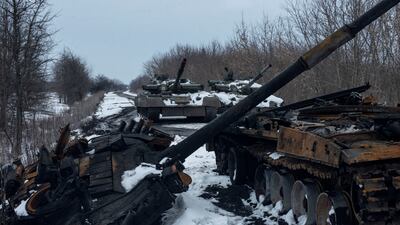
A charred Russian tank and captured tanks in the Sumy region. Reuters -
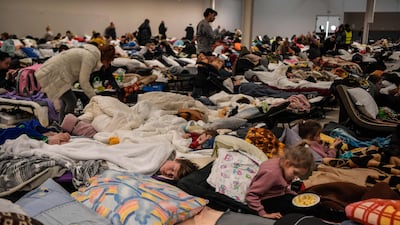
People rest at a temporary shelter for Ukrainian refugees in Przemysl, Poland. AFP -
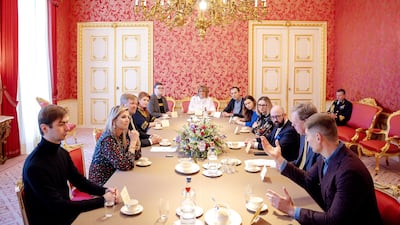
Ukraine's ambassador to the Netherlands, Maksym Kononenko, third right, and his wife Tetiana Doroshenko, fourth left, attend a meeting of members of the Ukrainian community with Dutch King Willem-Alexander, third left, and Queen Maxima, second left, to discuss the situation in Ukraine, in The Hague. EPA -
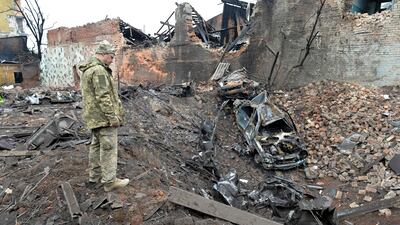
A Ukrainian soldier looks at the destruction after shelling in Ukraine's second-largest city of Kharkiv. AFP -
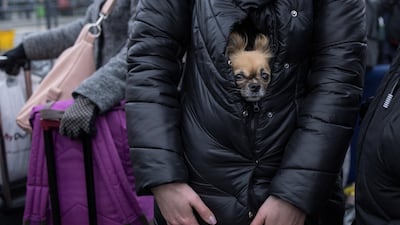
A refugee holds her dog as they wait for trains to Poland in Lviv, Ukraine. Reuters -
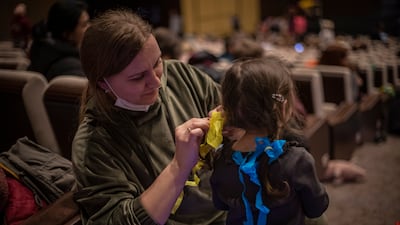
A woman ties ribbons in Ukrainian national flag colours in a girl's hair as people wait at a refugee assistance centre in Prague, Czech Republic. EPA -
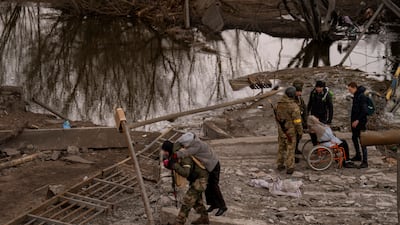
A Ukrainian soldier carries an elderly woman crossing the Irpin river on the outskirts of Kyiv. AP -
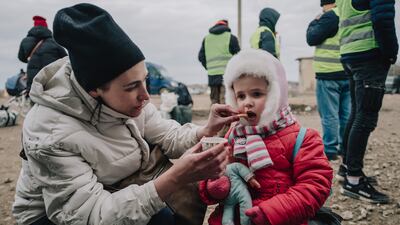
Lena, who had never left Ukraine before fleeing into Moldova, feeds Dasha, 3, soon after crossing the border. Erin Clare Brown for The National -
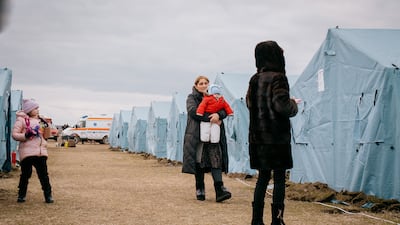
Refugees without immediate plans to move further inland can stay the night in tents set up on Moldova's side of the border. Erin Clare Brown for The National -
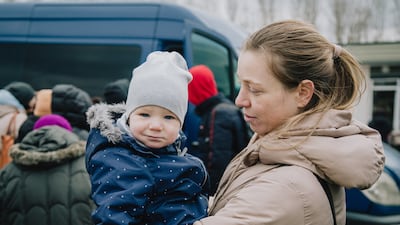
Tatiana and her son wait for a van that will carry them from the Moldovan border to Chisinau. Erin Clare Brown for The National -
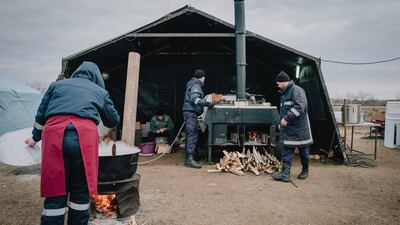
Each night, the Palanca refugee camp in Moldova feeds up to 300 people who arrive with no onward plans. Erin Clare Brown for The National -
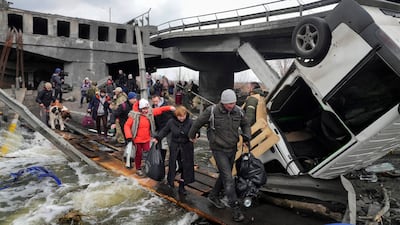
People pass a damaged bridge while fleeing the town of Irpin, close to the Ukrainian capital of Kyiv. AP -
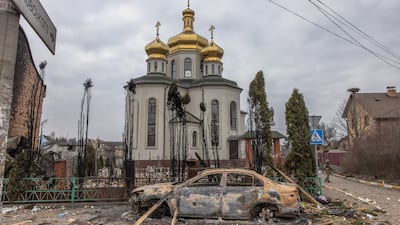
A Ukrainian soldier stands guard next to a church in Irpin. EPA -
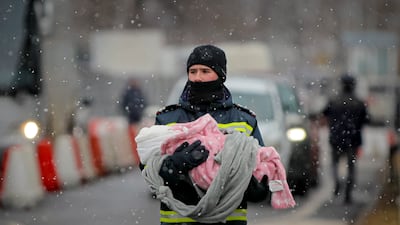
A firefighter holds the baby of a Ukrainian refugee at the border in Romania. AP -
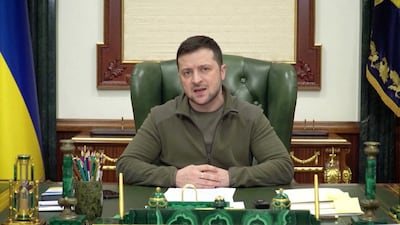
Ukrainian President Volodymyr Zelenskyy speaks in Kyiv. Reuters -
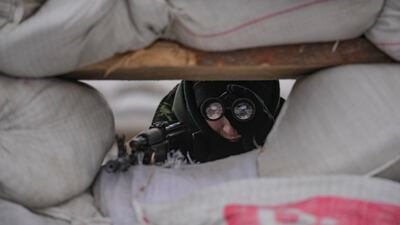
A Ukrainian soldier at a checkpoint in Kyiv. AP -
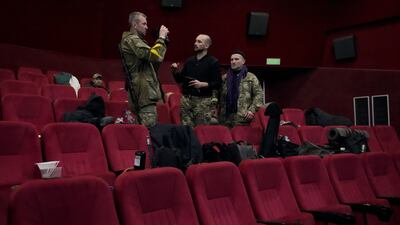
Ukrainian activist Ihor Mazur, left, a veteran of the war in the country's east, looks at a night-vision device in Kyiv. AP -
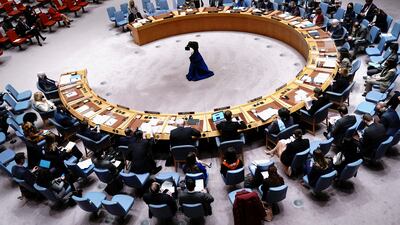
Ambassadors attend a UN Security Council meeting on threats to international security after Russia's invasion of Ukraine, in New York. Reuters -
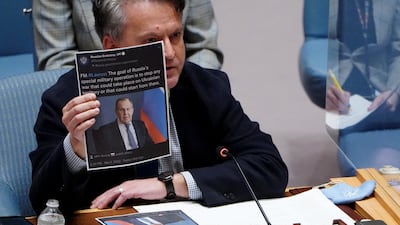
Ukraine's UN ambassador Sergey Kyslytsya holds a paper with an image of Russia's Foreign Minister Sergey Lavrov as he addresses the Security Council in New York. Reuters -
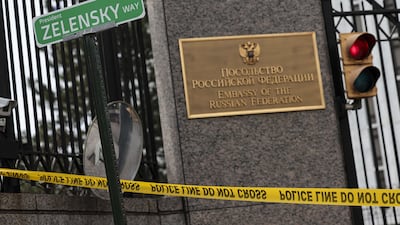
A road sign put up in support of Mr Zelenskyy outside Russia's embassy in Washington. AFP -
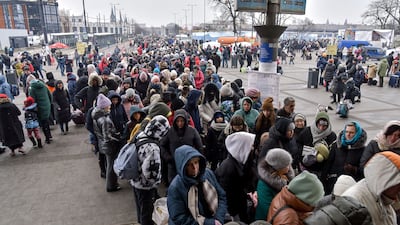
Ukrainian refugees at the train station in Lviv, western Ukraine. EPA -
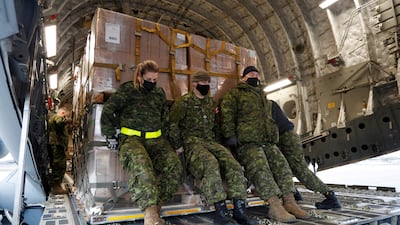
Lethal and non-lethal Ukrainian aid is loaded on to a plane bound for Poland by Canadian soldiers in Trenton, Ontario. Reuters -
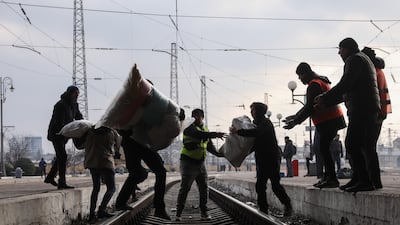
Volunteers carry medical aid and necessities at a train station in Lviv. EPA -
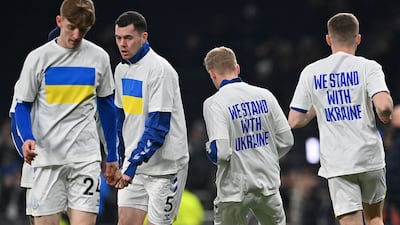
Everton players wear T-shirts in support of Ukraine as they warm up for an English Premier League football match against Tottenham Hotspur. AP -
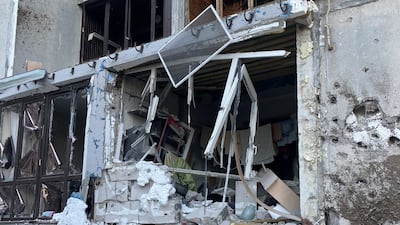
A residential building damaged by Russian shelling in Chernihiv, Ukraine. Reuters -
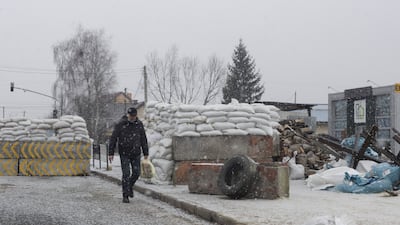
A man walks past a checkpoint in heavy snow in Lviv. Getty -
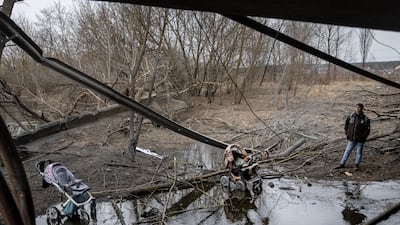
A man fleeing fighting in Irpin waits to cross a river after Russian forces entered the city. Getty -
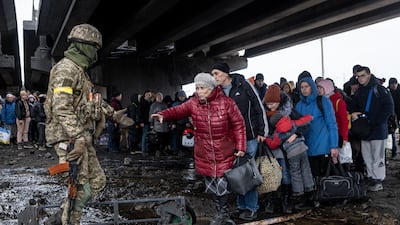
Soldiers assist Irpin residents underneath a damaged bridge as they flee. Getty -
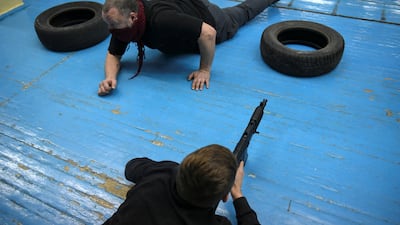
Ukrainian civilians who volunteered to join the Territorial Defence Forces take part in a training exercise in Odesa after Russia's invasion. Reuters -
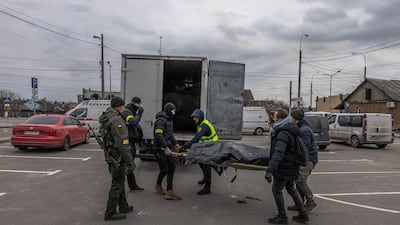
Men carry a body to a lorry as people flee from the frontline town of Irpin. EPA -
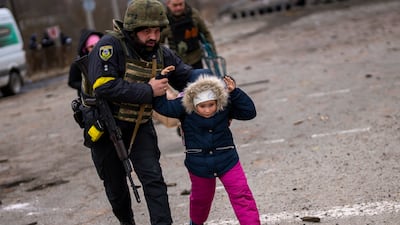
A Ukrainian police officer runs with a child as the sound of shelling echoes nearby in Irpin. AP -
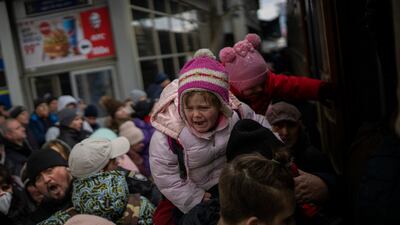
Parents and children struggle to board a train in Lviv. AP


“We must agree in advance that we will not agree on everything,” he said on Wednesday. “But we shall aspire to solve our disagreements with mutual respect and goodwill.”
Before he arrived in Ankara, Mr Herzog travelled to Cyprus and Greece, which have long-standing strained relations with Turkey.
Israel has allied itself with the two EU nations in recent years, signing a pipeline deal in 2020 to ship gas from the eastern Mediterranean to Europe.
Both Turkey and the US have raised concern about the project, although it may gain wider support as countries seek to reduce their reliance on Russian exports.
Mr Erdogan on Wednesday expressed interest in co-operating with Israel on energy.
Turkey is scheduled to host the foreign ministers of Russia and Ukraine on Thursday, two weeks after Moscow launched its offensive on its eastern European neighbour.
Israel has also pursued a mediating role in the war, with Prime Minister Naftali Bennett travelling to Moscow on Saturday for talks with Russian President Vladimir Putin.
He has also held regular calls with Ukraine’s President Volodymyr Zelenskyy.
Agencies contributed to this report

