Syrian army units in the town of Al Eis in south Aleppo province in 2020. AFP

At least 13 Syrian soldiers killed in former ISIS stronghold


  • English
  • Arabic

At least 13 soldiers were killed in an ambush on a desert road near Palmyra in eastern Syria on Sunday, government media service Sana reported.

The news agency said 18 soldiers were also wounded in the attack that involved a variety of weapons.

British-based Syrian Observatory for Human Rights blamed ISIS for the attack and reported the death toll as 15.

Despite the fall of the self-proclaimed ISIS "caliphate" in 2019, the group continues to launch deadly attacks from hideouts in the Syrian desert, which extends from the outskirts of the capital Damascus to the Iraqi border.

The Observatory, which relies on a network of sources across the country, said the death toll could rise as most of the wounded soldiers were in a serious condition.

ISIS did not immediately claim responsibility for the attack.

Syrian soldiers are occasionally moved across country by bus, a high-risk mode of transport given the large concentration of men within a single unarmoured vehicle.

In January, ISIS militants fired rockets and an anti-aircraft gun at a bus travelling in the same area, killing five soldiers.

In October, 27 Syrian soldiers were killed when a bus in Damascus was blown up by two bombs. Two similar attacks in central Syria and in Damascus in January killed eight soldiers.

Palmyra, which has a Unesco World Heritage site that includes Roman ruins, was seized by ISIS in 2015 at the height of the country's civil war.

  • Palmyra, which means City of Palms, is known in Syria as Tadmor, or City of Dates. File photo from March 14, 2014, shows a sculpture in the ancient Syrian oasis city of Palmyra, 215 kilometres north-east of Damascus, displayed at the city’s museum. Joseph Eid / AFP Photo
    Palmyra, which means City of Palms, is known in Syria as Tadmor, or City of Dates. File photo from March 14, 2014, shows a sculpture in the ancient Syrian oasis city of Palmyra, 215 kilometres north-east of Damascus, displayed at the city’s museum. Joseph Eid / AFP Photo
  • Its name first appeared on a tablet in the 19th century BCE as a stopping point for caravans travelling on the Silk Road and between the Gulf and the Mediterranean. File photo from March 14, 2014 showing a partial view of the ancient oasis city. ISIL seized full control of Palmyra on May 21, 2015, putting the world heritage site at risk of destruction. Joseph Eid / AFP Photo
    Its name first appeared on a tablet in the 19th century BCE as a stopping point for caravans travelling on the Silk Road and between the Gulf and the Mediterranean. File photo from March 14, 2014 showing a partial view of the ancient oasis city. ISIL seized full control of Palmyra on May 21, 2015, putting the world heritage site at risk of destruction. Joseph Eid / AFP Photo
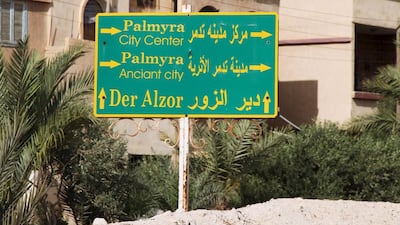
  • Palmyra rose to prominence during the Roman Empire. Photo from May 19, 2015 shows a road sign in Palmyra city. Reuters
    Palmyra rose to prominence during the Roman Empire. Photo from May 19, 2015 shows a road sign in Palmyra city. Reuters
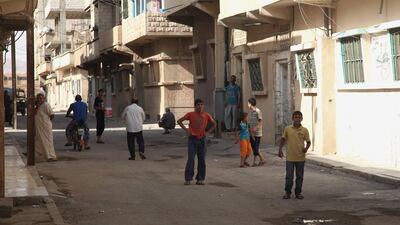
  • Though surrounded by desert dunes, Palmyra developed into a luxurious metropolis thanks to the trade of spices, perfumes, silk and ivory from the east, and statues and glasswork from Phoenicia. Photo from May 19, 2015 shows residents walking in the city. Reuters
    Though surrounded by desert dunes, Palmyra developed into a luxurious metropolis thanks to the trade of spices, perfumes, silk and ivory from the east, and statues and glasswork from Phoenicia. Photo from May 19, 2015 shows residents walking in the city. Reuters
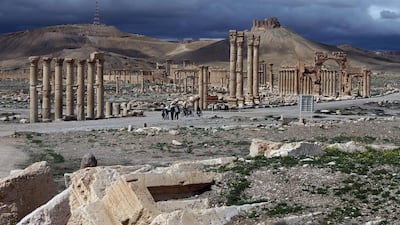
  • In the year 129AD, Roman emperor Hadrian declared Palmyra a ‘free city’ within his empire. A general view taken on May 18, 2015. AFP Photo
    In the year 129AD, Roman emperor Hadrian declared Palmyra a ‘free city’ within his empire. A general view taken on May 18, 2015. AFP Photo
  • As the Roman Empire faced internal political instability in the third century, Palmyra took the opportunity to declare its independence. File photo from March 14, 2014 shows the citadel of the ancient Palmyra. Joseph Eid / AFP Photo
    As the Roman Empire faced internal political instability in the third century, Palmyra took the opportunity to declare its independence. File photo from March 14, 2014 shows the citadel of the ancient Palmyra. Joseph Eid / AFP Photo
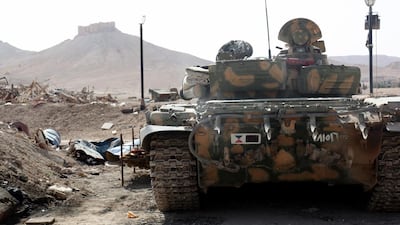
  • Palmyra bears scars of Syria’s continuing war: clashes between armed rebels and government forces in 2013 left collapsed columns and statues in their wake. Days before its capture, a Syrian armoured tank took up position during battles against ISIL on May 19, 2015. EPA
    Palmyra bears scars of Syria’s continuing war: clashes between armed rebels and government forces in 2013 left collapsed columns and statues in their wake. Days before its capture, a Syrian armoured tank took up position during battles against ISIL on May 19, 2015. EPA
  • According to the governor of Homs province, the inner city is home to about 35,000 people, including those displaced by fighting nearby. Photo handout released on May 17, 2015, by the Syrian official news agency Sana, shows a wide view of the ancient city. Sana via AP
    According to the governor of Homs province, the inner city is home to about 35,000 people, including those displaced by fighting nearby. Photo handout released on May 17, 2015, by the Syrian official news agency Sana, shows a wide view of the ancient city. Sana via AP
  • Another 35,000 live in the city’s suburbs. Seen here on May 19, days before its fall, residents walk near a military lorry that belongs to forces loyal to Syria’s president Bashar Al Assad, near the historical city of Palmyra. Reuters
    Another 35,000 live in the city’s suburbs. Seen here on May 19, days before its fall, residents walk near a military lorry that belongs to forces loyal to Syria’s president Bashar Al Assad, near the historical city of Palmyra. Reuters
  • Hundreds of statues and artefacts from Palmyra’s museum were transferred out of the city before it fell to ISIL, according to Syria’s antiquities chief Mamoun Abdulkarim. Photo from May 19, 2015 shows Palmyra’s famous graves. Reuters
    Hundreds of statues and artefacts from Palmyra’s museum were transferred out of the city before it fell to ISIL, according to Syria’s antiquities chief Mamoun Abdulkarim. Photo from May 19, 2015 shows Palmyra’s famous graves. Reuters
  • Many other priceless archaeological sites, including massive tombs, could not be moved, renewing fears the extremist group will destroy the ruins if they reach them. Photo released on May 17, 2015, by the Syrian official news agency Sana. Sana via AP
    Many other priceless archaeological sites, including massive tombs, could not be moved, renewing fears the extremist group will destroy the ruins if they reach them. Photo released on May 17, 2015, by the Syrian official news agency Sana. Sana via AP

The city was retaken in March 2016 after Russia's intervention to assist President Bashar Al Assad, only to fall back into ISIS hands in December 2016, before again being recaptured by government forces in January 2017.


RESULTS
%3Cp%3E3.30pm%3A%20Al%20Maktoum%20Challenge%20Round%203%20%E2%80%93%20Group%201%20(PA)%20%2475%2C000%20(Dirt)%202%2C000m%3Cbr%3EWinner%3A%20Jugurtha%20De%20Monlau%2C%20Pat%20Dobbs%20(jockey)%2C%20Jean-Claude%20Pecout%20(trainer)%3C%2Fp%3E%0A%3Cp%3E4.05pm%3A%20Dubai%20City%20Of%20Gold%20%E2%80%93%20Group%202%20(TB)%20%24250%2C000%20(Turf)%202%2C410m%3Cbr%3EWinner%3A%20Global%20Storm%2C%20William%20Buick%2C%20Charlie%20Appleby%3C%2Fp%3E%0A%3Cp%3E4.40pm%3A%20Burj%20Nahaar%20%E2%80%93%20Group%203%20(TB)%20%24250%2C000%20(D)%201%2C600m%3Cbr%3EWinner%3A%20Discovery%20Island%2C%20James%20Doyle%2C%20Bhupat%20Seemar%3C%2Fp%3E%0A%3Cp%3E5.15pm%3A%20Nad%20Al%20Sheba%20Turf%20Sprint%20%E2%80%93%20Group%203%20(TB)%20%24250%2C000%20(T)%201%2C200m%3Cbr%3EWinner%3A%20Al%20Dasim%2C%20Mickael%20Barzalona%2C%20George%20Boughey%3C%2Fp%3E%0A%3Cp%3E5.50pm%3A%20Al%20Bastakiya%20%E2%80%93%20Listed%20(TB)%20%24170%2C000%20(D)%201%2C900m%3Cbr%3EWinner%3A%20Go%20Soldier%20Go%2C%20Adrie%20de%20Vries%2C%20Fawzi%20Nass%3C%2Fp%3E%0A%3Cp%3E6.25pm%3A%20Al%20Maktoum%20Challenge%20Round%203%20%E2%80%93%20Group%201%20(TB)%20%24450%2C000%20(D)%202%2C000m%3Cbr%3EWinner%3A%20Salute%20The%20Soldier%2C%20Adrie%20de%20Vries%2C%20Fawzi%20Nass%3C%2Fp%3E%0A%3Cp%3E7.10pm%3A%20Ras%20Al%20Khor%20%E2%80%93%20Conditions%20(TB)%20%24300%2C000%20(T)%201%2C400m%3Cbr%3EWinner%3A%20Al%20Suhail%2C%20William%20Buick%2C%20Charlie%20Appleby%3C%2Fp%3E%0A%3Cp%3E7.45pm%3A%20Jebel%20Hatta%20%E2%80%93%20Group%201%20(TB)%20%24350%2C000%20(T)%201%2C800m%3Cbr%3EWinner%3A%20Alfareeq%2C%20Dane%20O%E2%80%99Neill%2C%20Charlie%20Appleby%3C%2Fp%3E%0A%3Cp%3E8.20pm%3A%20Mahab%20Al%20Shimaal%20%E2%80%93%20Group%203%20(TB)%20%24250%2C000%20(D)%201%2C200m%3Cbr%3EWinner%3A%20Sound%20Money%2C%20Mickael%20Barzalona%2C%20Bhupat%20Seemar%3C%2Fp%3E%0A

Mercer, the investment consulting arm of US services company Marsh & McLennan, expects its wealth division to at least double its assets under management (AUM) in the Middle East as wealth in the region continues to grow despite economic headwinds, a company official said.

Mercer Wealth, which globally has $160 billion in AUM, plans to boost its AUM in the region to $2-$3bn in the next 2-3 years from the present $1bn, said Yasir AbuShaban, a Dubai-based principal with Mercer Wealth.

Within the next two to three years, we are looking at reaching $2 to $3 billion as a conservative estimate and we do see an opportunity to do so,” said Mr AbuShaban.

Mercer does not directly make investments, but allocates clients’ money they have discretion to, to professional asset managers. They also provide advice to clients.

“We have buying power. We can negotiate on their (client’s) behalf with asset managers to provide them lower fees than they otherwise would have to get on their own,” he added.

Mercer Wealth’s clients include sovereign wealth funds, family offices, and insurance companies among others.

From its office in Dubai, Mercer also looks after Africa, India and Turkey, where they also see opportunity for growth.

Wealth creation in Middle East and Africa (MEA) grew 8.5 per cent to $8.1 trillion last year from $7.5tn in 2015, higher than last year’s global average of 6 per cent and the second-highest growth in a region after Asia-Pacific which grew 9.9 per cent, according to consultancy Boston Consulting Group (BCG). In the region, where wealth grew just 1.9 per cent in 2015 compared with 2014, a pickup in oil prices has helped in wealth generation.

BCG is forecasting MEA wealth will rise to $12tn by 2021, growing at an annual average of 8 per cent.

Drivers of wealth generation in the region will be split evenly between new wealth creation and growth of performance of existing assets, according to BCG.

Another general trend in the region is clients’ looking for a comprehensive approach to investing, according to Mr AbuShaban.

“Institutional investors or some of the families are seeing a slowdown in the available capital they have to invest and in that sense they are looking at optimizing the way they manage their portfolios and making sure they are not investing haphazardly and different parts of their investment are working together,” said Mr AbuShaban.

Some clients also have a higher appetite for risk, given the low interest-rate environment that does not provide enough yield for some institutional investors. These clients are keen to invest in illiquid assets, such as private equity and infrastructure.

“What we have seen is a desire for higher returns in what has been a low-return environment specifically in various fixed income or bonds,” he said.

“In this environment, we have seen a de facto increase in the risk that clients are taking in things like illiquid investments, private equity investments, infrastructure and private debt, those kind of investments were higher illiquidity results in incrementally higher returns.”

The Abu Dhabi Investment Authority, one of the largest sovereign wealth funds, said in its 2016 report that has gradually increased its exposure in direct private equity and private credit transactions, mainly in Asian markets and especially in China and India. The authority’s private equity department focused on structured equities owing to “their defensive characteristics.”

Updated: March 07, 2022, 5:56 AM