


Renewed antimilitary protests rocked Sudan’s capital Khartoum on Monday, as the country showed no sign of emerging from a deadly trial of wills pitting its ruling generals against a pro-democracy movement determined to remove them from power.
Witnesses said thousands took to the streets of the capital and other cities to show solidarity with an estimated 200 politicians and pro-democracy activists detained by the military in recent weeks.
Pro-democracy lawyer Enaam Attik said the authorities have ordered that more than 40 people arrested in a crackdown on the protests be freed.
Among the slogans on banners and placards at the rallies on Monday was one saying: “Yes to freedom, no to detentions.”
The demonstrators also carried banners bearing the images of killed and detained protesters.
At least 82 people have been killed — many shot dead — and thousands wounded by the security forces during protests, according to medics.
-
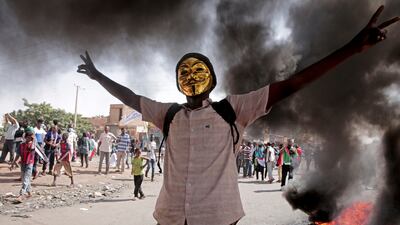
A man flashes the victory sign during a protest in Khartoum to denounce the October 2021 military coup in Sudan. AP -
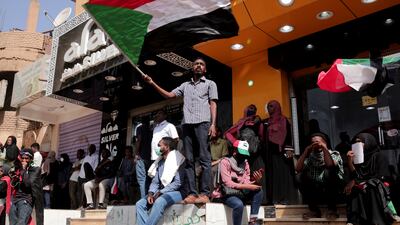
The UN said it would hold talks in Sudan to try to set the country's transition to democracy back on track. AP -
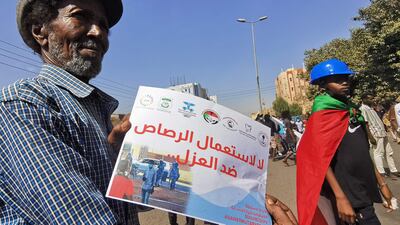
A Sudanese man , in the capital Khartoum holds a poster that reads in Arabic: ‘No to the use of live bullets against the unarmed’ during a protest against the October 2021 military coup. AFP -
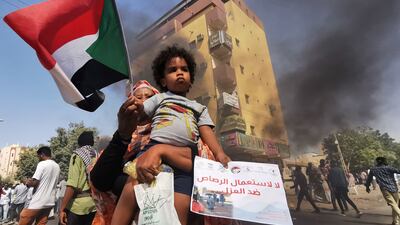
A Sudanese woman carries a child during a protest against the October 2021 military coup. AFP -
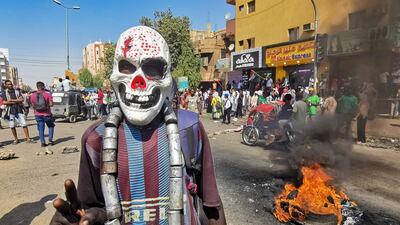
The coup on October 25, led by army chief General Abdel Fattah Al Burhan, derailed a power-sharing transition between the military and civilians that had been painstakingly established after longtime dictator Omar Al Bashir was removed in 2019. AFP -
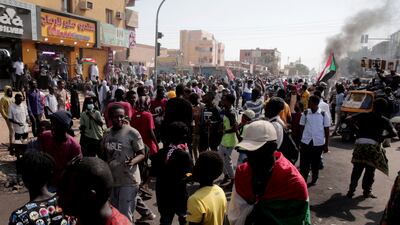
People chant slogans during a protest to denounce the coup. AP -
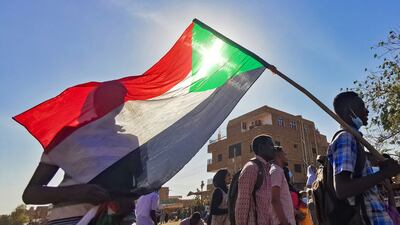
A Sudanese man carries the national flag during an anti-coup demonstration. AFP -
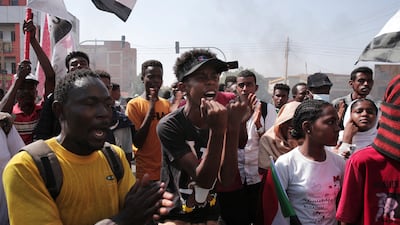
People chant slogans during a protest to denounce the military takeover. AP -
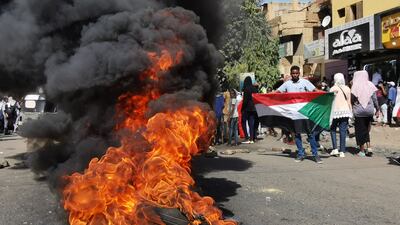
Sudanese protesters walk past burning tyres during a rally. AFP -
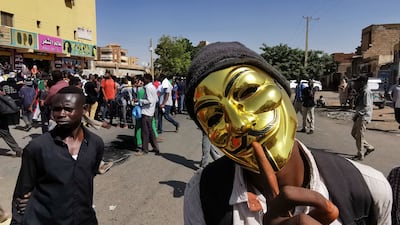
A mask-clad Sudanese protester attends a demonstration. AFP


The latest fatality came on Sunday when a hospital patient on the balcony of his hospital room was killed by a stray bullet during antimilitary protests in Khartoum, according to a medical group aligned with the opposition.
It said Faisal Abdul Rahman, 51, had been recovering from a leg amputation.
Protesters on Monday marched on Bahri, to the north of Khartoum city, rather than on the Republican Palace in the capital itself. The palace has been the target of almost all past protests since a military takeover last year derailed the country’s democratic transition.
Held under the slogan, “The morning will come; and neither the prison nor the prisoner will be there,” protesters in Omdurman, across the Nile from Khartoum, were prevented from crossing the river into Bahri by security forces using tear gas and stun grenades, according to witnesses.
In the city of Wad Wadani, south of Khartoum, protesters called on the military “to go back to the barracks".
In the eastern state of Gedaref they chanted, “Civilian is the people's choice,” according to witness Amal Hussein.
Demonstrators also marched to rally outside a government building in the Red Sea city of Port Sudan but security forces halted them with tear gas, according to witnesses.

In the eastern border state of Kassala, young protesters chanted, “No, no to military rule,” as they headed towards a military base in the city, witness Hussein Idris said.
Mass street rallies have been held in Khartoum and across much of the vast Afro-Arab nation since the military last October derailed the country’s democratic transition, following the 2019 removal of longtime leader Omar Al Bashir.
Activists have vowed to continue to demonstrate against the military takeover.
“The situation is very foggy at the moment and we are left with no clear indication of where things are headed or what goes on behind closes doors,” said prominent activist Sulaima Ishaq, a veteran of the 2018-19 uprising that toppled Al Bashir.
“Generally, it’s not looking good for the prospect of democracy or civilian rule, but we will continue to resist until we bring down military rule,” she said.
The arrests and the killings are part of a widening military crackdown on the protest movement being led by army chief Gen Abdel Fattah Al Burhan. This has given rise to claims among the pro-democracy movement that the military always intended to stay in power, rather than oversee a transition to civilian rule.
Gen Al Burhan has repeatedly assured the Sudanese that he has no interest in ruling the country and that he and the military planned to go back to their barracks if a consensus between the country’s stakeholders is reached or free elections are held in 2023 as planned.
Pro-democracy activists, however, claim that some of the actions and comments by Gen Al Burhan point to his political ambitions and cite the country’s 50 years of military rule since independence in 1956 as evidence of a military establishment convinced of its inherent right to rule.
In an interview with state television this month, Gen Al Burhan suggested that a presidential system would be a better fit for Sudan than a parliamentary system. The latter has been the system of choice during the brief spells of democratic rule in Sudan in the 1950s, 1960s and 1980s.
He also suggested that presidential elections should be held before next year’s parliamentary vote, but gave no details. He signalled his opposition to how the UN is handling its bid to bring all stakeholders to the negotiating table to chart a way out of the political crisis.

