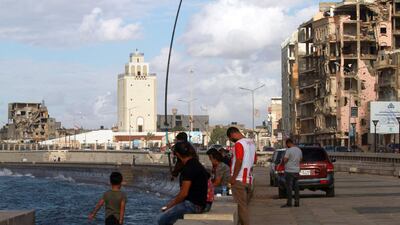
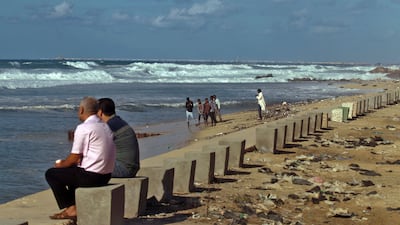
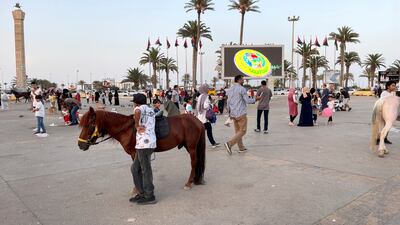
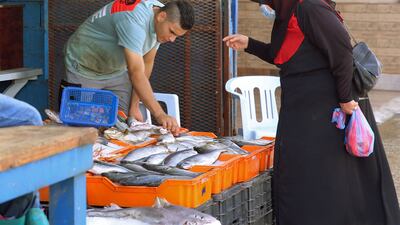
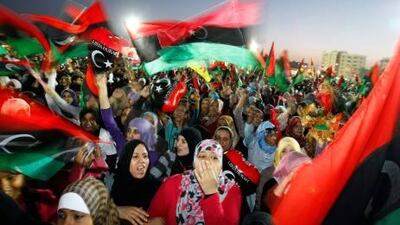
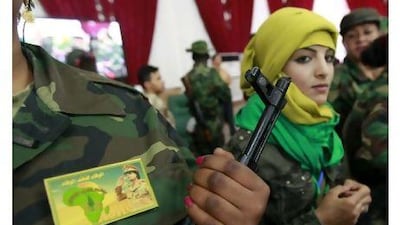
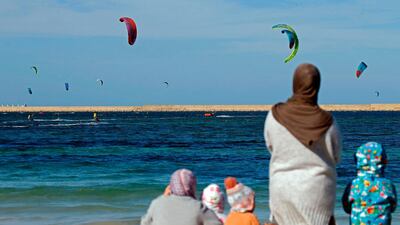
From enthusiasm to dismay and despair, the journey taken by many Libyans over the past weeks has been a frustrating one as the dream of electing their first president faded into the distance.
About 2.5 million people – a third of the population – were due to choose Libya’s first elected president on December 24.
The day would have been a historic step towards ending a decade of turmoil in Libya.
But political wrangling over the legal framework governing the vote, a surge in militia fighting, polarising candidates and years-long divisions between Libyans complicated the process, the result of a UN-sponsored peace process that began last year.
Candidates’ campaigns never took off. Days before the election, there were few signs that a landmark poll was imminent.
All that remain are heated discussions on the streets and in households, as well as adverts by the High National Election Commission calling on Libyans to register to vote.
Many had done so, eagerly. Abdul Salam Al Turki, 32, whom lives in Tunisia, had waited for an opportunity to put “an end to this chaos”.
He told The National earlier in December “a new president is a key step towards building Libya’s battered institutions and forming a much-awaited unified government”.
But as he observed the various institutions’ failure to see the process through, he now predicts the country to fall back into conflict.
“We may have parliamentary elections in a year or two, but any talk of a presidential race will only lead to renewed fighting, since leaders of battling parties each want to be president,” he said.
Legislative polls also planned for Thursday were also delayed, to January 24.
The dominance of militias, Mr Al Turki said, and widespread weaponry meant no free vote would take place.
In Sebha, south-west Libya, Mohamed Mesbah said that while he was not happy about the elections being postponed, it was a second chance for the clashing parties to accept the election and its results.
“No Libyan is pleased to see the vote postponed. But it gives us all a better chance to choose what is best for our country,” he said.
Mohamed Al Hasheem, from Tripoli, described the way the postponement happened “as mysterious, suspicious”.
“The unfolding of events leading to the announcement of the delay was confusing, and only means that the crisis will worsen,” he said.
‘Renewed chaos’
Since Nato’s intervention to unseat Muammar Qaddafi in 2011, Libya has been the theatre of international and regional feuds, hosting foreign boots aligned with the clashing governments, in the east and west.
The spectre of renewed conflict already looms. Militias have started to flex their muscles, breaching a UN-brokered ceasefire that began in October last year. On Wednesday, rival militias were seen roaming the streets of the capital. Days earlier, militia fighters shut down two major oil pipelines, and last week, fighters in Tripoli and Sabha attacked police stations, courts and government institutions.
Fearing that the presidential vote would get lost amid political disputes and armed conflicts, and despite a preliminary date of January 24 proposed by HNEC for the election, Benghazi-based activists are calling for nationwide protests on Friday. The group is urging officials to commit to holding free presidential elections.
Libya election preparations – in pictures
Yasmine Al Owkali, 53, said the vote’s postponement was a “big shock and disappointment”.
“We as Libyans needed the vote,” she said. "We needed a president to fix what has gone wrong with the country over the past decade. Those displaced and those who aren’t but can’t find services. The postponement crushed all our hopes.”
Nadia Saleh, a teacher in Benghazi, was not surprised by this turn of events in the election process. The 37-year-old had predicted that the elections would not happen on time “due to certain politicians dominating the scene and refusing to cede power”.
Candidates include Abdul Hamid Dbeibah, who leads the interim government that has responsibility for ensuring the poll takes place, and parliamentary speaker Aguila Saleh, who unilaterally passed the law governing the election, creating a legal conundrum.
Commander Khalifa Haftar, who controls eastern Libya, was another frontrunner in the race.
Ms Saleh had earlier said she planned to boycott the vote because “those elected in 2012 and 2014 were disappointing and the interim government proved to be a failure too”.
After the vote was postponed, she said: “Libya still needs many years before the different factions accept one another and choose a path other than fighting.”
This story was published in collaboration with Egab

More on animal trafficking
The%20Woman%20King%20
%3Cp%3E%3Cstrong%3EDirector%3A%3C%2Fstrong%3E%20Gina%20Prince-Bythewood%3C%2Fp%3E%0A%3Cp%3E%3Cstrong%3EStars%3A%3C%2Fstrong%3E%20Viola%20Davis%2C%20Thuso%20Mbedu%2C%20Sheila%20Atim%2C%20Lashana%20Lynch%2C%20John%20Boyega%C2%A0%3C%2Fp%3E%0A%3Cp%3E%3Cstrong%3ERating%3A%3C%2Fstrong%3E%203%2F5%3C%2Fp%3E%0A
What vitamins do we know are beneficial for living in the UAE
Vitamin D: Highly relevant in the UAE due to limited sun exposure; supports bone health, immunity and mood.
Vitamin B12: Important for nerve health and energy production, especially for vegetarians, vegans and individuals with absorption issues.
Iron: Useful only when deficiency or anaemia is confirmed; helps reduce fatigue and support immunity.
Omega-3 (EPA/DHA): Supports heart health and reduces inflammation, especially for those who consume little fish.
Mercer, the investment consulting arm of US services company Marsh & McLennan, expects its wealth division to at least double its assets under management (AUM) in the Middle East as wealth in the region continues to grow despite economic headwinds, a company official said.
Mercer Wealth, which globally has $160 billion in AUM, plans to boost its AUM in the region to $2-$3bn in the next 2-3 years from the present $1bn, said Yasir AbuShaban, a Dubai-based principal with Mercer Wealth.
“Within the next two to three years, we are looking at reaching $2 to $3 billion as a conservative estimate and we do see an opportunity to do so,” said Mr AbuShaban.
Mercer does not directly make investments, but allocates clients’ money they have discretion to, to professional asset managers. They also provide advice to clients.
“We have buying power. We can negotiate on their (client’s) behalf with asset managers to provide them lower fees than they otherwise would have to get on their own,” he added.
Mercer Wealth’s clients include sovereign wealth funds, family offices, and insurance companies among others.
From its office in Dubai, Mercer also looks after Africa, India and Turkey, where they also see opportunity for growth.
Wealth creation in Middle East and Africa (MEA) grew 8.5 per cent to $8.1 trillion last year from $7.5tn in 2015, higher than last year’s global average of 6 per cent and the second-highest growth in a region after Asia-Pacific which grew 9.9 per cent, according to consultancy Boston Consulting Group (BCG). In the region, where wealth grew just 1.9 per cent in 2015 compared with 2014, a pickup in oil prices has helped in wealth generation.
BCG is forecasting MEA wealth will rise to $12tn by 2021, growing at an annual average of 8 per cent.
Drivers of wealth generation in the region will be split evenly between new wealth creation and growth of performance of existing assets, according to BCG.
Another general trend in the region is clients’ looking for a comprehensive approach to investing, according to Mr AbuShaban.
“Institutional investors or some of the families are seeing a slowdown in the available capital they have to invest and in that sense they are looking at optimizing the way they manage their portfolios and making sure they are not investing haphazardly and different parts of their investment are working together,” said Mr AbuShaban.
Some clients also have a higher appetite for risk, given the low interest-rate environment that does not provide enough yield for some institutional investors. These clients are keen to invest in illiquid assets, such as private equity and infrastructure.
“What we have seen is a desire for higher returns in what has been a low-return environment specifically in various fixed income or bonds,” he said.
“In this environment, we have seen a de facto increase in the risk that clients are taking in things like illiquid investments, private equity investments, infrastructure and private debt, those kind of investments were higher illiquidity results in incrementally higher returns.”
The Abu Dhabi Investment Authority, one of the largest sovereign wealth funds, said in its 2016 report that has gradually increased its exposure in direct private equity and private credit transactions, mainly in Asian markets and especially in China and India. The authority’s private equity department focused on structured equities owing to “their defensive characteristics.”
FIRST TEST SCORES
England 458
South Africa 361 & 119 (36.4 overs)
England won by 211 runs and lead series 1-0
Player of the match: Moeen Ali (England)
Company%20profile
%3Cp%3E%3Cstrong%3ECompany%20name%3A%20%3C%2Fstrong%3EXare%C2%A0%3C%2Fp%3E%0A%3Cp%3E%3Cstrong%3EStarted%3A%20%3C%2Fstrong%3EJanuary%2018%2C%202021%C2%A0%3C%2Fp%3E%0A%3Cp%3E%3Cstrong%3EFounders%3A%20%3C%2Fstrong%3EPadmini%20Gupta%2C%20Milind%20Singh%2C%20Mandeep%20Singh%C2%A0%3C%2Fp%3E%0A%3Cp%3E%3Cstrong%3EBased%3A%20%3C%2Fstrong%3EDubai%C2%A0%3C%2Fp%3E%0A%3Cp%3E%3Cstrong%3ESector%3A%20%3C%2Fstrong%3EFinTech%C2%A0%3C%2Fp%3E%0A%3Cp%3E%3Cstrong%3EFunds%20Raised%3A%20%3C%2Fstrong%3E%2410%20million%C2%A0%3C%2Fp%3E%0A%3Cp%3E%3Cstrong%3ECurrent%20number%20of%20staff%3A%20%3C%2Fstrong%3E28%C2%A0%3C%2Fp%3E%0A%3Cp%3E%3Cstrong%3EInvestment%20stage%3A%20%3C%2Fstrong%3Eundisclosed%3C%2Fp%3E%0A%3Cp%3E%3Cstrong%3EInvestors%3A%20%3C%2Fstrong%3EMS%26amp%3BAD%20Ventures%2C%20Middle%20East%20Venture%20Partners%2C%20Astra%20Amco%2C%20the%20Dubai%20International%20Financial%20Centre%2C%20Fintech%20Fund%2C%20500%20Startups%2C%20Khwarizmi%20Ventures%2C%20and%20Phoenician%20Funds%3C%2Fp%3E%0A
UAE currency: the story behind the money in your pockets
The National's picks
4.35pm: Tilal Al Khalediah
5.10pm: Continous
5.45pm: Raging Torrent
6.20pm: West Acre
7pm: Flood Zone
7.40pm: Straight No Chaser
8.15pm: Romantic Warrior
8.50pm: Calandogan
9.30pm: Forever Young
MATCH INFO
Everton 2 Southampton 1
Everton: Walcott (15'), Richarlison (31' )
Southampton: Ings (54')
Man of the match: Theo Walcott (Everton)
FIXTURES
Monday, January 28
Iran v Japan, Hazza bin Zayed Stadium (6pm)
Tuesday, January 29
UAEv Qatar, Mohamed Bin Zayed Stadium (6pm)
Friday, February 1
Final, Zayed Sports City Stadium (6pm)
Getting%20there%20
%3Cp%3E%3Ca%20href%3D%22https%3A%2F%2Fwww.thenationalnews.com%2Ftravel%2F2023%2F01%2F12%2Fwhat-does-it-take-to-be-cabin-crew-at-one-of-the-worlds-best-airlines-in-2023%2F%22%20target%3D%22_self%22%3EEtihad%20Airways%20%3C%2Fa%3Eflies%20daily%20to%20the%20Maldives%20from%20Abu%20Dhabi.%20The%20journey%20takes%20four%20hours%20and%20return%20fares%20start%20from%20Dh3%2C995.%20Opt%20for%20the%203am%20flight%20and%20you%E2%80%99ll%20land%20at%206am%2C%20giving%20you%20the%20entire%20day%20to%20adjust%20to%20island%20time.%20%C2%A0%3C%2Fp%3E%0A%3Cp%3ERound%20trip%20speedboat%20transfers%20to%20the%20resort%20are%20bookable%20via%20Anantara%20and%20cost%20%24265%20per%20person.%20%C2%A0%3C%2Fp%3E%0A
BIG SPENDERS
Premier League clubs spent £230 million (Dh1.15 billion) on January transfers, the second-highest total for the mid-season window, the Sports Business Group at Deloitte said in a report.
Meatless Days
Sara Suleri, with an introduction by Kamila Shamsie
Penguin
Profile of Bitex UAE
Date of launch: November 2018
Founder: Monark Modi
Based: Business Bay, Dubai
Sector: Financial services
Size: Eight employees
Investors: Self-funded to date with $1m of personal savings