


Hope remains that the US, Iran and the EU can reach an agreement on reviving the 2015 nuclear pact as negotiators resume talks in Vienna on Thursday, according to Vali Nasr, a former US State Department senior adviser.
The talks ended last week amid an air of pessimism, with US Secretary of State Antony Blinken saying time was running out for a deal.
In Tehran, a senior diplomat said US reluctance to guarantee lifting sanctions was the obstacle.
However, both sides on a “fundamental level” need to make a deal and that is a good thing, according to Mr Nasr, now a professor at the Johns Hopkins School of Advanced International Studies.
For Iran, the incentive is the lifting of US sanctions imposed by former president Donald Trump that have seriously damaged its economy. For the US, there are concerns that failure to reach a deal could lead to a regional crisis and conflict, Mr Nasr told The National.
He said the grim scenarios that the 2015 nuclear agreement sought to prevent had returned.
Mr Nasr said the dangers increase if Iran heads towards nuclear weapons capability,
“That’s a scenario in which we know how to start a conflict, but nobody in Washington is confident that they can contain it or end it.
“Not only would it be costly for the US but very costly for Iran’s neighbours, and one thing Iran has made clear is that a war would not be contained on Iranian soil.”
Mr Nasr said the main problem in the negotiations was a lack of trust. Iran's leadership has lost its trust in the US and that sanctions will be lifted at all.
“What makes these talks difficult for Iran is that going back into a deal without US guarantees is risky ... hugely risky.”
The 2015 deal was reached during the final year in office of Mr Trump's predecessor, Barack Obama. Former Iranian president Hassan Rouhani, a relative moderate who faced criticism for the agreement from Iranian hardliners, was succeeded by hardline President Ebrahim Raisi in August.
“If a deal is made then, in two years when a new [US] president comes in everything comes back, Mr Raisi loses face, Iran's supreme leader [Ayatollah Ali Khamenei] loses face and then the moderates will be back and say you didn’t do any better,” Mr Nasr said.
-

Iran's President-elect Ebrahim Raisi is pictured during his first press conference since his election in Tehran. -
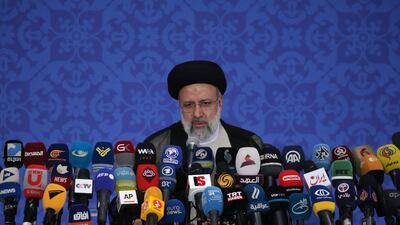
Iran's new president hailed what he called a 'massive' voter turnout. -
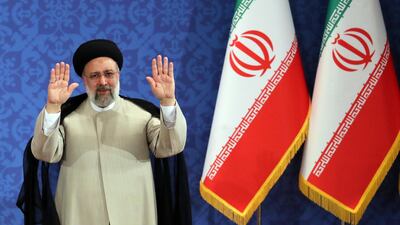
Mr Raisi said that his government would continue the nuclear negotiations with world powers. -
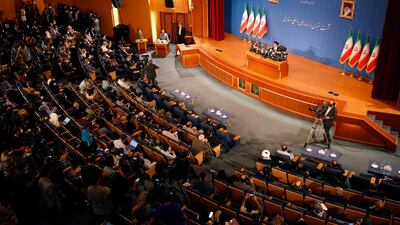
Mr Raisi said US must lift the sanctions and return to JCPOA deal. -
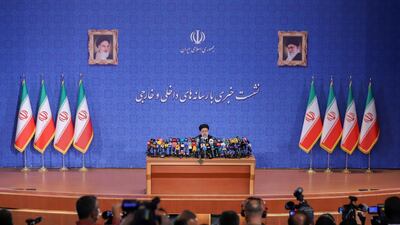
President-elect Ebrahim Raisi attends a news conference in Tehran. Reuters -
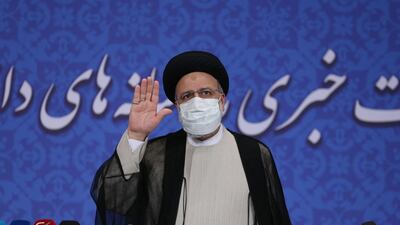
Mr Raisi replaces moderate Hassan Rouhani. -
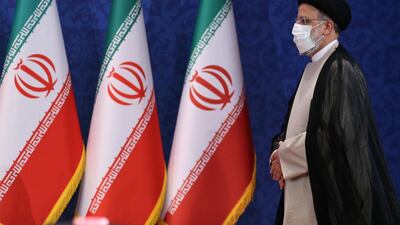
President-elect Ebrahim Raisi arrives for his first press conference in the capital Tehran.


Iran is still willing to cut a deal, but the question is at what price, Mr Nasr said.
The Iranians have been asking for a guarantee that a repeat of 2018 – when Mr Trump withdrew the US from the nuclear deal – will not happen, but this is guarantee that President Joe Biden cannot give, he said.
“The US is basically telling them, 'You give up your nuclear programme, go back to 2015, give up missiles, cut back in Iraq, Lebanon and Yemen; you do all those things but we cannot guarantee that sanctions won’t come back.' For Iran, this won’t work.”
Iran responded to Mr Trump's withdrawal from the nuclear pact, officially known as the Joint Comprehensive Plan of Action, by incrementally breaching the limits set on its levels of enriched uranium and stockpiles, a tactic Mr Nasr said was dictated by the US style of negotiation.
“When you go the table with the US, the US runs a really rough bargain – 'I can impose sanctions on you and it is nothing to me. What do you have to bargain with me?' The problem Iran had under Trump, which it is trying to avoid now, is the issue of leverage. With the signing of the JCPOA, Iran gave up any leverage it may have had, leaving them vulnerable during the Trump years.”
Now the tactic is to “build as big and scary a programme as possible”, creating an incentive for the US to come to the table, he said.
Mr Nasr said another obstacle to progress in the talks is the domestic landscape in the US and Iran.
Mr Biden is facing a Congress that has bipartisan support against diplomacy with Iran and he will be unlikely to sell a “less for less” deal, essentially a deal where Iran gives up less and the US asks for less, he said.
Mr Raisi has to deal with a struggling economy, water and electricity shortages, the coronavirus pandemic, frequent protests, political infighting and the question of eventual succession of the supreme leader.
Mr Raisi's administration needs success in the talks not just for himself but for the conservative factions in Iran, Mr Nasr said.
For the past eight years, Iran's conservative and hardline groups have been saying they could do better than the moderates and the Rouhani administration, now they need to deliver, he said.
Unlike other authoritarian governments, Iran’s government does face pushback from its people and if the new government cannot deliver on their promises, “they are going to face a very unhappy disgruntled population and the cost of managing that will be high”, he said.
Mr Nasr said the talks are likely to go on for another two or three rounds until March 2022. Although a deal is unlikely in that time frame, there is a possibility of a breather. The US could give Iran some leeway to sell more oil and get access to funds in exchange for a halt to the ramping up its nuclear programme, he said.
Ultimately, a deal can only be reached through building up trust and both sides showing that they can abide by the terms, he said.

