


Middle Eastern governments must do more to tackle air pollution, experts say, with fuel subsidies and poor public transport the cause of poor air quality in many major cities.
Air pollution is a major health hazard across the globe, with the World Health Organisation stating that in 2019, 99 per cent of the world’s population lived in places where the institution’s air quality guidelines were not met.
An estimated 4.2 million people die each year from conditions links to outdoor air pollution, according to figures published by the WHO, with much of the problem caused by traffic emissions.
Alongside East and South-East Asia, the Middle East is one of the most acutely affected regions, with levels of pollutants such as particulate matter among the highest in the world.
A 2018 WHO report with data from major Middle Eastern cities reported that average levels of PM10s (particulate matter up to 10 microns in diameter) in major cities ranged from just over 50 µg/m3 (micrograms per cubic metre) in Tehran to more than 250 µg/m3 in greater Cairo.
researcher
This compares with the WHO’s recommended maximum yearly average, based on updated guidelines published in September, of 15 µg/m3, down from the previous recommendation of 20 µg/m3.
The Middle East has levels of particulate matter up to 2.5 microns in size (PM2.5) that are similarly well above the WHO’s new recommended maximum yearly average of 5 µg/m3. The previous recommended figure was 10 µg/m3.
Health consequences
According to WHO figures for 2016, the Eastern Mediterranean region, which the organisation defines as including the Middle East and much of North Africa, has average PM2.5 levels of just over 51 µg/m3 — more than 10 times the new recommended limit. Potential effects on residents are significant and include an increased risk of lung cancer.
“Particle pollution has a strong impact on human health, and PM2.5 pose the greatest risk,” says Salman Zafar, founder of EcoMena, an environmental consultancy in Qatar.
“Particulate matter can move into the lungs and may also enter into the bloodstream, affecting both the lungs and heart. The potential human health risks of PM2.5 include heart attacks, asthma attacks and bronchitis.”
In Egypt, health problems caused by poor air quality lead two million people each year to seek medical treatment, according to government figures cited by the World Bank.
Traffic problems in the greater Cairo area, home to more than 19 million people, are acute even by regional standards, partly because fuel subsidies and poor public transport have encouraged car use.
Vehicles and dust major sources of pollution

As is the case elsewhere in the Gulf, road vehicles remain a significant source of pollution in the UAE, with more than three million vehicles using the country’s roads despite heavy investments in public transport, such as the Dubai Metro.
Aside from vehicle emissions, other major sources of PM2.5 in the Middle East include power plants, various industrial facilities and sand storms, the last of which may be affected by climate change, although current evidence is unclear.
Dr Diana Francis, a senior research scientist and head of the Environmental and Geophysical Sciences laboratory at Khalifa University in Abu Dhabi, says that from between about 2000 and 2010, dust emissions increased, but then fell back the following decade.
“Dust emissions are very sensitive to climate change but we still need to understand the degree of contribution and the weight of each factor in order to be able to predict their behaviour in the future,” she says.
The region’s governments can take measures such as increasing the green cover by planting trees to mitigate the effects of dust storms and other emissions, according to Dr Francis.
“This acts on both dust emissions, by cutting the available erodible surface, and on climate change itself by increasing the uptake of CO2 by plants, and decreasing the temperature due to vegetation’s cooling effects,” she says.
The 'black cloud'

Burning rice straw has made a significant contribution to Cairo’s pollution, creating what is called the “black cloud”, although in recent years there have been efforts to reduce the problem.
“They do this in the Nile Valley. This produces an enormous amount of air pollution that’s blown into the city”, says Prof Jos Lelieveld, who researches Middle East air pollution and climate change at The Cyprus Institute research centre in Nicosia, and the Max Planck Institute for Chemistry in Mainz, Germany.
“Many, many more people die from air pollution than from violence in the Middle East … Air pollution is on a par with tobacco in terms of public health problems.”
Other regions of the world have shown that progress can be made, but it will be slow, especially if — as Prof Lelieveld describes the situation in Europe — “there’s no political will” to deal with the problem.
Even now, more than three decades after the European Union introduced clean air legislation, about 400,000 people are thought to die each year in Europe because of air pollution. Similarly, it is “not going to be an easy” problem to solve in the Middle East.
“This is the danger — people get resigned to it. It’s such a difficult problem, they don’t do anything. But I believe more can be done”, says Prof Lelieveld.
Environmental alternatives
Although the UAE is building the Gulf’s first coal-fired power plant, the Hassyan Clean Coal Project in Dubai will not be a major source of particulate emissions in the way that is typical of coal-fired power stations.
The Middle East as a whole has already invested heavily in solar power, which does not generate harmful emissions, with regional capacity set to reach 8.3 gigawatts (GW) next year.
This could be part of what Mr Zafar described as the “steady transition to a low-carbon economy” needed to tackle the increases in PM2.5 levels in the Middle East.
“Adoption of renewable energy systems, stricter emission norms for cars, promotion of electric cars, stringent pollution control in industries and creation of more green spaces in cities are some of the ways to reduce particulate pollution,” he says.
UAE's Barakah nuclear plant: in pictures
-

Unit three of Abu Dhabi's Barakah Nuclear Energy Plant started commercial operations in February. Photo: Emirates Nuclear Energy Corporation -

The UAE has issued an operating licence for the fourth and final unit of its Barakah Nuclear Energy Plant. FANR -
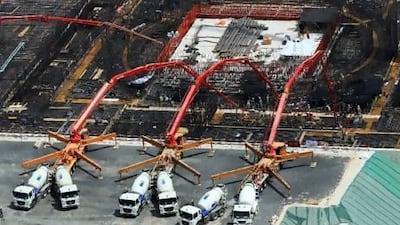
A view of the Barakah nuclear site under construction in 2012. -

Unit 1 being built in 2013 in the Western region of Abu Dhabi. -
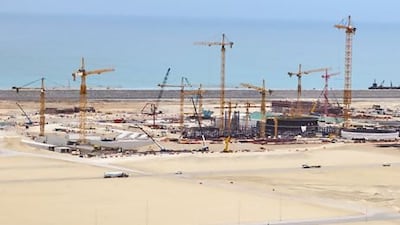
The Emirates Nuclear Energy Corporation selected a Korean consortium in 2013 to build four APR-1400 reactors. Photo: Enec -
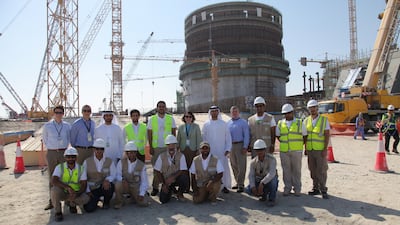
Kristine Svinicki, head of the US Nuclear Regulatory Commission, toured the Barakah site in November 2013. Photo: Enec -
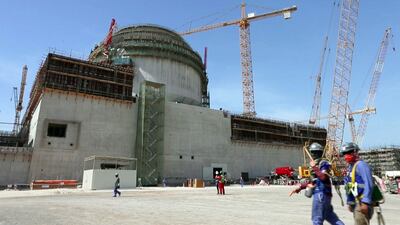
By August 2014, more than 55 per cent of construction at Unit 1 had been completed. Photo: Enec -
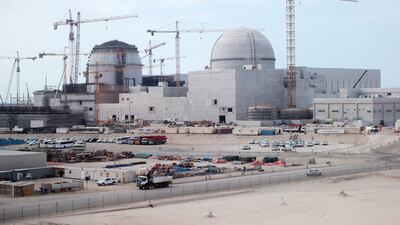
The first nuclear reactor at Barakah in 2016. Christopher Pike / The National -
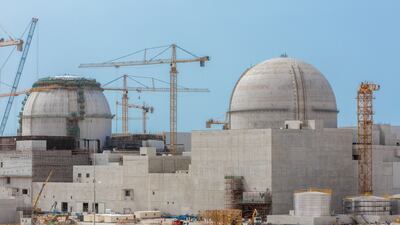
The UAE's nuclear energy programme is based in Barakah in the Western Region of Abu Dhabi. Photo: Enec -
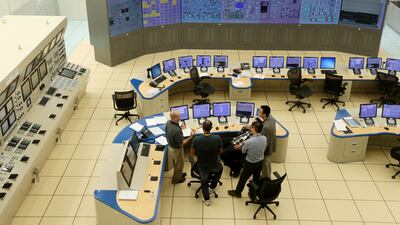
Trainees learn to deal with potentially catastrophic scenarios at this simulator in Barakah. Christopher Pike / The National -
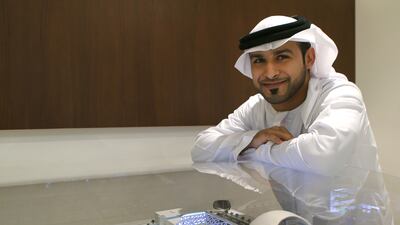
Khalid Naqbi was part of the first batch of resident inspectors sent to the construction site by the Federal Authority for Nuclear Regulation. Ravindranath K / The National



