Sudan's finance minister: world will ‘move on’ from army takeover


Ahmed Maher
  • English
  • Arabic

The international community and key financial institutions, who have suspended assistance, will again deal with the incoming civilian-led technocratic government of Sudan even if ousted prime minister Abdullah Hamdok does not return to power, the country's finance minister has said.

In an exclusive interview, Jibril Ibrahim — one of the few ministers to have kept their jobs after the military seized power on October 25 — told The National the world “will move on” from the events of October 25, when the army dissolved Cabinet, declared a state of emergency and arrested dozens of politicians and activists, including advisers to Mr Hamdok.

Sudan is a big and vital country with lots of potential and resources,” he said.

“We are heading towards a new government of technocrats and will expand political participation and have an inclusive Parliament that will protect our democracy and hold the government accountable.”

Mr Ibrahim admitted that all bids for new foreign investment have been paused since October 25, posing a serious challenge to the North African country's struggling economy.

The finance minister is one of nine ministers to have retained their posts in line with a quota of portfolios given to representatives of opposition groups in several regions in Sudan. At least one of them, the minister of urban development, resigned in protest at the military intervention.

The military takeover has drawn international criticism, sparked widespread protests in the streets of the capital Khartoum and elsewhere in the country, and proved costly to the country's young entrepreneurs and its emerging business community.

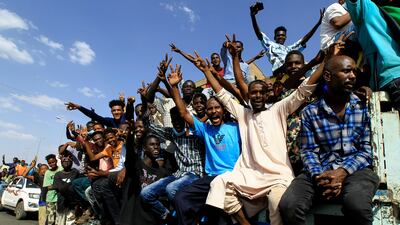
  • Protesters demonstrate against the Sudanese military's seizure of power and removal of the civilian government, in the capital Khartoum. Reuters
    Protesters demonstrate against the Sudanese military's seizure of power and removal of the civilian government, in the capital Khartoum. Reuters
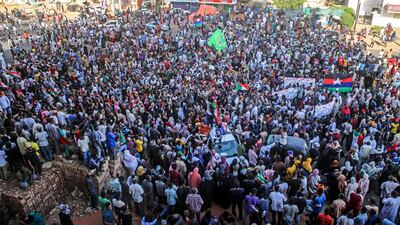
  • Thousands of Sudanese people took to the streets in the capital of Khartoum, above, and other major cities across the country to demand the country's transition to democratic rule be put back on track. EPA
    Thousands of Sudanese people took to the streets in the capital of Khartoum, above, and other major cities across the country to demand the country's transition to democratic rule be put back on track. EPA
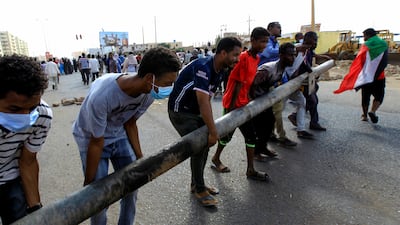
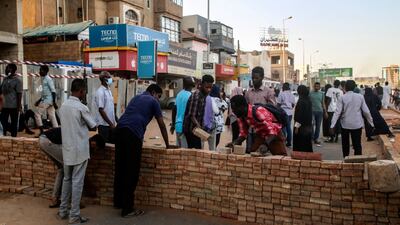
  • Protesters carry a barricade as they demonstrate against the Sudanese military, in the capital Khartoum. Reuters
    Protesters carry a barricade as they demonstrate against the Sudanese military, in the capital Khartoum. Reuters
  • A Sudanese protester flashes a victory sign near a burning tyre as thousands of people joined anti-coup protests in Khartoum. EPA
    A Sudanese protester flashes a victory sign near a burning tyre as thousands of people joined anti-coup protests in Khartoum. EPA
  • Thousands of Sudanese people participated in anti-military protests in the capital Khartoum. EPA
    Thousands of Sudanese people participated in anti-military protests in the capital Khartoum. EPA
  • A Sudanese protester dressed up as Spider-Man, stands on car during an anti-coup protest in the capital Khartoum. EPA
    A Sudanese protester dressed up as Spider-Man, stands on car during an anti-coup protest in the capital Khartoum. EPA
  • Demonstrators build a barricade on a street in the capital Khartoum during an anti-coup protest. EPA
    Demonstrators build a barricade on a street in the capital Khartoum during an anti-coup protest. EPA
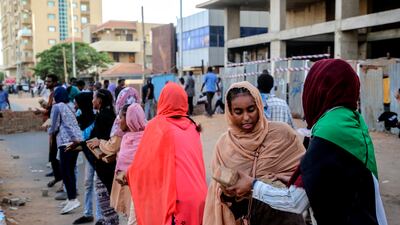
  • Sudanese women during anti-coup protests as a part of nationwide demonstrations against the military takeover of the government on October 25, in the capital Khartoum. EPA
    Sudanese women during anti-coup protests as a part of nationwide demonstrations against the military takeover of the government on October 25, in the capital Khartoum. EPA
  • Protesters raised slogans demanding the exit of Gen Abdel Fattah Al Burhan, in the capital Khartoum. AP Photo
    Protesters raised slogans demanding the exit of Gen Abdel Fattah Al Burhan, in the capital Khartoum. AP Photo
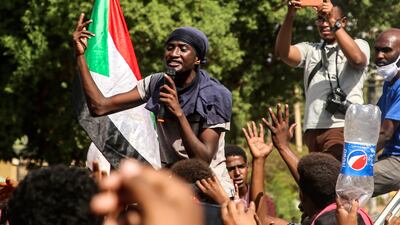
  • Protesters declared 'the revolution will continue' during a demonstration in Khartoum. AP
    Protesters declared 'the revolution will continue' during a demonstration in Khartoum. AP
  • 'Going back is impossible' was among slogans raised by Sudanese protesters in the capital Khartoum. AP
    'Going back is impossible' was among slogans raised by Sudanese protesters in the capital Khartoum. AP

The World Bank has paused economic aid and stopped processing any new operations in the country, while some major multinational companies have backtracked on signing lucrative contracts there.

Western powers have also put economic assistance to Sudan on hold, saying that relief for tens of billions of dollars of foreign debt is at risk unless there is a return to a democratic transition.

Mr Ibrahim said that Mr Hamdok has made unrealistic demands in negotiations to end the current political stalemate, and he blamed what he called the intransigence of the Hamdok camp for hardening attitudes on both sides of the table.

“Preconditions have complicated the negotiations. You should come with your demands and show flexibility and not set conditions before the start of the talks. This muddies the mediation waters,” Mr Ibrahim said, referring to the Forces of Freedom and Change (FCC). The pro-democracy umbrella group led the 2019 uprising against long-time autocrat Omar Al Bashir and forms the base of Mr Hamdok's political support.

An FCC spokesman told The National that accusations of a power monopoly were merely an “excuse” for the army and its supporters to take over, saying that Cabinet portfolios had been distributed fairly before the coup.

Military takeover was ‘not a coup’

Some Sudanese and outside parties have disagreed on the right language to describe what has happened in a country that witnessed repeated coups and failed attempts since it declared independence in 1956.

Mr Ibrahim said terminology matters and that he did not believe “coup” was the right word to describe the events of last month.

“A coup happens when the army seizes everything. This hasn’t happened this time. The army had to intervene to rectify the course of transition to democracy and when it felt that national security was at stake,” he said, echoing comments from military head Gen Abdel Fattah Al Burhan.

“Some parties in the FFC wanted to negate the army completely. This was wrong as it’s part and parcel of society in Sudan. We need a balance of power without excluding anyone from the political and ethnic mosaic of Sudan.”

The finance minister is the leader of the Justice and Equality Movement (JEM) in Darfur, which played a key role in the conflict that broke out in 2003.

Rebels led by the JEM accused the government of oppressing non-Arabs and favouring Arab groups in the area. The UN estimates 300,000 were killed in the war and nearly 3 million were displaced. The International Criminal Court issued arrest warrants for crimes against humanity for Al Bashir and several Sudanese military officials.

Last year, the movement — and other rebel groups in the Blue Nile and South Kordofan — signed a peace agreement in the South Sudanese capital to end the conflicts and bring rebel forces and officials into the government.

The peace deal was negotiated by Mr Hamdok's transitional government.

‘Stable governments can’t rely on one man’

In the week before the coup, Mr Ibrahim supported protests and a sit-in outside the presidential palace in Khartoum to demand the sacking of the Hamdok government.

Protesters in the capital shouted, “Down with the government of hunger”, drawing attention to the plight of ordinary Sudanese forced to wait for hours each day to buy bread and fuel, with the local currency having lost much of its value.

Mr Ibrahim acknowledged that Mr Hamdok has unique capabilities — especially as an economist and in his relations with international financial institutions such as the World Bank — but said the task of governing Sudan is more complicated than leading an economic campaign.

Moreover, he said, it was wrong for Sudan's political establishment to be centred on one leader.

“They are many candidates and competitors to Mr Hamdok, whom I highly respect. But we don’t want to have a country that centres on one person, whether from the civilian or the military camps. We want to have a solid state with functioning establishments and are totally against any form of dictatorship.”

He hinted at divisions within the FCC, which has split into two main factions.

His movement, the JEM, has joined forces with another former rebel group in Darfur, the Sudan Liberation Movement (SPLM), as well as a group of political parties to form a splinter coalition opposed to the main FFC.

“I think that the power of the ruler is linked to those who surround him. If he or she finds a harmonious and coherent team who are conscious of their role, they would be able to lead them. However, if they find a contentious team who hold different and conflicting views and opinions, they will face many hardships,” said Mr Ibrahim.

On the continuing protests against the military takeover, the finance minister said he believes that people in Sudan are not as angry as media coverage would suggest and that future large-scale demonstrations were unlikely.

“I don't foresee demonstrations of millions of people and I don't see an enraged public, but this does not mean that there aren't some people who object to what we are living through. There are some opposition forces who express using different methods such as putting up barricades on the streets. These have diminished to a great extent,” he said.

Pro-democracy groups have launched civil disobedience campaigns since the takeover.

Local resistance committees and the Sudanese Professionals Association (SPA), which were among the prominent entities that led demonstrations in the uprising that toppled Al Bashir, are organising a campaign of protests and barricades to try to reverse the military takeover.

Internet services have been almost completely disrupted since the October 25 coup and phone coverage remains patchy.


Meatless Days
Sara Suleri, with an introduction by Kamila Shamsie
​​​​​​​Penguin 

How much do leading UAE’s UK curriculum schools charge for Year 6?
  1. Nord Anglia International School (Dubai) – Dh85,032
  2. Kings School Al Barsha (Dubai) – Dh71,905
  3. Brighton College Abu Dhabi - Dh68,560
  4. Jumeirah English Speaking School (Dubai) – Dh59,728
  5. Gems Wellington International School – Dubai Branch – Dh58,488
  6. The British School Al Khubairat (Abu Dhabi) - Dh54,170
  7. Dubai English Speaking School – Dh51,269

*Annual tuition fees covering the 2024/2025 academic year

Key facilities
  • Olympic-size swimming pool with a split bulkhead for multi-use configurations, including water polo and 50m/25m training lanes
  • Premier League-standard football pitch
  • 400m Olympic running track
  • NBA-spec basketball court with auditorium
  • 600-seat auditorium
  • Spaces for historical and cultural exploration
  • An elevated football field that doubles as a helipad
  • Specialist robotics and science laboratories
  • AR and VR-enabled learning centres
  • Disruption Lab and Research Centre for developing entrepreneurial skills
Avatar: Fire and Ash

Director: James Cameron

Starring: Sam Worthington, Sigourney Weaver, Zoe Saldana

Rating: 4.5/5

Match info:

Real Betis v Sevilla, 10.45pm (UAE)

%20Ramez%20Gab%20Min%20El%20Akher
%3Cp%3E%3Cstrong%3ECreator%3A%3C%2Fstrong%3E%20Ramez%20Galal%3C%2Fp%3E%0A%3Cp%3E%3Cstrong%3EStarring%3A%3C%2Fstrong%3E%20Ramez%20Galal%3C%2Fp%3E%0A%3Cp%3E%3Cstrong%3EStreaming%20on%3A%20%3C%2Fstrong%3EMBC%20Shahid%3C%2Fp%3E%0A%3Cp%3E%3Cstrong%3ERating%3A%20%3C%2Fstrong%3E2.5%2F5%3C%2Fp%3E%0A
Tax authority targets shisha levy evasion

The Federal Tax Authority will track shisha imports with electronic markers to protect customers and ensure levies have been paid.

Khalid Ali Al Bustani, director of the tax authority, on Sunday said the move is to "prevent tax evasion and support the authority’s tax collection efforts".

The scheme’s first phase, which came into effect on 1st January, 2019, covers all types of imported and domestically produced and distributed cigarettes. As of May 1, importing any type of cigarettes without the digital marks will be prohibited.

He said the latest phase will see imported and locally produced shisha tobacco tracked by the final quarter of this year.

"The FTA also maintains ongoing communication with concerned companies, to help them adapt their systems to meet our requirements and coordinate between all parties involved," he said.

As with cigarettes, shisha was hit with a 100 per cent tax in October 2017, though manufacturers and cafes absorbed some of the costs to prevent prices doubling.

the pledge

I pledge to uphold the duty of tolerance

I pledge to take a first stand against hate and injustice

I pledge to respect and accept people whose abilities, beliefs and culture are different from my own

I pledge to wish for others what I wish for myself

I pledge to live in harmony with my community

I pledge to always be open to dialogue and forgiveness

I pledge to do my part to create peace for all

I pledge to exercise benevolence and choose kindness in all my dealings with my community

I pledge to always stand up for these values: Zayed's values for tolerance and human fraternity

SPEC%20SHEET%3A%20APPLE%20M3%20MACBOOK%20AIR%20(13%22)
%3Cp%3E%3Cstrong%3EProcessor%3A%3C%2Fstrong%3E%20Apple%20M3%2C%208-core%20CPU%2C%20up%20to%2010-core%20CPU%2C%2016-core%20Neural%20Engine%3C%2Fp%3E%0A%3Cp%3E%3Cstrong%3EDisplay%3A%3C%2Fstrong%3E%2013.6-inch%20Liquid%20Retina%2C%202560%20x%201664%2C%20224ppi%2C%20500%20nits%2C%20True%20Tone%2C%20wide%20colour%3C%2Fp%3E%0A%3Cp%3E%3Cstrong%3EMemory%3A%3C%2Fstrong%3E%208%2F16%2F24GB%3C%2Fp%3E%0A%3Cp%3E%3Cstrong%3EStorage%3A%3C%2Fstrong%3E%20256%2F512GB%20%2F%201%2F2TB%3C%2Fp%3E%0A%3Cp%3E%3Cstrong%3EI%2FO%3A%3C%2Fstrong%3E%20Thunderbolt%203%2FUSB-4%20(2)%2C%203.5mm%20audio%2C%20Touch%20ID%3C%2Fp%3E%0A%3Cp%3E%3Cstrong%3EConnectivity%3A%3C%2Fstrong%3E%20Wi-Fi%206E%2C%20Bluetooth%205.3%3C%2Fp%3E%0A%3Cp%3E%3Cstrong%3EBattery%3A%3C%2Fstrong%3E%2052.6Wh%20lithium-polymer%2C%20up%20to%2018%20hours%2C%20MagSafe%20charging%3C%2Fp%3E%0A%3Cp%3E%3Cstrong%3ECamera%3A%3C%2Fstrong%3E%201080p%20FaceTime%20HD%3C%2Fp%3E%0A%3Cp%3E%3Cstrong%3EVideo%3A%3C%2Fstrong%3E%20Support%20for%20Apple%20ProRes%2C%20HDR%20with%20Dolby%20Vision%2C%20HDR10%3C%2Fp%3E%0A%3Cp%3E%3Cstrong%3EAudio%3A%3C%2Fstrong%3E%204-speaker%20system%2C%20wide%20stereo%2C%20support%20for%20Dolby%20Atmos%2C%20Spatial%20Audio%20and%20dynamic%20head%20tracking%20(with%20AirPods)%3C%2Fp%3E%0A%3Cp%3E%3Cstrong%3EColours%3A%3C%2Fstrong%3E%20Midnight%2C%20silver%2C%20space%20grey%2C%20starlight%3C%2Fp%3E%0A%3Cp%3E%3Cstrong%3EIn%20the%20box%3A%3C%2Fstrong%3E%20MacBook%20Air%2C%2030W%2F35W%20dual-port%2F70w%20power%20adapter%2C%20USB-C-to-MagSafe%20cable%2C%202%20Apple%20stickers%3C%2Fp%3E%0A%3Cp%3E%3Cstrong%3EPrice%3A%3C%2Fstrong%3E%20From%20Dh4%2C599%3C%2Fp%3E%0A
The%20Iron%20Claw
%3Cp%3E%3Cstrong%3EDirector%3A%3C%2Fstrong%3E%20Sean%20Durkin%C2%A0%3C%2Fp%3E%0A%3Cp%3E%3Cstrong%3EStarring%3A%3C%2Fstrong%3E%20Zac%20Efron%2C%20Jeremy%20Allen%20White%2C%20Harris%20Dickinson%2C%20Maura%20Tierney%2C%20Holt%20McCallany%2C%20Lily%20James%3C%2Fp%3E%0A%3Cp%3E%3Cstrong%3ERating%3A%3C%2Fstrong%3E%204%2F5%3C%2Fp%3E%0A
Fanney Khan

Producer: T-Series, Anil Kapoor Productions, ROMP, Prerna Arora

Director: Atul Manjrekar

Cast: Anil Kapoor, Aishwarya Rai, Rajkummar Rao, Pihu Sand

Rating: 2/5 

Mercer, the investment consulting arm of US services company Marsh & McLennan, expects its wealth division to at least double its assets under management (AUM) in the Middle East as wealth in the region continues to grow despite economic headwinds, a company official said.

Mercer Wealth, which globally has $160 billion in AUM, plans to boost its AUM in the region to $2-$3bn in the next 2-3 years from the present $1bn, said Yasir AbuShaban, a Dubai-based principal with Mercer Wealth.

Within the next two to three years, we are looking at reaching $2 to $3 billion as a conservative estimate and we do see an opportunity to do so,” said Mr AbuShaban.

Mercer does not directly make investments, but allocates clients’ money they have discretion to, to professional asset managers. They also provide advice to clients.

“We have buying power. We can negotiate on their (client’s) behalf with asset managers to provide them lower fees than they otherwise would have to get on their own,” he added.

Mercer Wealth’s clients include sovereign wealth funds, family offices, and insurance companies among others.

From its office in Dubai, Mercer also looks after Africa, India and Turkey, where they also see opportunity for growth.

Wealth creation in Middle East and Africa (MEA) grew 8.5 per cent to $8.1 trillion last year from $7.5tn in 2015, higher than last year’s global average of 6 per cent and the second-highest growth in a region after Asia-Pacific which grew 9.9 per cent, according to consultancy Boston Consulting Group (BCG). In the region, where wealth grew just 1.9 per cent in 2015 compared with 2014, a pickup in oil prices has helped in wealth generation.

BCG is forecasting MEA wealth will rise to $12tn by 2021, growing at an annual average of 8 per cent.

Drivers of wealth generation in the region will be split evenly between new wealth creation and growth of performance of existing assets, according to BCG.

Another general trend in the region is clients’ looking for a comprehensive approach to investing, according to Mr AbuShaban.

“Institutional investors or some of the families are seeing a slowdown in the available capital they have to invest and in that sense they are looking at optimizing the way they manage their portfolios and making sure they are not investing haphazardly and different parts of their investment are working together,” said Mr AbuShaban.

Some clients also have a higher appetite for risk, given the low interest-rate environment that does not provide enough yield for some institutional investors. These clients are keen to invest in illiquid assets, such as private equity and infrastructure.

“What we have seen is a desire for higher returns in what has been a low-return environment specifically in various fixed income or bonds,” he said.

“In this environment, we have seen a de facto increase in the risk that clients are taking in things like illiquid investments, private equity investments, infrastructure and private debt, those kind of investments were higher illiquidity results in incrementally higher returns.”

The Abu Dhabi Investment Authority, one of the largest sovereign wealth funds, said in its 2016 report that has gradually increased its exposure in direct private equity and private credit transactions, mainly in Asian markets and especially in China and India. The authority’s private equity department focused on structured equities owing to “their defensive characteristics.”

The Byblos iftar in numbers

29 or 30 days – the number of iftar services held during the holy month

50 staff members required to prepare an iftar

200 to 350 the number of people served iftar nightly

160 litres of the traditional Ramadan drink, jalab, is served in total

500 litres of soup is served during the holy month

200 kilograms of meat is used for various dishes

350 kilograms of onion is used in dishes

5 minutes – the average time that staff have to eat
 

Film: Raid
Dir: Rajkumar Gupta
Starring: Ajay Devgn, Ileana D'cruz and Saurabh Shukla

Verdict:  Three stars 

The National in Davos

We are bringing you the inside story from the World Economic Forum's Annual Meeting in Davos, a gathering of hundreds of world leaders, top executives and billionaires.

Updated: November 10, 2021, 5:10 AM