


Bentley reported “challenging market conditions” as the reason for an 11 per cent drop in global sales last year.
The company based in Crewe, England, said it delivered 13,560 cars in 2023, compared with 15,174 in the previous year.
An 18 per cent decrease in sales in the UK and China caused the luxury car company's declining results.
Despite the year-on-year fall, 2023 was still the car maker's third best year for sales.
Bentley, owned by the Volkswagen Group, also said customers were “increasingly attracted to higher revenue models” such as the Azure, S and Speed, which made up 70 per cent of total sales, compared with 30 per cent in 2022.
The company has previously said it is focusing on the profit it makes from each sale rather than volume.
“The luxury market was not immune from the challenging market conditions seen around the world in the second half of 2023, and despite this we were able to deliver our third-highest retail position in history and enter 2024 with a strong order bank," Bentley chief executive Adrian Hallmark said.
“Building on this, our quality of sales was much greater, with significant increases in our higher value derivatives and a significant growth in demand for bespoke personalisation.
Supercars with the best fuel efficiency - in pictures
-
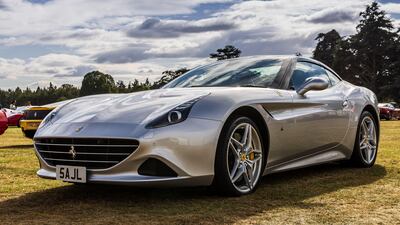
1. Ferrari California: 10.5 litres per 100km, and 742.9km on a full tank. Alamy -
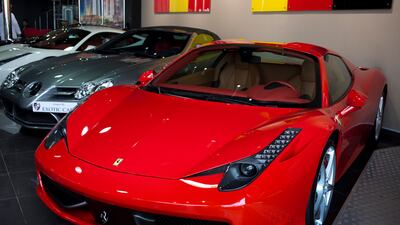
2. Ferrari 458 Spider: 11.8 litres per 100km, and 728.8km on a full tank. Razan Alzayani / The National -
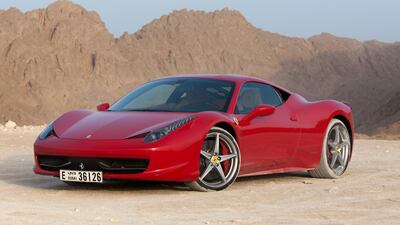
3. Ferrari 458 Italia: 13.3 litres per 100km, and 646.6km on a full tank. Pawel Dwulit / The National -
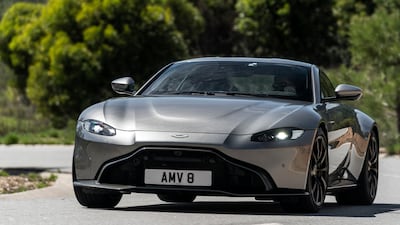
4. Aston Martin Vantage: 11.5 litres per 100km, and 634.8km on a full tank. Photo: Aston Martin -
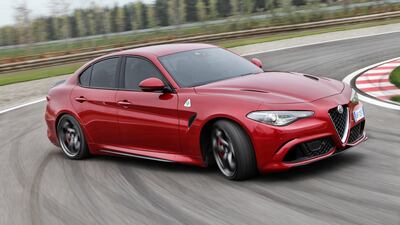
5. Alfa Romeo Giulia AWD: 9.2 litres per 100km, and 630.4km on a full tank. Photo: Alfa Romeo -
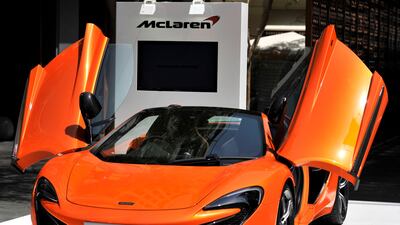
6. McLaren 650S: 11.7 litres per 100km, and 615.4km on a full tank. Charles Crowell/The National -
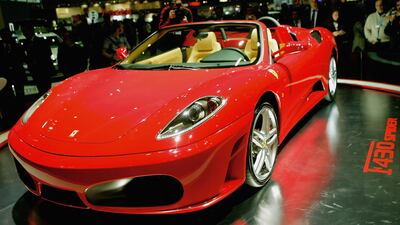
7. Ferrari F430: 16.0 litres per 100km, and 593.8km on a full tank. Getty Images -

8. Ferrari FF: 15.4 litres per 100km, and 590.9km on a full tank. Getty Images -
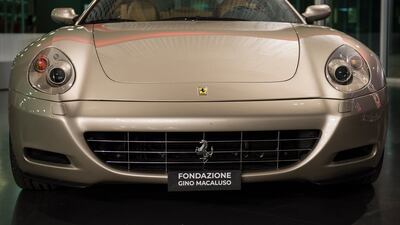
9. Ferrari 612 Scaglietti: 18.3 litres per 100km, and 590.2km on a full tank. Getty Images -
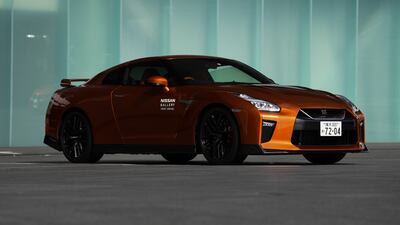
10. Nissan GT-R: 12.8 litres per 100km, and 578.1km on a full tank. Getty Images


“We remain cautiously optimistic for the year ahead, with a continued robust global demand by market and model, high levels of interest in our hybrid models and with more to follow this year.”
Meanwhile, Rolls-Royce announced last week it sold more cars last year than ever before.
All of the 6,032 units that were delivered to customers in 2023 were unique in one way or another, thanks to the bespoke method of building that leaves considerable room for personal preferences.
"The record level of bespoke commissions, both by volume and value, also underlines our position within the luxury sector, offering our clients opportunities for self-expression and personalisation they cannot find anywhere else," said Rolls-Royce chief executive Chris Brownridge.

