On the first Monday in May, the Met Gala will return to New York with its usual dazzling display of fashion, both daring and imaginative. The theme this year is Karl Lagerfeld: A Line of Beauty, in tribute to the trailblazing designer who died in 2019 and, as such, we can expect to see all manner of tributes to his most famous designs and style, from starched collars and severe black suiting to fluffy Choupette-the-cat facsimiles.
The gala acts as the opening night of the titular exhibition at the Metropolitan Museum of Art, which over the years has morphed from an annual fundraiser (tickets are said to be $30,000 per person, while a table costs in the region of $300,000) into one of fashion's most glittering events, attended by celebrities and designers keen to flex their sartorial muscles in front of the world's cameras.
Of course, an event of this scale does not just happen in a vacuum — it requires months of planning, fittings, expertise and support. And that's where The Mark Hotel comes in.
Those familiar with New York City might already know The Mark. Situated at East 77th Street, this five-star establishment is a stone’s throw from the upscale districts of Park Avenue and Madison Avenue, and less than a block from the wide open spaces of Central Park. It's also a handy 10-minute stroll from the MoMa and, by default, the Met Gala.
Such proximity has made it the de facto base for those attending the gala, with guests checking into the hotel's Art Deco rooms and suites, along with a small army of fashion and hair stylists, make-up artists and publicists. To accommodate the A-list crowd, the hotel shuts its doors to the public for three full days around the annual event.
First opened in 1927, The Mark underwent an extensive redesign in 2009, led by famed French designer Jacques Grange, who is well known for his skill of combining old-world glamour with contemporary art and design. For example, when designer Yves Saint Laurent looked to redo the interior of his Villa Mabrouka in Tangier in 1990, it was Grange he turned to.
In 2015, Grange was once again commissioned by the hotel to create The Mark Penthouse, a 930-square-metre apartment spanning two floors, with five bedrooms, eight bathrooms, a library and its own 230-square-metre terrace overlooking Central Park. Costing $75,000 per night, the room has housed several A-listers over the years, such as Anna Wintour — chair of the Met Gala — and Meghan, Duchess of Sussex, who held her baby shower there in 2019, organised by her close friend Serena Williams.
Not only is the hotel conveniently located for the gala's guests, it also has plenty of amenities for those getting red-carpet-ready. French hairstylist Frederic Fekkai has a vegan, sulphate-free salon within the hotel, while John Lobb-trained in-house butlers can buff and shine guest's shoes.
And for anyone needing a last-minute outfit, guests of The Mark have exclusive access to department store Bergdorf Goodman located next door, which will open its doors around the clock if required. For glowing skin, the hotel offers in-room wellness packages designed by aesthetician Dr Barbara Sturm, including massages, personal training sessions, IV drips, facials and The Mark Signature Sturmglow Facial.
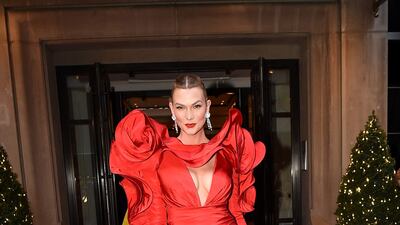
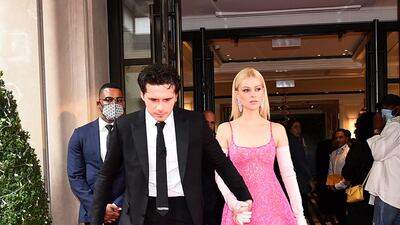
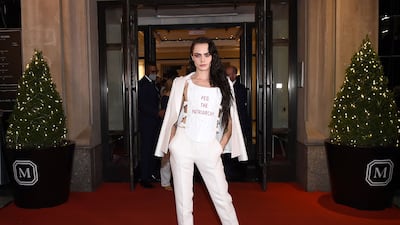
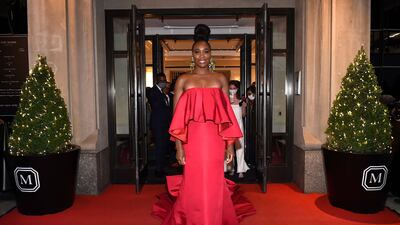
In fact, so many famous faces have stayed at The Mark ahead of the gala, its lobby has been dubbed the evening's second red carpet, with photographers and celebrity spotters often gathered to catch a first glimpse of stars — from Jeremy Scott and Emma Stone to Gigi and Bella Hadid — as they set off from the hotel's canopied front door and make the short journey to the famous party.

Mercer, the investment consulting arm of US services company Marsh & McLennan, expects its wealth division to at least double its assets under management (AUM) in the Middle East as wealth in the region continues to grow despite economic headwinds, a company official said.
Mercer Wealth, which globally has $160 billion in AUM, plans to boost its AUM in the region to $2-$3bn in the next 2-3 years from the present $1bn, said Yasir AbuShaban, a Dubai-based principal with Mercer Wealth.
“Within the next two to three years, we are looking at reaching $2 to $3 billion as a conservative estimate and we do see an opportunity to do so,” said Mr AbuShaban.
Mercer does not directly make investments, but allocates clients’ money they have discretion to, to professional asset managers. They also provide advice to clients.
“We have buying power. We can negotiate on their (client’s) behalf with asset managers to provide them lower fees than they otherwise would have to get on their own,” he added.
Mercer Wealth’s clients include sovereign wealth funds, family offices, and insurance companies among others.
From its office in Dubai, Mercer also looks after Africa, India and Turkey, where they also see opportunity for growth.
Wealth creation in Middle East and Africa (MEA) grew 8.5 per cent to $8.1 trillion last year from $7.5tn in 2015, higher than last year’s global average of 6 per cent and the second-highest growth in a region after Asia-Pacific which grew 9.9 per cent, according to consultancy Boston Consulting Group (BCG). In the region, where wealth grew just 1.9 per cent in 2015 compared with 2014, a pickup in oil prices has helped in wealth generation.
BCG is forecasting MEA wealth will rise to $12tn by 2021, growing at an annual average of 8 per cent.
Drivers of wealth generation in the region will be split evenly between new wealth creation and growth of performance of existing assets, according to BCG.
Another general trend in the region is clients’ looking for a comprehensive approach to investing, according to Mr AbuShaban.
“Institutional investors or some of the families are seeing a slowdown in the available capital they have to invest and in that sense they are looking at optimizing the way they manage their portfolios and making sure they are not investing haphazardly and different parts of their investment are working together,” said Mr AbuShaban.
Some clients also have a higher appetite for risk, given the low interest-rate environment that does not provide enough yield for some institutional investors. These clients are keen to invest in illiquid assets, such as private equity and infrastructure.
“What we have seen is a desire for higher returns in what has been a low-return environment specifically in various fixed income or bonds,” he said.
“In this environment, we have seen a de facto increase in the risk that clients are taking in things like illiquid investments, private equity investments, infrastructure and private debt, those kind of investments were higher illiquidity results in incrementally higher returns.”
The Abu Dhabi Investment Authority, one of the largest sovereign wealth funds, said in its 2016 report that has gradually increased its exposure in direct private equity and private credit transactions, mainly in Asian markets and especially in China and India. The authority’s private equity department focused on structured equities owing to “their defensive characteristics.”
Islamophobia definition
A widely accepted definition was made by the All Party Parliamentary Group on British Muslims in 2019: “Islamophobia is rooted in racism and is a type of racism that targets expressions of Muslimness or perceived Muslimness.” It further defines it as “inciting hatred or violence against Muslims”.
Pupils in Abu Dhabi are learning the importance of being active, eating well and leading a healthy lifestyle now and throughout adulthood, thanks to a newly launched programme 'Healthy Lifestyle'.
As part of the Healthy Lifestyle programme, specially trained coaches from City Football Schools, along with Healthpoint physicians have visited schools throughout Abu Dhabi to give fun and interactive lessons on working out regularly, making the right food choices, getting enough sleep and staying hydrated, just like their favourite footballers.
Organised by Manchester City FC and Healthpoint, Manchester City FC’s regional healthcare partner and part of Mubadala’s healthcare network, the ‘Healthy Lifestyle’ programme will visit 15 schools, meeting around 1,000 youngsters over the next five months.
Designed to give pupils all the information they need to improve their diet and fitness habits at home, at school and as they grow up, coaches from City Football Schools will work alongside teachers to lead the youngsters through a series of fun, creative and educational classes as well as activities, including playing football and other games.
Dr Mai Ahmed Al Jaber, head of public health at Healthpoint, said: “The programme has different aspects - diet, exercise, sleep and mental well-being. By having a focus on each of those and delivering information in a way that children can absorb easily it can help to address childhood obesity."
The specs
Engine: 2.0-litre four-cylinder turbo
Power: 268hp at 5,600rpm
Torque: 380Nm at 4,800rpm
Transmission: CVT auto
Fuel consumption: 9.5L/100km
On sale: now
Price: from Dh195,000