


A number of celebrities have been photographed showing their support for the Bring Back Our Girls movement in protest of nearly 300 abducted Nigerian schoolgirls by Nigerian Islamic extremist group Boko Haram.
-
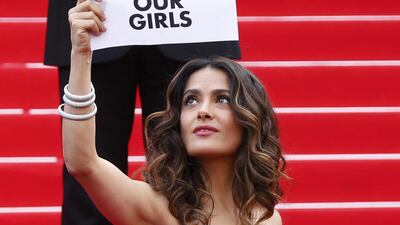
-
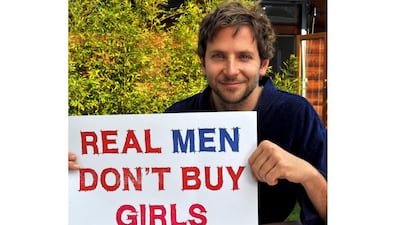
Bradley Cooper holds up a sign reading Real Men Don’t Buy Girls. Courtesy Bradley Cooper -

Spanish actor Antonio Banderas, member of the cast of The Expendables 3, holds a cardboard reading Bring Back Our Girls, as a sign of support for the kidnapped Nigerian schoolgirls, while posing on the red carpet during the 67th edition of the Cannes Film Festival in Cannes, France, on May 18, 2014. Loic Venance / AFP photo -
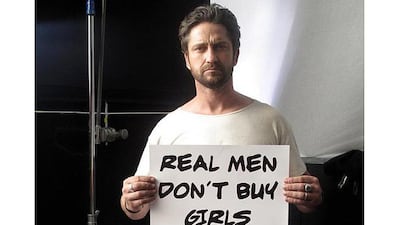
Gerard Butler holds up a sign reading Read Men Don’t Buy Girls in support of the movement. Courtesy Gerard Butler -
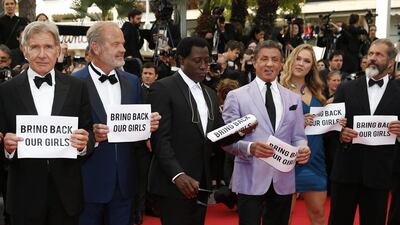
The cast of The Expendables 3, from left, Kelsey Grammer, Wesley Snipes, Sylvester Stallone, Ronda Rousey and Mel Gibson hold up banners reading, Bring Back Our Girls, part of a campaign calling for the release of nearly 300 abducted Nigerian schoolgirls being held by Nigerian Islamic extremist group Boko Haram, as they arrive for the screening of The Homesman at the 67th international film festival in Cannes, France on May 18, 2014. Alastair Grant / AP photo -

Simon Baker holds up a sign reading Real Men Don’t Buy Girls. Courtesy Simon Baker -

Musician Ricky Martin arrives at the 2014 Billboard Music Awards in Las Vegas, Nevada on May 18, 2014 holding up a sign referring to the girls kidnapped in Nigeria. L.E. Baskow / Reuters -

From left, Eva Longoria, Ashton Kutcher, Demi Moore hold up a sign reading Real Men Don’t Buy Girls in support of the kidnapped Nigerian girl students. May 2014. Courtesy Ashton Kutcher -

Ben Stiller holds up a sign in support of the kidnapped Nigerian schoolgirls. Courtesy Ben Stiller -

Justin Timberlake holds up a Real Men Don’t Buy Girls sign in support of the Nigerian schoolgirls. Courtesy Justin Timberlake -

Sean Combs aka Puff Daddy holds up a #BringBackOurGirlsNow sign. Courtesy Sean Combs -

Sean Penn holds up a Real Men Don’t Buy Girls sign. Courtesy Sean Penn -

Alicia Keys holds up a #BringBackOurGirls sign. Courtesy Alicia Keys -

Ellen DeGeneres shows support by holding up a #BringBackOurGirls sign on her show. Courtesy The Ellen DeGeneres Show -

Jamie Foxx holds up a Real Men Don’t Buy Girls sign. Courtesy Jamie Foxx -

Amy Poehler holds up a #BringBackOurGirls sign in support of the Nigerian schoolgirls. Courtesy Amy Poehler -
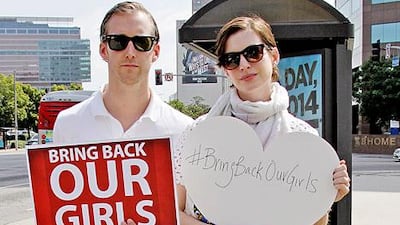
Adam Schulman and his wife Anne Hathaway hold up signs showing their support for the Bring Back Our Girls campaign. Courtesy Anne Hathaway -

CNN anchor Christiane Amanpour and prime minister David Cameron hold up the sign #Bring Back Our Girls in support of the kidnapped Nigerian girl students. Courtesy CNN -

Michelle Obama holds a #BringBackOurGirls sign. Courtesy The White House -

Pakistani activist Malala Yousafzai supporting a social media campaign over the abduction of 276 schoolgirls in Nigeria last month, flooding social media with posts using the hashtag: #BringBackOurGirls. Courtesy EPA. -

French director Lisa Azuelos, left, and French actress Julie Gayet, right, hold a sign #BringBackOurGirls as they arrive for the screening of Saint Laurent during the 67th annual Cannes Film Festival, in Cannes, France, 17 May 2014. Sebastien Nogier / EPA
In pictures: Celebrities show their support for the Bring Back Our Girls movement
Most popular today

