



In addition to decorative rangoli, new clothes and general merrymaking with friends and family, eating mithai (Indian sweetmeats) is a customary part of Diwali.
Sweets are a crucial element of the prayer ceremonies performed during the Indian festival of lights, and often kept out in silver platters all night to welcome Lakshmi, the goddess of prosperity, into the home.
Scroll through the gallery above to learn more about some of the traditional sweets eaten during Diwali
Diwali falls on October 24 this year, and sweetshops around the UAE are gearing up for a sugar-tastic season, with many offering decorative trays and gift-worthy hampers, as well as individual pieces.
Here are a few tried-and-tested shops to scope out.
UAE-wide
Bikanervala
On the menu: The quintessential gulab jamun aside, Bikanervala also stocks moong dal halwa, rasmalai and rasgulla, and other Bengali sweets.
Price point: From Dh4 for a plate of shahi gulab jamun
Locations: in Abu Dhabi at Madinat Zayed and The Galleria, Al Maryah Island; in Dubai at Al Barsha, Al Ghurair Centre, Al Karama, Business Bay, Dubai Hills Mall, JLT, Palm Jumeirah, Silicon Oasis, The Dubai Mall, Trade Centre and Umm Suqeim; and in Sharjah at Al Majaz.
Chhappan Bhog
On the menu: Gulab jamun and rasgulla are its two best-sellers, and the restaurant also does a mean rasmalai in saffron and cardamom flavours, plus piping hot carrot halwa.
Price point: From Dh3.50 for rasgulla
Locations: In Abu Dhabi at Al Markaziya, Al Reef, Mussaffah and Najda; in Dubai at Al Karama and Discovery Gardens; and in Sharjah at Abu Shagara and Al Ghuwair.
Indian by Nature
On the menu: The restaurant divides its mithais into the classic and signature collections. The former includes gulab jamun with pistachio, rasmalai with saffron and two types of halwa, while the latter takes in jalebi with rabri and malai apple phirni among other options.
Price point: from Dh10 for a plate of pistawala gulab jamun
Locations: In Abu Dhabi at Najda; and in Dubai at Al Karama.
Kamat
On the menu: A selection of traditional Indian sweets aside, Kamat has put together Diwali hampers with dry fruits, mawa-based sweets and even diya-shaped fudge.
Price point: From Dh7 for rasmalai, and Dh50 for a mithai box with 10 pieces of fudge
Locations: In Abu Dhabi at Al Wahda Mall; in Dubai at Business Bay, Dubai Internet City, Ibn Battuta, JLT, Mankhool and Qusais; and in Sharjah at Abu Shagara.
Puranmal
On the menu: Puranmal has one of the most expansive mithai menus in the UAE, listed by the piece and by the kilo, and taking in treats ranging from barfi, peda, laddoos and halwa to Mysore pak, cashew katli, malai sandwich and soan papdi.
Price point: From Dh7 for kurmura laddoo
Locations: In Dubai at Academic City, Al Barsha, Al Karama, Business Bay, DIP, Discovery Gardens, Emirates Hills, IMBZ, Jumeirah, Meena Bazaar, Ras Al Khor, Silicon Oasis, The Greens, Trade Centre; and in Sharjah at Abu Shagara and Al Nahda.
Regal Plus
On the menu: A multi-page mithai menu also awaits at “Regal Sweets”, as it’s colloquially known, with options ranging from motichur and besan laddoos to saffron-infused kaju katli and Karachi halwa.
Price point: From Dh7.50 for a kaju kesar pista roll
Locations: In Abu Dhabi at Al Markaziya; and in Dubai at Discovery Gardens and Mankhool.
Abu Dhabi
Mithaiwalas
On the menu: As the name suggests, the focus is firmly on mithais here (although a few savoury street food options are available), with treats ranging from black jamun and pink rasgulla to almond chamcham and saffron pakiza.
Price point: From Dh3 for a kala jamun and mawa sweet
Location: Al Markaziya
Sandesh Sweets
On the menu: Offering a concise but excellent selection, Sandesh serves individual helpings of gulab jamun, malai sandwich and cream rolls, plus milk cake, kaju katli, barfi, jalebi and laddoos by the kilo.
Price point: From Dh2 for a gulab jamun, and from Dh40 for one kilo of jalebi
Location: Al Markaziya
Dubai
Bombay Sweets and Bakery
On the menu: The shop sells mithais under five categories and all by the kilo: milk halwa, barfi, laddoos, cashew-based sweets and peda. Each is offered in various flavours such as fig halwa, coconut barfi, besan laddoo, dry fruit kaju katli and Mathura peda, to name but a few.
Price point: From Dh36 for a kilo of til laddoo
Location: Al Nahda
Shree Haldiram Restaurant
On the menu: The restaurant serves the top five traditional Indian sweets — rasmalai, rasgula, rabri, gulab jamun and jalebi — and allows patrons to pick and mix options to create their own platter.
Price point: From Dh4 for gulab jamun, and Dh35 for an assorted sweets platter
Locations: BurJuman Centre, JLT and Oud Metha
Shree Gangour Sweets - Desilicious
On the menu: The shop divides its offerings under hot mithais (malpua, coin jalebi, angoori gulab jamun) and Bengali sweets (kheer kadam, misti doi and sandesh).
Price point: From Dh4.5 for a regular gulab jamun and kheer kadam
Location: Oud Metha
Scroll through the gallery below to see last year's Diwali preparations across India
-
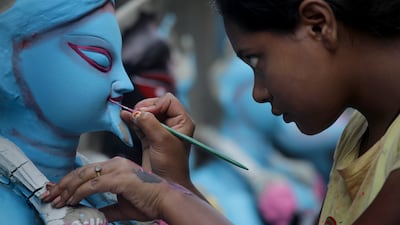
An Indian clay artist, Sujata Chitrakar, works with an idol of the goddess Kali ahead of Diwali in Kolkata. EPA -
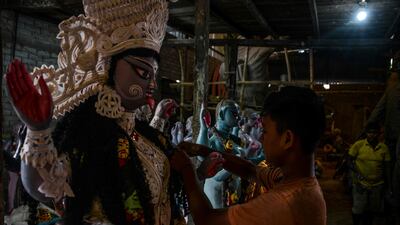
An artist gives the final touches to an idol of Kali, the Hindu goddess of power, in Siliguri, West Bengal. AFP -
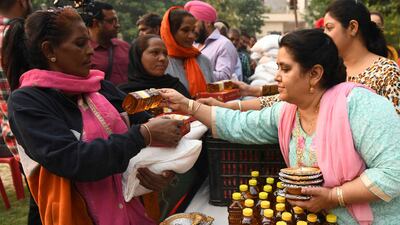
Members of the Just Sewa Society distribute lamps and grocery items to people in need during an event ahead of Diwali, in Amritsar. AFP -
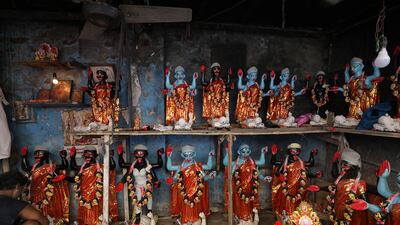
An Indian clay artist works with idols of the goddess Kali in Kolkata. EPA -
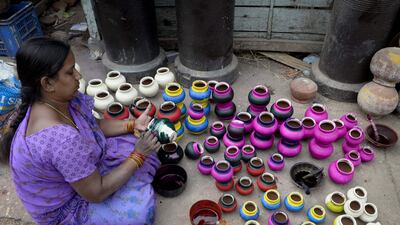
A street vendor applies dye to earthen pots to be used as decorative items, in Hyderabad. AFP -

People shop at a crowded market in New Delhi. Reuters -
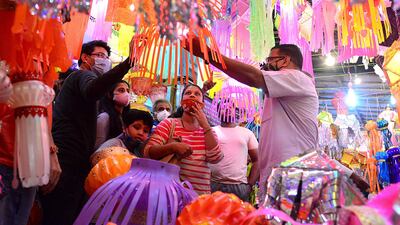
People shop for paper lanterns and other decorative items in Mumbai. AFP -
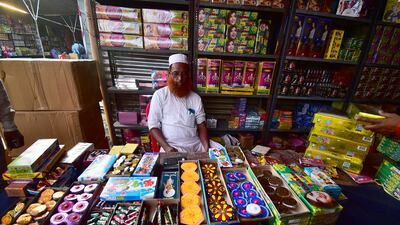
A vendor selling firecrackers in Allahabad. AFP -
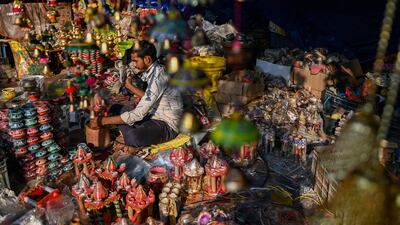
A street vendor sells decorative items at a market in New Delhi. AFP -
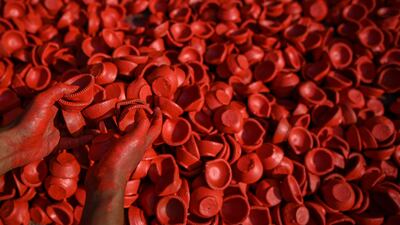
A street vendor dyes earthen lamps in New Delhi. AFP -
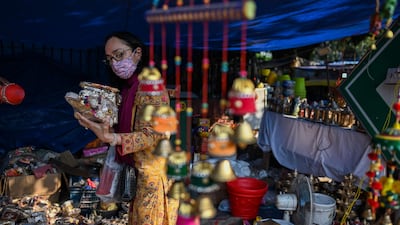
Shoppers buy decorative items in New Delhi. AFP -
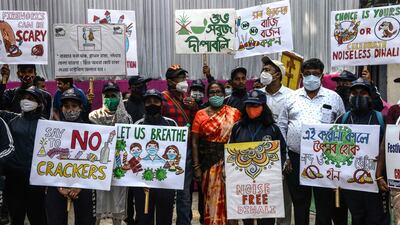
People hold placards to raise awareness on air pollution caused by firecrackers, in Siliguri. AFP -
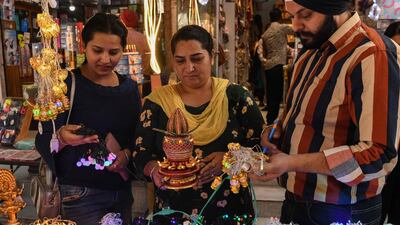
People buy decorative items at a market in Amritsar. AFP -
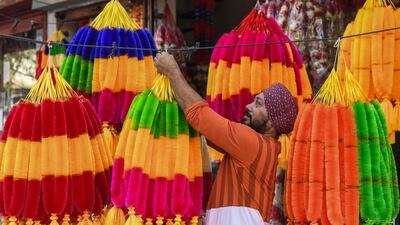
A shopkeeper hangs artificial flower garlands in Amritsar. AFP -
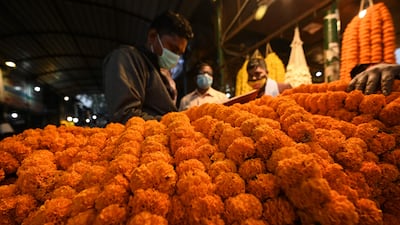
Flower garlands at a shop in New Delhi. AFP -
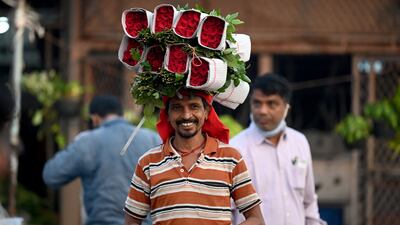
A vendor carries a bunch of roses at a flower market in New Delhi. AFP -

A woman makes garlands in New Delhi. AFP -
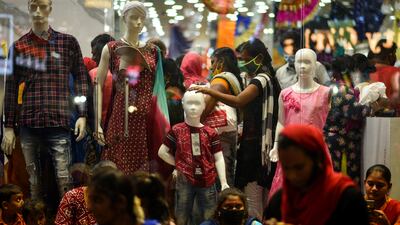
Shoppers in Chennai. EPA -

An artist gives finishing touches to an idol of Lakshmi in Kolkata. AP -
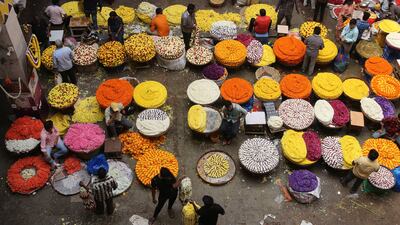
People buy flowers, fruits and essentials at a city market in Bengaluru. EPA -
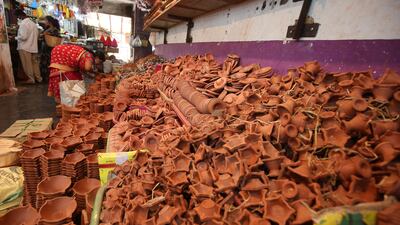
A shop selling earthen lamps in Bengaluru. EPA -

A worker hangs decoration items in Amritsar. AFP -
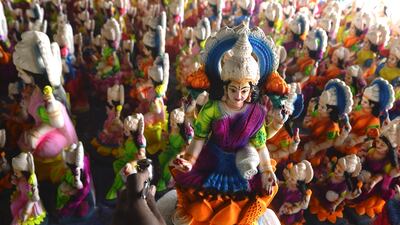
An artisan paints a statue of Lakshmi on the outskirts of Hyderabad. AFP -
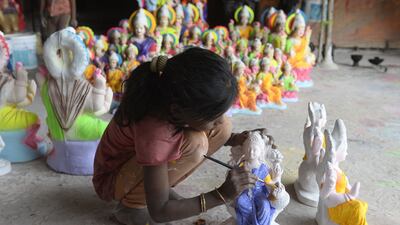
A young artisan at work in Hyderabad. AFP -
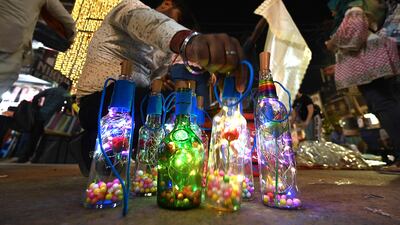
A vendor arranges decorative lights at a market in New Delhi. AFP -
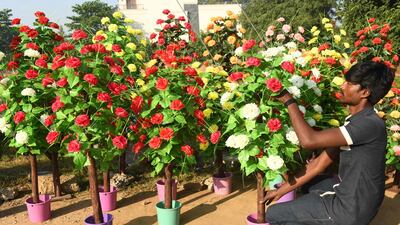
A worker arranges artificial flowers in Amritsar. AFP -

A potter loads dried clay earthen lamps into a furnace in Allahabad. AFP -
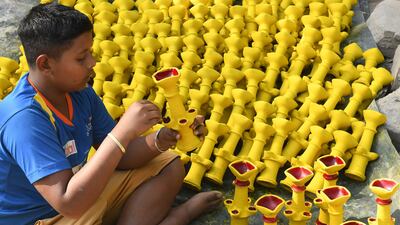
A craftsman paints earthen lamps in Amritsar. AFP -
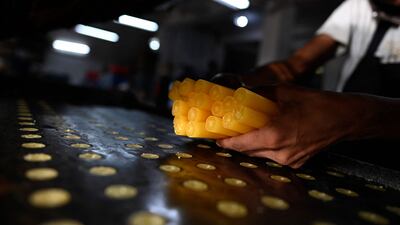
A visually impaired youth makes candles to be sold for Diwali in New Delhi. AFP -
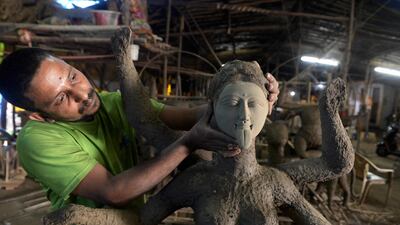
An artisan works on an idol of the goddess Kali on the outskirts of Hyderabad. AFP -

Customers visit a shop selling decorative electric lights in Kolkata. EPA -
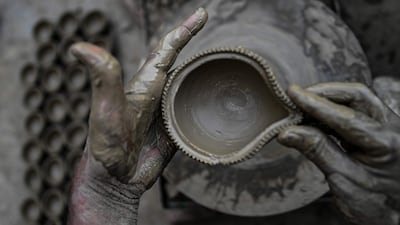
Potters make diyas or earthen oil lamps in New Delhi. AFP -

A worker makes candles in Ahmedabad. AFP -
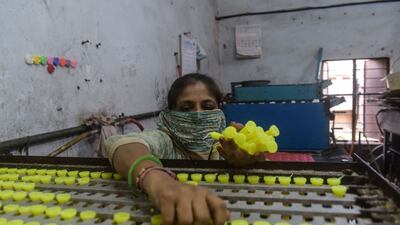
A worker at a candle making shop in Ahmedabad. AFP -
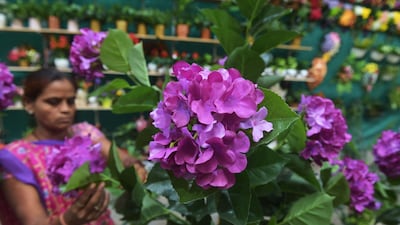
A woman at a flower shop on the outskirts of Ahmedabad. AFP -

Women work inside an artifical flower shop in Ahmedabad. AFP -
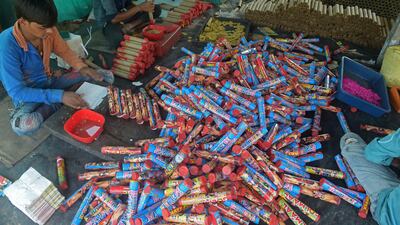
Workers make firecrackers at a workshop in Ahmedabad. AFP -

Girls prepare wax-filled earthen lamps ahead of Diwali, at a centre for visually challenged girls in Ahmedabad. AFP



