


This is the Year of Saudi Coffee.
The kingdom's Ministry of Culture in January announced several initiatives to promote the various blends available in the country, in addition to supporting local coffee roasters.
One high-profile event was the Formula One Saudi Arabian Grand Prix, held in Jeddah from March 25 to 27.
As part of the activities in the official F1 Village, a small pavilion offered visitors a taste of the five major coffee blends available in Saudi Arabia, with guides explaining how they are all linked to the kingdom's geography.
Here's what they had to say ...
1. The north

A general principle of coffee roasting is that blends get lighter from north to south, explains guide Ruba Nadeem.
The flavours of the north are strong and slightly harsh.
"This is coffee from the northern region of Saudi Arabia, and this entails cities like Tabuk," Nadeem says.
"This is a dark roast and has healthy amounts of cloves and cardamom which gives it that rich flavour.
“The slightly bitter and smoky taste comes from the way the coffee is traditionally made, which requires it to be slowly boiled for 30 minutes.”
2. The east
Those residing in the eastern provinces, including the major cities of Dammam and Al Khobar, like their brew lighter and with a shorter preparation time of up to 10 minutes.
"The key thing about coffee from the eastern region is the lighter element of cardamom and saffron," Nadeem says.
3. The centre
This is the coffee of the “people of Riyadh”, says another guide, Nawaf Nadeem.
“I can also say this is probably the most popular coffee in the kingdom.”
True to its geographic location, the brew strikes a deft balance of being not too dark or light.
“It has a great mix of everything normally used in Saudi coffee like the cloves, cardamom and saffron,” she says.
“Because it is also associated with the capital city Riyadh, this kind of coffee has now become the standard in Saudi Arabia and is widely served in official functions and large events.”
4. The west
Home to Saudi Arabia's two holy cities of Makkah and Madinah, coffee from the western provinces boasts an atmospheric punch courtesy of the key ingredient mastic, an aromatic gum obtained from the trunks of mastic trees and traditionally used to treat ailments such as stomach and intestinal ulcers.
"Makkah households use mastic in food, drinks and as a scent to perfume the house," says guide Shaher Al Matrafi.
"With the cardamom, mastic and cloves, it has a really good and relatively light flavour profile.
“For a lot of people from overseas, this is the first coffee they may taste in Saudi Arabia because they would have tried it as part of their Hajj or Umrah journeys.”
5. The south

Those hailing from Saudi Arabia's southern cities, such as Al Bahah, like their coffee light. However, that doesn't mean they lack in flavour, says guide Raghad Nadeem.
"It is subtle because there are a few things going on, in that it can have cinnamon or ginger as well as ajwain," which is a small oval-shaped seed-like fruit with flavours similar to anise.
"Because it is lightly roasted, the flavours are clear and there is no real after taste. This kind of coffee is not really widely available outside the southern province."
Scroll through the gallery below to see photos of the Saudi Arabian Grand Prix:
-

Red Bull's Max Verstappen celebrates after winning the Saudi Arabian Grand Prix in Jeddah on March 27, 2022. AP -

Ferrari's driver Charles Leclerc chats with Red Bull's Dutch driver Max Verstappen after the race. AFP -
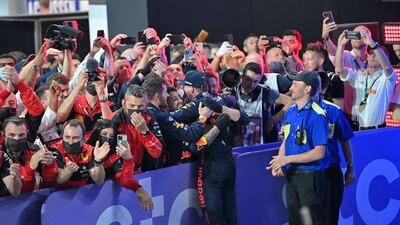
Verstappen celebrates with his team. AFP -

Race winner Max Verstappen of the Netherlands and Red Bull. Getty -
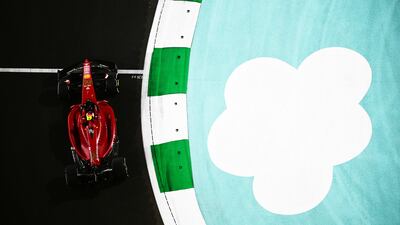
Ferrari's Carlos Sainz in action during Saudi Grand Prix. Getty -
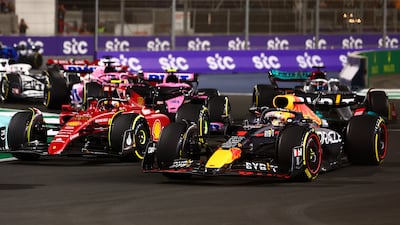
World champion Max Verstappen in his Red Bull. Getty -

Sergio Perez in action in his Red Bull. Getty



