



For the first time in seven decades, Israel will not send a beauty queen to the Miss Universe pageant, which next takes place on January 14 in New Orleans, US.
The Miss Israel organisation released a statement, saying it would not participate in the pageant, which was founded in 1952.
Local media announced the move on Sunday, with The Times of Israel reporting that opinions in the country were divided on whether or not beauty pageants remain relevant in 2022.
The announcement was made a year after the Israeli southern resort city of Eilat hosted the global pageant, where Miss India Harnaaz Sandhu took home the crown.
Scroll through the gallery above to see the moment Miss Universe 2021 was crowned
Sella Sharlin, who was Miss Israel 2019, told Israel's Radio 103FM on Friday that the competition “gives a lot of tools to anyone who is chosen”, adding that since winning she was able to give lectures to youth and found a “group of associations that deal with financial education for youth”.
She said that while changes could still be made, such as removing the swimsuit segment of the competition, “at the end of the day, this competition gives a platform and a place for women to lead, to initiate, and not necessarily to talk about beauty”.
Sivan Klein, the winner in 2003, meanwhile, said in a video post on the country's Channel 12 website, that she backed the cancellation.
“Queen Elizabeth has died, and now the beauty queen contest is buried,” she said.
Overall, she believes the contest to be “shallow”.
“It asks smart questions of smart women, in a bikini. It places a crown on the head and, at the same time, a ceiling,” she said.
Miss Universe made history in August when it announced it was making one of the biggest changes to its selection process. Starting next year, the annual competition will accept married women and mothers. Previously, only single women, aged between 18 and 28, who had never been married or had children, were allowed to apply.
The new rules will not be in place for the 71st Miss Universe, which has been postponed until January 14, as preliminary pageants have already taken place.
The new date also means two Miss Universe pageants are likely to be held next year — the first in January to crown the 2022 winner and the second one later in the year to crown Miss Universe 2023.
The announcement also effectively extended the reign of current Miss Universe Sandhu. But the longest-reigning Miss Universe is Zozibini Tunzi of South Africa, who won the tile in 2019.
Tunzi held her title for 525 days after the 2020 pageant was cancelled owing to the Covid-19 pandemic. She crowned her successor Andrea Meza from Mexico in May 2021, in turn making Meza's the shortest reign in history. Meza passed on her crown to Sandhu at a pageant in Israel in December last year after only 211 days.
The number of countries participating in the pageant changes every year. At the Miss Universe 2021 pageant, 80 countries took part, including first-time contestant Miss Universe Bahrain Manar Nadeem Deyani.
For Miss Universe 2022, organisers are expecting close to 90 countries to participate. A final number will be revealed before the pageant.
Scroll through the gallery below for some of the Miss Universe 2022 contestants crowned so far
-

Miss Universe Turkey 2022 is Aleyana Sirin. Photo: Instagram / Aleyanasirinn -

Miss Universe Italy 2022 is Virginia Stablum. Photo: / Instagram / Virginia.Stablum -
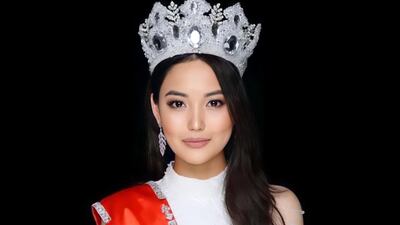
Miss Universe Kyrgyzstan 2022 is Altynai Botoyarova. Photo: Instagram / botoyarova_altynai -

Evlin Khalifa, 24, is the second Miss Universe Bahrain. Photo: Miss Universe Bahrain -

Miss Universe Spain, Alicia Faubel, comes from Alicante and has lived in Dubai and the Philippines. Photo: Instagram / alicia.aliccia -
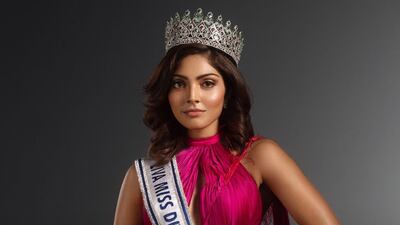
Divita Rai, 23, winner of India's Miss Diva Universe 2022. Photo: Miss Diva -

Sophiya Bhujel was crowned Oriflame Miss Universe Nepal 2022. Photo: Miss Universe Nepal -
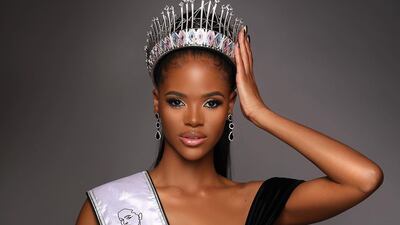
Ndavi Nokeri, winner of Miss Universe South Africa 2022. Photo: Miss South Africa -

Anna Sueangam-iam was named Miss Universe Thailand 2022. Photo: Miss Universe -

Balsam Hussein when she was declared Miss Iraq 2022. Azhar Al-Rubaie for The National -
Yasmina Zaytoun after being crowned Miss Lebanon 2022 at Forum De Beirut. EPA -
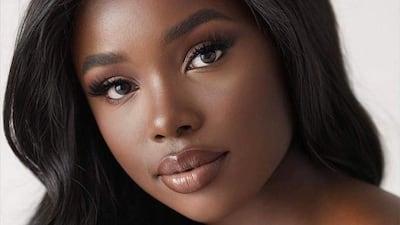
Noky Simbani was crowned Miss Universe Great Britain 2022. Photo: Instagram / Miss Universe Great Britain -

Miss Ukraine 2022 is Viktoria Apanasenko, first runner-up from last year's contest. There was no pageant held this year owing to the war in the country. Photo: Instagram / Viktoria Apanasenko -

Nguyen Thi Ngoc Chau has been named Miss Universe Vietnam 2022. Photo: Facebook / Nguyen Thi Ngoc Chau -
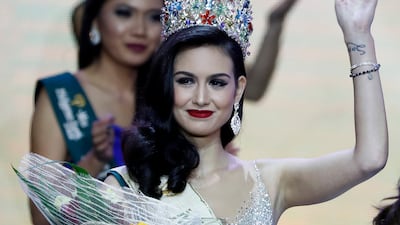
Filipino-Italian beauty queen Celeste Cortesi was crowned Miss Universe Philippines 2022 in Manila. EPA-EFE -

Bhutan is marking its pageant debut this year and Tashi Choden is the country's first beauty queen. Photo: Tashi Choden -

Laksmi Suardana took the Puteri Indonesia 2022 crown, becoming the first contestant from Bali to enter Miss Universe. Photo: Laksmi Shari De Neefe Suardana -
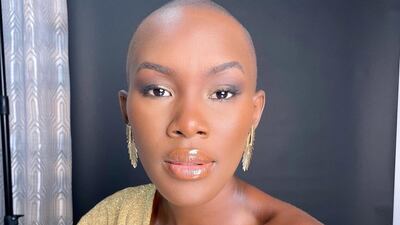
Miss Universe Ghana 2022 Engracia Afua K Mofuman was one of the first women to be crowned in 2022, in order to compete in the 71st Miss Universe pageant. Photo: Engracia Mofuman -

Hanna Kim, from Seoul, will represent South Korea in the next Miss Universe pageant. Photo: Hanna Ming -
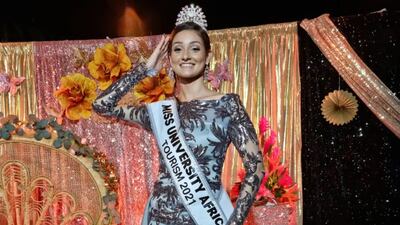
The first and last time the Seychelles competed in Miss Universe was 1995 and so, after that 27-year hiatus, Gabriella Gonthier, from Mahe, will be representing her home country. Photo: Gabriella Gonthier/ Miss University Africa -

Amelia Tu, from Vancouver, winner of Miss Universe Canada 2022. Photo: Miss Universe Canada -
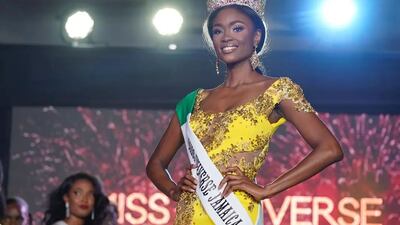
Miss Universe Jamaica 2022, Toshami Calvin, 26, is the cousin of Miss World 2019 Toni-Ann Singh. Photo: Instagram / officialmissuniversejamaica



