

One of the capital's most renowned historic buildings will play host to a programme of events set to mark Ramadan this weekend.
A line-up of traditional performances, demonstrations, games and workshops, has been designed to suit families. Food outlets serving Emirati cuisine and star-gazing are also on the two-day schedule, which kicks off this Saturday.
At the House of Artisans, a range of artisanal products will be up for sale from the craftspeople themselves, who will also be showing off their techniques. Here, you'll be able to custom-make your own kaftans, beach bags and planters, as well as peruse a bunch of stalls by emerging local brands.
The event aims to "revive the authentic traditions of Ramadan by recalling the memories rooted in our past, when the people of Abu Dhabi gathered at Qasr Al Hosn to celebrate the holy month," the announcement reads.
Entry is free, and it's open to people of all ages, from 9pm to 1am each day.
What is Qasr Al Hosn?
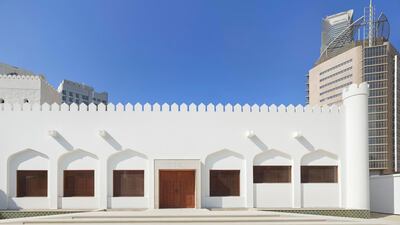
Qasr Al Hosn, which reopened last year after extensive and careful conservation and renovation, is located at the centre of the UAE capital. It's the emirate's oldest heritage site, parts of which date back to the 1760s.
-
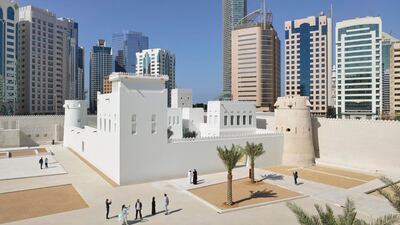
Qasr Al Hosn reopened in December 2018. All photos courtesy Department of Culture and Tourism – Abu Dhabi. Photos by Roland Halbe -
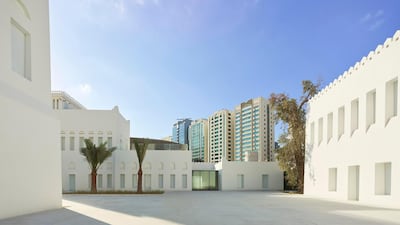
Qasr Al Hosn is made up of an Inner Fort – or 'Hosn' – that was built with coral and sea stone by Sheikh Shakhbut bin Dhiyab in 1795... -
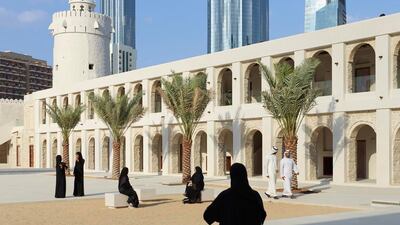
...and an Outer Palace – or 'Qasr' – added by Sheikh Shakhbut bin Sultan Al Nahyan in 1939. -
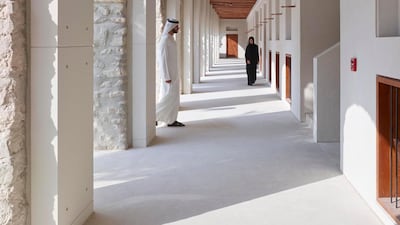
The Arches, Qasr Al Hosn -
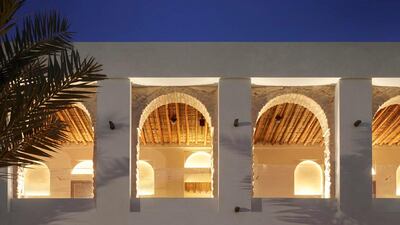
View of Qasr Al Hosn arcades at night -
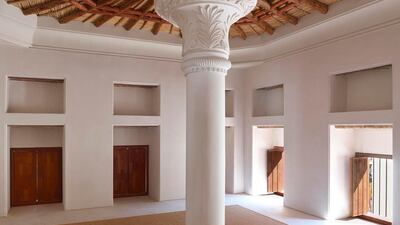
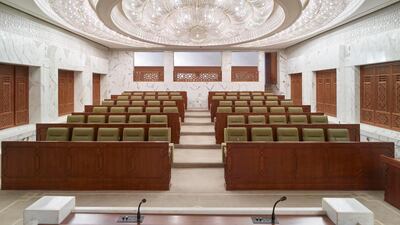
Interior of Qasr Al Hosn -
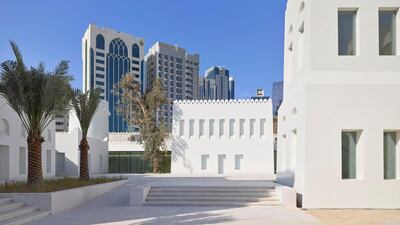
Constructed over 250 years ago, Qasr Al Hosn had begun to show its age before its renovation. -
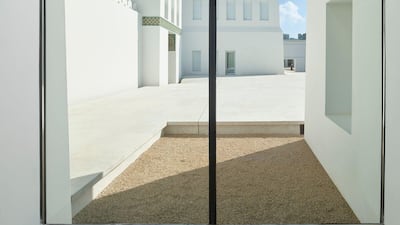
The walls were crumbling; the interiors were tired. It has now had the face-lift it so richly deserves. -
Abu Dhabi’s past is secured. -
In fact, it has become a central part of its future.


The landmark is made up of an Inner Fort – or 'Hosn' – that was built with coral and sea stone by Sheikh Shakhbut bin Dhiyab in 1795 and an Outer Palace – or 'Qasr' – added by Sheikh Shakhbut bin Sultan Al Nahyan in 1939.
For decades, Qasr Al Hosn housed the ruling family but by the 1960s, after renovations, the collection of buildings became home to the National Centre for Documentation and Research. The complex is now also the location for the Cultural Foundation, museum and a soon-to-open Children's Library.

