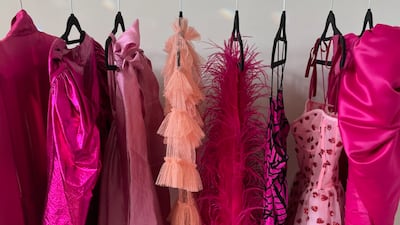

Sarah Silsbury was not immediately sold on the idea of renting out her clothes. The stylist and personal shopper, who describes her wardrobe as “getting out of hand”, understood the logic, she just wasn’t sure it would be worth the trouble.
“I thought it might be a bit of a faff,” she tells The National. But, she says, she was wrong. “It's actually really straightforward. Once your pieces are listed, there's very little to worry about and my wardrobe is basically earning its own keep now.”
Silsbury has had regular rentals and earned thousands of dirhams in passive income from clothes that would otherwise just be hanging up, gathering dust. “My wardrobe has developed its own little side hustle, which rather conveniently helps fund my next fashion obsession,” she says.


An increasing number of people in the UAE are following a similar path, as a cluster of rental platforms – covering everything from couture to carpet cleaners – make it increasingly straightforward to turn dormant possessions into a trickle, or sometimes a stream, of income.
Platforms removing friction
The architecture of the rental economy rests on intermediaries. Endless, a Dubai-based fashion rental platform founded by Rosie Gunn, takes care of logistics from end to end.
“It really is a low-effort additional stream of income for the financially savvy modern woman,” she says. Top lenders on the platform have made tens of thousands of dollars, she adds. “It's been known to cover the cost of women's holidays, weekend plans, weekly food shop.”

Best Kept Shared, cofounded by Sophie Kjoller, operates on a similar model, connecting lenders – the platform calls them “keepers” – with borrowers looking to access designer pieces for a fraction of their retail cost.
“With curated pieces and a bit of effort, lenders can make hundreds or thousands of dirhams a month,” Kjoller says. Some have reached the tens of thousands of dirhams mark, she says, “from pieces that might otherwise have been sitting unworn in their wardrobes”.
Neighbr, founded by Natalie Malhas, extends the same logic beyond fashion. The newly launched platform aims to facilitate peer-to-peer rental of household equipment, electronics and practical items within residential communities.
“I genuinely believe that some of the best income opportunities are hiding in things we already own,” says Malhas. “Sometimes, you don't need to start a business to start earning. You just need to look around your home.”

For example, a baby stroller listed at Dh60 a day, rented out for a fortnight, yields Dh840 from a single item that was otherwise occupying space. “An item listed at Dh20 a day that gets booked 10 times can generate more rental revenue than the same item listed at Dh100 that only gets booked once.”
Making sure you earn
Listing something and making money from it are not the same thing. All three platform founders agree the difference lies in a handful of decisions.
Kjoller frames it as a three-part formula: desirability, visibility and availability. Desirability means listing what people actually want to rent – “standout dresses, jumpsuits and occasion wear, particularly trending styles and cult pieces” – rather than clearing out items nobody will touch. Visibility means actively bringing your wardrobe to life on social media, sharing styled looks and linking to pieces available for rent, so potential borrowers can find them.

As for availability, Kjoller says: “Dubai girlies love a last-minute outfit. Most of our bookings are for same-day delivery, often using our two-hour service. Keeping your pieces clean and pressed, with someone at home available to hand them over at short notice, makes all the difference.”
Gunn has similar advice. “Present your wardrobe like a mini boutique. Great imagery, accurate information, competitive pricing and a good selection of items will lead to a successful additional revenue stream.”
Malhas believes some people overestimate how much they should charge “because they're thinking about how much they originally paid for an item, rather than how much someone would reasonably pay to use it for a day or two”. It takes a simple shift, from thinking: “How much can I charge for this?” to: “What price would make someone want to rent this?”
You can’t rent everything
For renters of fashion in particular, there is an emotional dimension to this side hustle. Silsbury’s biggest initial hesitation was “the thought of handing over some of my favourite pieces to complete strangers”, she says. “I'm quite attached to my clothes, but ultimately they're meant to be worn, and I'd much rather see them out having fun than sitting in my wardrobe.”
Rawan Kasir, who has been renting pieces through Endless for several years and has accumulated several thousand dollars in the process, says she navigates this by being selective. “There are certain pieces that are sentimental or that I prefer to keep completely personal, so I'm quite considered about what I choose to rent out.” The pieces that make it on to the platform, she says, are the ones she loves but rarely reaches for, “particularly occasion and holiday pieces”.

She recommends the process, “particularly for pieces that you love but don't necessarily have the opportunity to wear very often. I think our relationship with fashion is changing – there's less of a need for everything to be worn once and then replaced.”
Malhas believes there needs to be a shift in how people think about their possessions altogether, particularly in dense urban environments such as Dubai.
“Why should 10 people in the same building each buy something they'll only use once when they could simply rent it from one another?” she asks. “Instead of automatically asking, 'Where can I buy this?' I want people to start asking, 'Can I rent this from someone nearby?'”
In a city, where entire communities share walls and elevators, the person who needs what you already own might be closer than you expect. The only thing standing between your unused possessions and earning decent money could be a listing.

