


Cancer survival rates in the UK are trailing decades behind countries such as Denmark, Norway and Sweden, new analysis shows.
The analysis, by Macmillan Cancer Support found that survival rates in the UK for prostate, bowel, breast and cervical cancer are only just reaching levels that some other European countries achieved in the early 2000s.
The data shows that bowel cancer survival in England for women is 20 years behind Sweden, where women who had the condition diagnosed between 1997 and 2001 experienced better five-year survival rates than those in England who were diagnosed two decades later (2016-2020).
Current survival figures further shows 57.6 per cent of women in England live for at least five years, but this figure is much higher elsewhere at 72.7 per cent in Denmark, 71.7 per cent in Norway and 70.6 per cent in Sweden.
Similarly, survival data from Scotland, Wales and Northern Ireland shows these countries are lagging 10 to 15 years behind Sweden and Norway.
When it comes to men, bowel cancer survival in England lags 15 years behind Sweden, while prostate cancer survival is a decade behind.
England is currently achieving 57.6 per cent five-year survival rates, lower than the 73.2 per cent in Denmark, 70 per cent in Norway and 69.4 per cent in Sweden.
Prostate cancer five-year survival in England currently stands at 88.5 per cent, but is much higher in Sweden at 95 per cent, 94.8 per cent in Norway and 90.2 per cent in Denmark.
Breast cancer survival in England is also a decade behind Sweden and Denmark, while Scotland and Northern Ireland are a decade behind Sweden.
The data also showed that cervical cancer survival in England is 25 years behind Norway, which achieved a higher survival between 1992 and 1996 than England has now.
“Behind today’s shocking data are thousands of real people whose entire worlds have been turned upside down by cancer,” Gemma Peters, Macmillan Cancer Support’s chief executive, said.
“It’s clear that cancer care is at breaking point, but this is a political choice and better is possible.
“We urgently need the next UK government to prioritise a long-term cross-government strategy that revolutionises cancer care and ensures everyone with cancer has access to the care they need, every step of the way.”
Study finds strong link between ultra-processed foods and cancer - in pictures
-

Eating more ultra-processed foods increases the risk of developing cancer, a new study indicates. PA -

The research found a strong link between ultra-processed foods - such as mass-produced breads, many ready meals and breakfast cereals - and higher rates of cancer. -

Ultra-processed foods go through multiple processes such as extrusion, molding and milling, and often contain many added ingredients. Sarah Dea / The National -
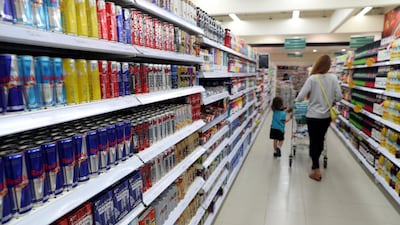
The foods, usually cheap and convenient, have increased in popularity and may even be marketed as 'healthy', 'natural' or 'organic'. Chris Whiteoak / The National


Previous studies have shown the UK has some of the worst cancer survival rates in Europe.
However, the analysis by Macmillan uses even more recent data to give a fuller picture.
The charity said it had compared the UK to Sweden, Norway and Denmark as they have similar healthcare systems and have high-quality cancer data.
Products that contain cancer-causing chemical - in pictures
-

Many dry shampoos contain benzene, a carcinogen known to cause cancer, according to tests carried out by independent US lab Valisure. Photo: Unsplash -

Last year, Valisure raised the alarm about benzene levels in hand sanitisers, body sprays and sunscreens, several of which were also recalled. Photo: Getty -

In 2021, several brands of sun cream were found to contain unsafe levels of benzene. Photo: Getty -

Some deodorants brands have also been found to contain benzene. Photo: Getty -

Studies have revealed that women who have used hair straightening chemicals, or relaxers, may be at higher risk of developing uterine cancer. Photo: Getty -

Some studies show a link between the chemicals in certain hair dyes and cancer. But it has been found that the risk is probably low in people who colour their hair from time to time. People who work with dye all day long, are at a greater risk. Photo: Getty


“The NHS is seeing and treating record numbers of people for cancer, with more people diagnosed at an earlier stage than ever before, and survival rates in England at an all-time high,” an NHS spokesman said.
“It is transforming and expanding its innovative screening programmes including lung checks in supermarket car parks, at home bowel cancer tests and using AI to spot skin cancer, making it easier than ever before to get checked, so please take up your screening invitation when asked – it could save your life.”

