Dr Angeliki Asimaki is hoping to save thousands of lives through a cheek swab that can detect when people are at risk of suffering a cardiac arrest. Photo: Getty Images

Zayed Research Centre and the London surgeon on a lifelong heart health mission


Nicky Harley
  • English
  • Arabic

Recognising the despair in young eyes is something that Dr Angeliki Asimaki does from a personal point of view, for the cardiac specialist knows only too well the struggles that families face when genetic heart conditions are discovered.

The 43-year-old has undergone nine heart operations because of a condition that she was born with, and for two decades the cardiac surgeon has also been developing techniques to tackle sudden cardiac death.

With thousands of youngsters dying from SCD every year, she has now teamed up with the UAE-backed rare diseases research centre at Great Ormond Street Hospital in London for trials of a test to help to save lives.

“I have worked on this my entire life,” Dr Asimaki told The National. “I decided to become involved in this field of work because I was born with two congenital heart defects.

“I have lived with a pacemaker since I was 15 and I’m currently going through my fifth generator.”

Now, she hopes to provide some solutions that lower the risk of death in those who suffer heart attacks caused by certain paediatric conditions. By using a simple cheek swab test, she discovered that the protein changes in a person’s heart are mirrored in their cheeks and instead of doctors needing to carry out invasive surgery and detailed examinations, it can swiftly reveal if a person is at imminent risk of a cardiac arrest.

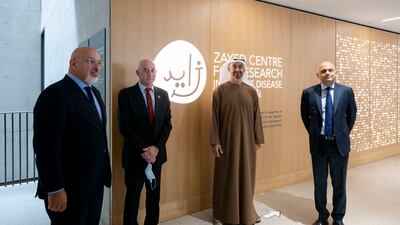
At her side is Dr Juan Kaski, consultant paediatric cardiologist and the lead director of the Inherited Cardiovascular Diseases Unit at Great Ormond Street Hospital, where the Zayed Centre for Research into Rare Disease in Children in based.

Dr Kaski sees first hand the effect of this condition on his young patients and wants to meet the desire for answers presented to him on a daily basis.

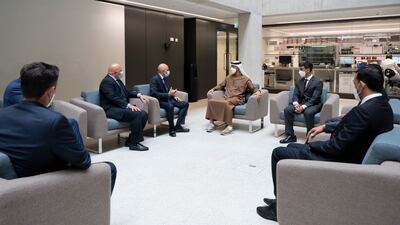
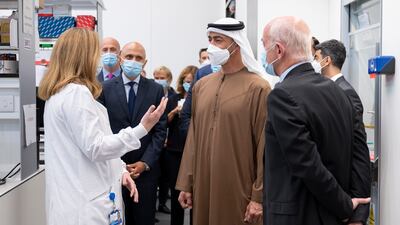
The Zayed Centre for Research into Rare Disease in Children, London. Getty Images

“The first question parents ask me is whether their child is going to die suddenly,” he told The National. “To be able to involve them and use this test to reassure them is massive.”

The breakthrough technology means children with a potentially deadly heart condition can be quickly and safely monitored and doctors can rapidly act to save their lives.

Dr Angeliki Asimaki was diagnosed with a heart condition during her childhood. Photo: Angeliki Asimaki

“I studied the hearts of SCD victims and established the group of proteins that move in the heart and translated this to the cheek in already diagnosed patients. We can detect changes in the heart in the cheek and pick it up before the disease is manifest.

Dr Angeliki Asimaki as a child. Photo: Angeliki Asimaki

“Although children are born with the actual DNA mistake, they do not show clinical abnormalities until their adolescent years and even after this point the disease can be dormant for a number of years and then it undergoes a hot phase where there’s a period of unstable activity which actually comes with the highest risk of SCD.

“We got funding to do a study to follow paediatric patients which carry these DNA mistakes with the aid of the cheek smears. The proteins start moving a little bit before the disease onset. So, before the disease wakes up that’s when you start having shifts on your proteins.

“Essentially, what we are trying to establish is a completely risk-free test to allow us to increase the surveillance of these children and establish management plans for when these proteins start moving.”

A cheek swab test can help detect people at risk from cardiac arrests.

The British Heart Foundation has provided £270,000 funding for the three-year trial at the Zayed Centre for Rare Diseases at GOSH.

Dr Asimaki, who is also a senior lecturer at St George’s, University of London, hopes to one day use the same technique on adults at the south London hospital.

The cheek swab can, hopefully, be used to monitor a disease called Arrhythmogenic cardiomyopathies, which is a major cause of sudden cardiac deaths across all populations of the world, affecting one in 1,000 people.

ACM is believed to account for 25 per cent of sudden deaths in children bearing such a mutation.

The condition appears in adolescence and presently children who have it are monitored on a yearly basis through a range of clinical tests that include electrocardiograms, echo cardiograms, magnetic resonance imaging and heart monitors.

The cheek swabs enable the doctors to get a quick snapshot of any changes in the heart.

“Presently there are many tests and it is quite emotionally burdening for the children and their families and the tests are very costly in terms of the time they take and the cost to the NHS,” she said. “So our test is providing a much-needed window into the minute changes happening in the hearts of ACM patients, in a totally risk-free, non-invasive way.

“Doctors can be warned about which of their patients are most at risk of dangerous heart rhythms and other symptoms, allowing them to tailor treatment to ensure that each patient receives the best care for them.

“Patients, particularly children, have told us they hugely prefer the speed and ease of the cotton bud cheek swab compared to alternatives like blood tests.

“Doing the annual standard clinical investigations at the moment costs the NHS more than £1,000 per child, analysing the location of proteins in quarterly cheek swabs in four sets of swabs costs me £100 so we are talking a 10-fold reduction in costs.”

The team have created DIY home kits for families to use and post back to the hospital.

It means if parents have concerns they can test their children and quickly get the results back so preventive action can be taken, if needed.

“People with ACM often live with day-to-day worries because of the unpredictable nature of their condition, in which dangerous symptoms can start with little to no warning,” Professor Bryan Williams, chief scientific officer at the British Heart Foundation, said.

“The simple monitoring test being developed by Dr Asimaki and her team has the potential to provide reassurance to patients and their families that their condition is being kept under a watchful eye by medical professionals.”

If children have a single genetic mistake linked to the disease its onset usually happens between ages 14 to 17, but in children bearing two mutations the disease onset can be much earlier.

The team is monitoring 115 children in the trial aged between two months old to 18, and is also conducting tests in the Netherlands and Dr Asimaki’s home nation, the Greek Island of Naxos, which has a high number of children with the disease.

The disease is also prevalent in children in the UAE and those receiving treatment for it at Great Ormond Street Hospital will also be able to take part in the trial.

“The trial is only on patients in the UK but I expect as we raise awareness of the study we will get referrals from places like the Middle East of people wanting to take part,” Dr Kaski said.

“The advantage of this trial is to put us in a better position to save lives. I feel really privileged to help these families and give them hope.”

Bea, who is taking part in the trial. Photo: British Heart Foundation

One of the youngsters taking part in the trial is 10-year-old Bea.

She started experiencing symptoms of an unusually fast heart rhythm, called ventricular tachycardia, including shortness of breath and dizziness, three years ago and was diagnosed with ACM.

“The test is adding another layer of reassurance to the family that the condition is being monitored. We think it’s so important to take part in this research to improve how ACM is monitored and managed for children in the future,” her mother Liz said.

“Every time she experiences a symptom, a recording of her heart rhythm is sent to GOSH and reviewed within an hour, which gives us some reassurance. It saves her having to go for overnight monitoring in hospital and missing school every time.

“Aside from going in for regular check-ups at GOSH, we feel it’s really important to not let Bea’s condition get in the way of a normal childhood.”

It is research nurse Emma Field's job at GOSH to talk to the families and ask them to be involved and she collects the samples.

“I approach new patients every week to take part in the trial and the numbers are going up,” she told The National. “The feedback from patients and families is amazing. It is not painful or uncomfortable and the children and their families are keen to take part and help us.”

Dr Asimaki is hoping the test can be rolled out globally and help save the lives of other heart patients.

“The majority of the people in my shoes work for the patient because everything we do is done solely for their benefit but I can also be in their shoes, I do not just work for the patient, I am one myself,” she said.

“This work is really important to me and I hope it can be rolled out. ACM affects all populations of the world, actually certain countries show even higher incidents such as the Netherlands, Greece and the Middle East.

“I really hope the swabs can be applied to every country, they will save lives, especially if the home kits become more widely available.

“I’m incredibly proud and happy that even if my work helps save one child then I feel like I have fulfilled my purpose in life.”


Freezer tips

  • Always make sure food is completely cool before freezing.
  • If you’re cooking in large batches, divide into either family-sized or individual portions to freeze.
  • Ensure the food is well wrapped in foil or cling film. Even better, store in fully sealable, labelled containers or zip-lock freezer bags.
  • The easiest and safest way to defrost items such as the stews and sauces mentioned is to do so in the fridge for several hours or overnight.
The specs: Lamborghini Aventador SVJ

Price, base: Dh1,731,672

Engine: 6.5-litre V12

Gearbox: Seven-speed automatic

Power: 770hp @ 8,500rpm

Torque: 720Nm @ 6,750rpm

Fuel economy: 19.6L / 100km

The President's Cake

Director: Hasan Hadi

Starring: Baneen Ahmad Nayyef, Waheed Thabet Khreibat, Sajad Mohamad Qasem 

Rating: 4/5

South Africa squad

Faf du Plessis (captain), Hashim Amla, Temba Bavuma, Quinton de Kock (wicketkeeper), Theunis de Bruyn, AB de Villiers, Dean Elgar, Heinrich Klaasen (wicketkeeper), Keshav Maharaj, Aiden Markram, Morne Morkel, Wiaan Mulder, Lungi Ngidi, Vernon Philander and Kagiso Rabada.

Global state-owned investor ranking by size

1.

United States

2.

China

3.

UAE

4.

Japan

5

Norway

6.

Canada

7.

Singapore

8.

Australia

9.

Saudi Arabia

10.

South Korea

Mercer, the investment consulting arm of US services company Marsh & McLennan, expects its wealth division to at least double its assets under management (AUM) in the Middle East as wealth in the region continues to grow despite economic headwinds, a company official said.

Mercer Wealth, which globally has $160 billion in AUM, plans to boost its AUM in the region to $2-$3bn in the next 2-3 years from the present $1bn, said Yasir AbuShaban, a Dubai-based principal with Mercer Wealth.

Within the next two to three years, we are looking at reaching $2 to $3 billion as a conservative estimate and we do see an opportunity to do so,” said Mr AbuShaban.

Mercer does not directly make investments, but allocates clients’ money they have discretion to, to professional asset managers. They also provide advice to clients.

“We have buying power. We can negotiate on their (client’s) behalf with asset managers to provide them lower fees than they otherwise would have to get on their own,” he added.

Mercer Wealth’s clients include sovereign wealth funds, family offices, and insurance companies among others.

From its office in Dubai, Mercer also looks after Africa, India and Turkey, where they also see opportunity for growth.

Wealth creation in Middle East and Africa (MEA) grew 8.5 per cent to $8.1 trillion last year from $7.5tn in 2015, higher than last year’s global average of 6 per cent and the second-highest growth in a region after Asia-Pacific which grew 9.9 per cent, according to consultancy Boston Consulting Group (BCG). In the region, where wealth grew just 1.9 per cent in 2015 compared with 2014, a pickup in oil prices has helped in wealth generation.

BCG is forecasting MEA wealth will rise to $12tn by 2021, growing at an annual average of 8 per cent.

Drivers of wealth generation in the region will be split evenly between new wealth creation and growth of performance of existing assets, according to BCG.

Another general trend in the region is clients’ looking for a comprehensive approach to investing, according to Mr AbuShaban.

“Institutional investors or some of the families are seeing a slowdown in the available capital they have to invest and in that sense they are looking at optimizing the way they manage their portfolios and making sure they are not investing haphazardly and different parts of their investment are working together,” said Mr AbuShaban.

Some clients also have a higher appetite for risk, given the low interest-rate environment that does not provide enough yield for some institutional investors. These clients are keen to invest in illiquid assets, such as private equity and infrastructure.

“What we have seen is a desire for higher returns in what has been a low-return environment specifically in various fixed income or bonds,” he said.

“In this environment, we have seen a de facto increase in the risk that clients are taking in things like illiquid investments, private equity investments, infrastructure and private debt, those kind of investments were higher illiquidity results in incrementally higher returns.”

The Abu Dhabi Investment Authority, one of the largest sovereign wealth funds, said in its 2016 report that has gradually increased its exposure in direct private equity and private credit transactions, mainly in Asian markets and especially in China and India. The authority’s private equity department focused on structured equities owing to “their defensive characteristics.”

What vitamins do we know are beneficial for living in the UAE

Vitamin D: Highly relevant in the UAE due to limited sun exposure; supports bone health, immunity and mood.Vitamin B12: Important for nerve health and energy production, especially for vegetarians, vegans and individuals with absorption issues.Iron: Useful only when deficiency or anaemia is confirmed; helps reduce fatigue and support immunity.Omega-3 (EPA/DHA): Supports heart health and reduces inflammation, especially for those who consume little fish.

The specs

BMW M8 Competition Coupe

Engine 4.4-litre twin-turbo V8

Power 625hp at 6,000rpm

Torque 750Nm from 1,800-5,800rpm

Gearbox Eight-speed paddleshift auto

Acceleration 0-100kph in 3.2 sec

Top speed 305kph

Fuel economy, combined 10.6L / 100km

Price from Dh700,000 (estimate)

On sale Jan/Feb 2020
 

Results

5pm: Wadi Nagab – Maiden (PA) Dh80,000 (Turf) 1,200m; Winner: Al Falaq, Antonio Fresu (jockey), Ahmed Al Shemaili (trainer)

5.30pm: Wadi Sidr – Handicap (PA) Dh80,000 (T) 1,200m; Winner: AF Majalis, Tadhg O’Shea, Ernst Oertel

6pm: Wathba Stallions Cup – Handicap (PA) Dh70,000 (T) 2,200m; Winner: AF Fakhama, Fernando Jara, Mohamed Daggash

6.30pm: Wadi Shees – Handicap (PA) Dh80,000 (T) 2,200m; Winner: Mutaqadim, Antonio Fresu, Ibrahim Al Hadhrami

7pm: Arabian Triple Crown Round-1 – Listed (PA) Dh230,000 (T) 1,600m; Winner: Bahar Muscat, Antonio Fresu, Ibrahim Al Hadhrami

7.30pm: Wadi Tayyibah – Maiden (TB) Dh80,000 (T) 1,600m; Winner: Poster Paint, Patrick Cosgrave, Bhupat Seemar

Timeline

2012-2015

The company offers payments/bribes to win key contracts in the Middle East

May 2017

The UK SFO officially opens investigation into Petrofac’s use of agents, corruption, and potential bribery to secure contracts

September 2021

Petrofac pleads guilty to seven counts of failing to prevent bribery under the UK Bribery Act

October 2021

Court fines Petrofac £77 million for bribery. Former executive receives a two-year suspended sentence 

December 2024

Petrofac enters into comprehensive restructuring to strengthen the financial position of the group

May 2025

The High Court of England and Wales approves the company’s restructuring plan

July 2025

The Court of Appeal issues a judgment challenging parts of the restructuring plan

August 2025

Petrofac issues a business update to execute the restructuring and confirms it will appeal the Court of Appeal decision

October 2025

Petrofac loses a major TenneT offshore wind contract worth €13 billion. Holding company files for administration in the UK. Petrofac delisted from the London Stock Exchange

November 2025

180 Petrofac employees laid off in the UAE

COMPANY%20PROFILE
%3Cp%3E%3Cstrong%3EName%3A%20%3C%2Fstrong%3ESmartCrowd%0D%3Cbr%3E%3Cstrong%3EStarted%3A%20%3C%2Fstrong%3E2018%0D%3Cbr%3E%3Cstrong%3EFounder%3A%20%3C%2Fstrong%3ESiddiq%20Farid%20and%20Musfique%20Ahmed%0D%3Cbr%3E%3Cstrong%3EBased%3A%20%3C%2Fstrong%3EDubai%0D%3Cbr%3E%3Cstrong%3ESector%3A%20%3C%2Fstrong%3EFinTech%20%2F%20PropTech%0D%3Cbr%3E%3Cstrong%3EInitial%20investment%3A%20%3C%2Fstrong%3E%24650%2C000%0D%3Cbr%3E%3Cstrong%3ECurrent%20number%20of%20staff%3A%3C%2Fstrong%3E%2035%0D%3Cbr%3E%3Cstrong%3EInvestment%20stage%3A%20%3C%2Fstrong%3ESeries%20A%0D%3Cbr%3E%3Cstrong%3EInvestors%3A%20%3C%2Fstrong%3EVarious%20institutional%20investors%20and%20notable%20angel%20investors%20(500%20MENA%2C%20Shurooq%2C%20Mada%2C%20Seedstar%2C%20Tricap)%3C%2Fp%3E%0A
The%20specs
%3Cp%3E%3Cstrong%3EEngine%3A%3C%2Fstrong%3E%20Twin%20electric%20motors%20and%20105kWh%20battery%20pack%0D%3Cbr%3E%3Cstrong%3EPower%3A%20%3C%2Fstrong%3E619hp%0D%3Cbr%3E%3Cstrong%3ETorque%3A%20%3C%2Fstrong%3E1%2C015Nm%0D%3Cbr%3E%3Cstrong%3ETransmission%3A%20%3C%2Fstrong%3ESingle-speed%20auto%0D%3Cbr%3E%3Cstrong%3ETouring%20range%3A%20%3C%2Fstrong%3EUp%20to%20561km%0D%3Cbr%3E%3Cstrong%3EOn%20sale%3A%20%3C%2Fstrong%3EQ3%20or%20Q4%202022%0D%3Cbr%3E%3Cstrong%3EPrice%3A%20%3C%2Fstrong%3EFrom%20Dh635%2C000%3C%2Fp%3E%0A
Who's who in Yemen conflict

Houthis: Iran-backed rebels who occupy Sanaa and run unrecognised government

Yemeni government: Exiled government in Aden led by eight-member Presidential Leadership Council

Southern Transitional Council: Faction in Yemeni government that seeks autonomy for the south

Habrish 'rebels': Tribal-backed forces feuding with STC over control of oil in government territory

Company%20profile
%3Cp%3E%3Cstrong%3ECompany%20name%3A%20%3C%2Fstrong%3EXare%C2%A0%3C%2Fp%3E%0A%3Cp%3E%3Cstrong%3EStarted%3A%20%3C%2Fstrong%3EJanuary%2018%2C%202021%C2%A0%3C%2Fp%3E%0A%3Cp%3E%3Cstrong%3EFounders%3A%20%3C%2Fstrong%3EPadmini%20Gupta%2C%20Milind%20Singh%2C%20Mandeep%20Singh%C2%A0%3C%2Fp%3E%0A%3Cp%3E%3Cstrong%3EBased%3A%20%3C%2Fstrong%3EDubai%C2%A0%3C%2Fp%3E%0A%3Cp%3E%3Cstrong%3ESector%3A%20%3C%2Fstrong%3EFinTech%C2%A0%3C%2Fp%3E%0A%3Cp%3E%3Cstrong%3EFunds%20Raised%3A%20%3C%2Fstrong%3E%2410%20million%C2%A0%3C%2Fp%3E%0A%3Cp%3E%3Cstrong%3ECurrent%20number%20of%20staff%3A%20%3C%2Fstrong%3E28%C2%A0%3C%2Fp%3E%0A%3Cp%3E%3Cstrong%3EInvestment%20stage%3A%20%3C%2Fstrong%3Eundisclosed%3C%2Fp%3E%0A%3Cp%3E%3Cstrong%3EInvestors%3A%20%3C%2Fstrong%3EMS%26amp%3BAD%20Ventures%2C%20Middle%20East%20Venture%20Partners%2C%20Astra%20Amco%2C%20the%20Dubai%20International%20Financial%20Centre%2C%20Fintech%20Fund%2C%20500%20Startups%2C%20Khwarizmi%20Ventures%2C%20and%20Phoenician%20Funds%3C%2Fp%3E%0A
HOSTS

T20 WORLD CUP 

2024: US and West Indies; 2026: India and Sri Lanka; 2028: Australia and New Zealand; 2030: England, Ireland and Scotland 

ODI WORLD CUP 

2027: South Africa, Zimbabwe and Namibia; 2031: India and
Bangladesh 

CHAMPIONS TROPHY 

2025: Pakistan; 2029: India  

Company%20Profile
%3Cp%3E%3Cstrong%3EName%3A%3C%2Fstrong%3E%20Raha%3Cbr%3E%3Cstrong%3EStarted%3A%3C%2Fstrong%3E%202022%3Cbr%3E%3Cstrong%3EBased%3A%3C%2Fstrong%3E%20Kuwait%2FSaudi%3Cbr%3E%3Cstrong%3EIndustry%3A%3C%2Fstrong%3E%20Tech%20Logistics%3Cbr%3E%3Cstrong%3EFunding%3A%3C%2Fstrong%3E%20%2414%20million%3Cbr%3E%3Cstrong%3EInvestors%3A%3C%2Fstrong%3E%20Soor%20Capital%2C%20eWTP%20Arabia%20Capital%2C%20Aujan%20Enterprises%2C%20Nox%20Management%2C%20Cedar%20Mundi%20Ventures%3Cbr%3E%3Cstrong%3ENumber%20of%20employees%3A%3C%2Fstrong%3E%20166%3C%2Fp%3E%0A

White hydrogen: Naturally occurring hydrogenChromite: Hard, metallic mineral containing iron oxide and chromium oxideUltramafic rocks: Dark-coloured rocks rich in magnesium or iron with very low silica contentOphiolite: A section of the earth’s crust, which is oceanic in nature that has since been uplifted and exposed on landOlivine: A commonly occurring magnesium iron silicate mineral that derives its name for its olive-green yellow-green colour

The burning issue

The internal combustion engine is facing a watershed moment – major manufacturer Volvo is to stop producing petroleum-powered vehicles by 2021 and countries in Europe, including the UK, have vowed to ban their sale before 2040. The National takes a look at the story of one of the most successful technologies of the last 100 years and how it has impacted life in the UAE. 

Read part four: an affection for classic cars lives on

Read part three: the age of the electric vehicle begins

Read part one: how cars came to the UAE


GOLF’S RAHMBO

- 5 wins in 22 months as pro
- Three wins in past 10 starts
- 45 pro starts worldwide: 5 wins, 17 top 5s
- Ranked 551th in world on debut, now No 4 (was No 2 earlier this year)
- 5th player in last 30 years to win 3 European Tour and 2 PGA Tour titles before age 24 (Woods, Garcia, McIlroy, Spieth)

UAE v Gibraltar

What: International friendly

When: 7pm kick off

Where: Rugby Park, Dubai Sports City

Admission: Free

Online: The match will be broadcast live on Dubai Exiles’ Facebook page

UAE squad: Lucas Waddington (Dubai Exiles), Gio Fourie (Exiles), Craig Nutt (Abu Dhabi Harlequins), Phil Brady (Harlequins), Daniel Perry (Dubai Hurricanes), Esekaia Dranibota (Harlequins), Matt Mills (Exiles), Jaen Botes (Exiles), Kristian Stinson (Exiles), Murray Reason (Abu Dhabi Saracens), Dave Knight (Hurricanes), Ross Samson (Jebel Ali Dragons), DuRandt Gerber (Exiles), Saki Naisau (Dragons), Andrew Powell (Hurricanes), Emosi Vacanau (Harlequins), Niko Volavola (Dragons), Matt Richards (Dragons), Luke Stevenson (Harlequins), Josh Ives (Dubai Sports City Eagles), Sean Stevens (Saracens), Thinus Steyn (Exiles)

Lexus LX700h specs

Engine: 3.4-litre twin-turbo V6 plus supplementary electric motor

Power: 464hp at 5,200rpm

Torque: 790Nm from 2,000-3,600rpm

Transmission: 10-speed auto

Fuel consumption: 11.7L/100km

On sale: Now

Price: From Dh590,000

Updated: May 06, 2024, 8:14 PM