


Researchers have developed a “super-engineered” vaccine that could be a major turning point in the battle against polio.
The new vaccine aims to address the resurgence of vaccine-derived polio strains that have hampered global eradication efforts, researchers said in a study published in the journal Nature.
The vaccines, designed by Andrew Macadam and his team at the UK's National Institute for Biological Standards and Control, have demonstrated effectiveness in initial tests and are now undergoing human trials.
Since 1988, global efforts to eradicate polio have brought the world tantalisingly close to eliminating the disease.
The tenacity of these campaigns has led to the eradication of two of the three poliovirus subtypes and the significant containment of the third.
Over the past year, only 21 cases of wild polio were reported in children in Afghanistan, Pakistan and Mozambique.
However, an unexpected challenge has emerged on this path to eradication – vaccine-derived polio.
Despite the overall success in combating wild polio, there were 665 cases of this strain across 23 countries in the past year alone.
This occurs when the weakened poliovirus used in oral vaccines regains its virulence and begins causing the very disease it was meant to prevent.
Addressing this resurgence, the newly developed vaccines employ genetic engineering to significantly lower the risk of the attenuated virus reverting to a virulent state.
-
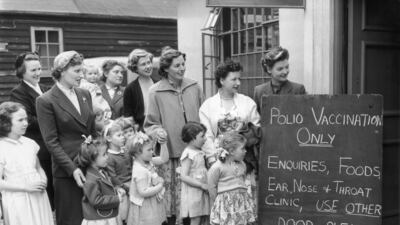
A group of mothers with their children wait outside Middlesex County Council Clinic for the first polio vaccinations in May 1956. All photos: Getty Images -

A polio vaccine being tested at the Glaxo Laboratories in Sefton Park, Buckinghamshire, in 1956. -
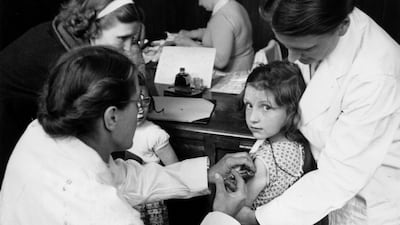
A child is injected with a vaccine against polio in 1956, the first stage of the biggest vaccination programme ever undertaken in Britain at the time. -
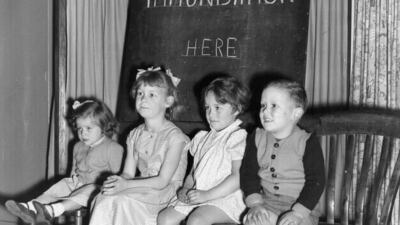
Four young children wait for injections against polio at the Fairfield Welfare Clinic in Wandsworth, south London, in 1956. -
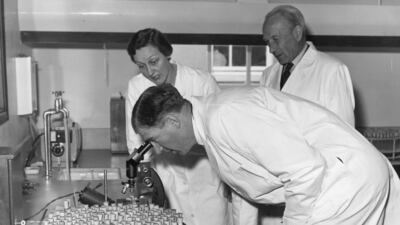
Health minister Dennis Vosper examining the polio virus in 1957, during the production of Polivirin, Britain's anti-poliomyletis vaccine, at Glaxo's Virus Research Laboratories in Stoke Poges. -
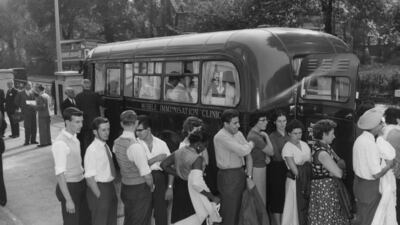
A queue of factory workers waiting to receive polio vaccinations in one of the new London Mobile Immunisation Clinics at Highbury Grove in 1959. -

Junior members of staff at the Ministry of Health on Saville Row, London, line up to receive their inoculation against polio in 1959. -

Nurses in one of the many emergency polio vaccination clinics in Hull read the latest reports on the health scare in 1961.


More than 650 million children in 30 countries have received the nOPV2 vaccine, a predecessor to these latest vaccines, since March 2021.
Although more genetically stable, it has regained virulence on four separate occasions, underscoring that the fight against polio requires more than scientific advancements alone – it necessitates comprehensive public health initiatives.
Notably, vaccine-derived polio cases are particularly prevalent in under-immunised communities.
These outbreaks have largely been seen in sub-Saharan Africa, though traces have been found in the UK, Canada, Israel and the US.
Factors such as the Covid-19 pandemic, which hindered vaccination campaigns, and conflicts in polio-vulnerable countries have contributed to this rise in cases.
As these challenges are tackled, the global management of polio is transitioning.
The responsibility is shifting from the Global Polio Eradication Initiative, based in Geneva, to national immunisation and disease-surveillance programmes.
Despite some hiccups in this transition, the World Health Organisation is enacting a more nuanced, country-specific approach to ensure that this handover does not undermine the significant progress already achieved.
Joseph Swan, a representative from the WHO and the GPEI, said: “Simply having these new and better tools will not get us over the finish line – vaccination, not just vaccines, is what will end polio.”
Even with the breakthroughs, complete polio eradication remains a complex endeavour, particularly in the world's poorest and most conflict-ridden regions.

