


Using artificial sweeteners does not help people to control their weight, the World Health Organisation has said.
Low or no-calorie sweeteners are regularly used instead of sugar in food and drinks, and can be found in products including desserts and fast food, cakes, drinks, chewing gum and toothpaste.
Many people also add non-sugar sweeteners to their food and beverages.
But new guidance from the WHO urges people not to use them as a tool for weight control.
It said consumption of free sugars has been linked to rising numbers of people who are overweight or obese, and increases Type 2 diabetes, cardiovascular diseases, cancer and tooth decay.
“Interest in non-sugar sweeteners as a possible alternative has intensified," the WHO said.
Hidden calories in our favourite food - in pictures
-
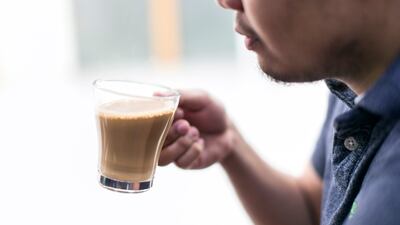
Karak chai is a popular drink in the UAE, but not all drinkers may be aware of its high calorie content. Reem Mohammed / The National -

Muffins containing 100 calories of energy offer little nutritional value compared with 100 calories of fruit. Jeffrey E Biteng / The National -

Butter chicken is a popular dish that contains almost 500 calories, equivalent to a quarter of the total recommended daily limit doctors recommend for women. -

Fruit smoothies are often billed as a healthy option, but some can contain as many calories as fizzy drinks because of their high sugar content.


The WHO undertook a review of studies that have examined the effects of non-sugar sweeteners, or NSS.
Researchers examined data from 283 studies conducted on adults, children, pregnant women or mixed populations.
It said the results suggest the “use of NSS does not confer any long-term benefit in reducing body fat in adults or children”.
But the authors said that in the short term, NSS use may lead to minor weight loss “when their use leads to a reduction in total energy intake”.
The WHO also said there could be “undesirable effects” linked to long-term use, such as an increased risk of Type 2 diabetes, cardiovascular diseases and death.
But the authors said further research was needed.
“Replacing free sugars with NSS does not help with weight control in the long term,” said Francesco Branca, the WHO’s director for nutrition and food safety.
“People need to consider other ways to reduce free sugars intake, such as consuming food with naturally occurring sugars, like fruit, or unsweetened food and beverages.
“NSS are not essential dietary factors and have no nutritional value.
“People should reduce the sweetness of the diet altogether, starting early in life, to improve their health.”
Lose weight the healthy way - in pictures
-

Walking briskly on the treadmill for 30 minutes can help a person burn about 150 calories. Sarah Dea / The National -

A sedentary life can lead to weight gain and health problems, so doctors recommend walking every day. Sarah Dea / The National -

Exercising outdoors is a good way to lose weight, especially in the winter months when the weather is good. Khushnum Bhandari / The National -

A healthy diet is essential for good health and nutrition. Getty Images -

Running is an excellent form of exercise for weight loss. Getty Images -

Meditation and yoga support stress management, mental health, mindfulness, weight loss and quality sleep. Getty Images


As a result of the study, the WHO released a new conditional guideline recommending against the use of NSS to control body weight or reduce the risk of non-communicable diseases.
The recommendation applies to everyone except those with diabetes.
It also applies to personal care and hygiene products containing NSS, such as toothpaste, skin cream and medications.
“Overall, this report highlights that universal replacement of sugar with sweeteners is not necessarily ideal, as this alone is unlikely to improve diet quality and produce the necessary changes to control weight long term," said Dr Duane Mellor, registered dietitian and senior lecturer at Aston Medical School.
“It is probably best not to stick with sugars to avoid sweeteners, though. The answer is to try and reduce sugar intake.
“For some, that might include using small amounts of sweeteners in food and drinks as a way to reduce overall sugar intake.
“Sweeteners may still have a place as a transitional or stepping stone to help people reduce their sugar intake.”
Dr Ian Johnson, nutrition researcher and emeritus fellow at the Quadram Institute in Norfolk, said: “This new guideline is based on a thorough assessment of the latest scientific literature and it emphasises that the use of artificial sweeteners is not a good strategy for achieving weight loss by reducing dietary energy intake.
“However, this should not be interpreted as an indication that sugar intake has no relevance to weight control.
“A better alternative to the use of artificial sweeteners is to reduce consumption of manufactured products containing free sugars, such as sugar-sweetened beverages; to use raw or lightly processed fruit as a source of sweetness; and perhaps, in the longer term, to try to reduce one’s overall taste for sweetness.”
But a representative for the International Sweeteners Association said: “Low/no calorie sweeteners are one of the most thoroughly researched ingredients in the world and continue to be a helpful tool to manage obesity, diabetes and dental diseases.
“They offer consumers an alternative to reduce sugar and calorie intake with the sweet taste they know and expect.
“There has been an overwhelming amount of scientific literature supporting low/no calorie sweeteners’ utility for weight management, including the WHO-commissioned systematic review itself.
“The International Sweeteners Association believes it is a disservice to not recognise the public health benefits of low/no calorie sweeteners and is disappointed that the WHO’s conclusions are largely based on low-certainty evidence from observational studies, which are at high risk of reverse causality.”
NSS approved for use in the UK include acesulfame K, aspartame, erythritol, saccharin, sorbitol, steviol glycosides, sucralose and xylitol.

