


All I remember about the afternoon was the shimmering beauty of Taj Mahal as the sun shone down on its white marble domes.
Oblivious to the oppressive heat and the throng of people around me, I stood in line to enter the Mughal marvel in Agra.
Hot breath and sweat thickened the air as crowds moved in and out of the mausoleum and around its sprawling outdoor gardens.
I was aware that India was in the midst of a new wave of Covid-19. The Omicron subvariant, Arcturus, which is supposedly more contagious, has been pushing the daily caseload to well above 10,000.
But I lost track of the vagaries of the virus a long time ago. The days when we had to be scared of other humans were surely behind us. We are back in the game of shaking hands when we greet strangers, aren’t we?
I felt absolutely normal among a sea of people as I was confident that I would not catch it. I had already contracted the virus and recovered without too much trouble. I have had a concoction of two different vaccines, in double doses, for that extra shield.
But as I was boarding the flight to Dubai, I knew my body was coming down with something. My stomach was acting strangely.
I attributed it to “Delhi belly”, after all the street food I gorged on.
The next day, I woke up cold with a high fever. Things took a turn for the worse quickly. Fever and headache hit me like a tonne of bricks. It was a big day at work, and I thought I will pop two paracetamols and show up.

But my body had other plans. I was crushed under the weight of fatigue, unable to move from my bed. I knew it was not just a “feeling under the weather” sickness.
So, I did the responsible thing and got myself tested. The result came back positive.
I had contracted the new variant of Covid that is raging across India — an unwanted souvenir to bring back to the UAE.
Following protocol in the UAE, I isolated myself for five days in my room. Any other day, I would have been binge-watching all my favourite Netflix series but I didn't even have the energy to watch TV.
Fever claimed my taste buds and smell
I can’t say how the new variant is different from the old one. Scientists may have theories. But all I know is it was harsher for me.
The fever was relentless for the first three days. I was groaning in pain and felt like my body had been run over by a lorry.
I couldn't eat anything as my taste buds were dead. They still are, five days later — I have lost my senses of smell and taste. Everything tastes like paper in my mouth.
I don’t know whether I contracted the virus in Agra or in the busy markets of Old Delhi. But I can say for sure that I have unknowingly passed it on to others, and for that I feel an overwhelming guilt.
My friend from Delhi was the first one. Even before I reached Dubai, she tested positive. Within no time, both her parents fell sick too.
The saga is just a reminder that Covid-19 is not behind us. It can strike us anytime, anywhere. A tiny virus, believed to have originated in a bat in China, is in my lungs today. It is stronger and sturdier, and is not going anywhere soon.
Global fight against Covid-19 — in pictures
-
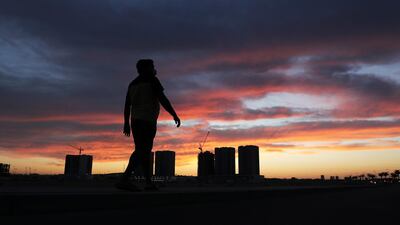
A man wearing a facemask in Dubai in April 2020, shortly after the first outbreak. Pawan Singh / The National -

Staff from the Wuhan Hygiene Emergency Response Team conduct searches on the closed Huanan Seafood Market in Wuhan, China, at the start of the outbreak on January 11, 2020. AFP -
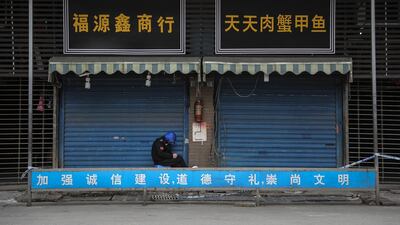
A security guard sits outside the closed Huanan market in Wuhan, Hubei province. Getty Images -
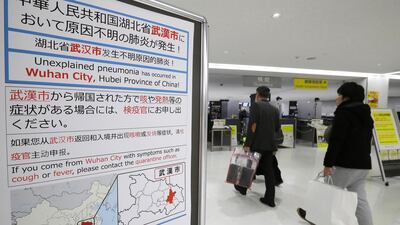
A notice displayed near a quarantine control station at Narita Airport, Japan, in January 2020. EPA -
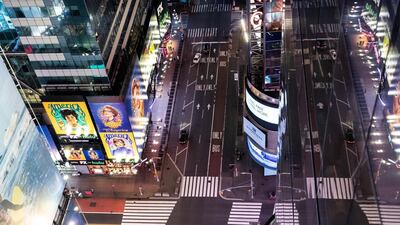
An empty Times Square after a coronavirus lockdown was ordered in New York City, March 18, 2020. Reuters -
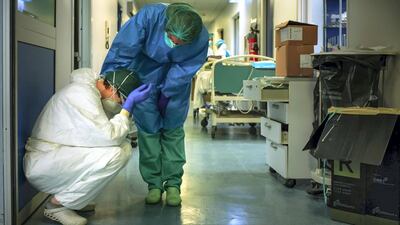
A nurse wearing PPE comforts another as they change shifts on March 13, 2020 at Cremona Hospital, north-eastern Italy. AFP -
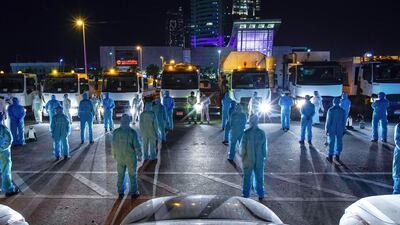
Sanitation workers from Tadweer on the first day of the UAE cleaning campaign in March 2020. Victor Besa / The National -
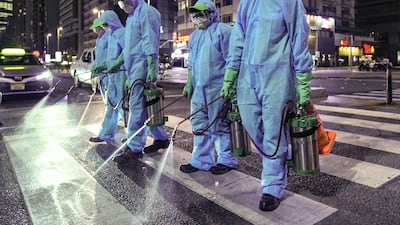
The pedestrian crossing on Hamdan and Fatima Bint Mubarak Street is sprayed on March 27, 2020. Victor Besa / The National -
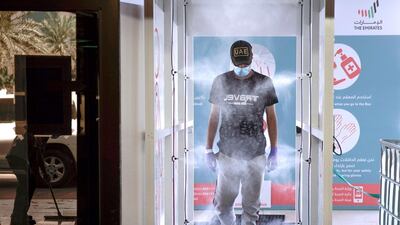
A commuter enters the sterilisation area at the entrance of the Abu Dhabi Central Bus Terminal in March 2020. Victor Besa / The National -
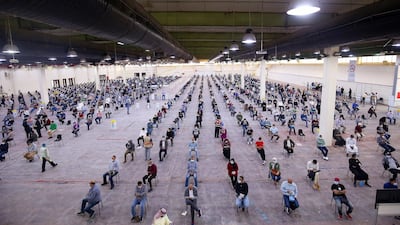
Travellers returning to Kuwait from Egypt, Syria and Lebanon arrive to be re-tested at a containment and screening zone in Kuwait City on March 16, 2020. AFP -
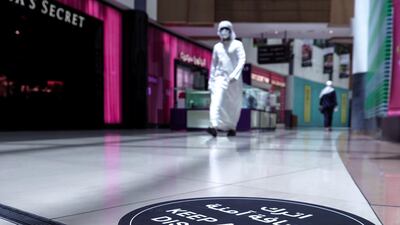
Al Wadha Mall in Abu Dhabi reopens in May 2020 with measures in place to protect shoppers. Victor Besa / The National -
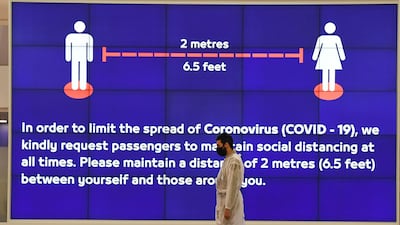
Safety reminders at Dubai International Airport after the resumption of scheduled operations by Emirates on May 22, 2020. AFP -
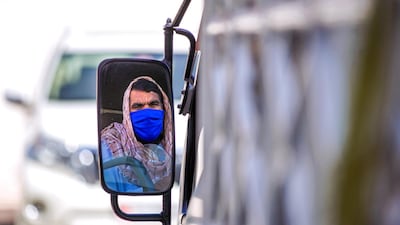
A delivery driver wearing a face mask in downtown Abu Dhabi. Victor Besa / The National -
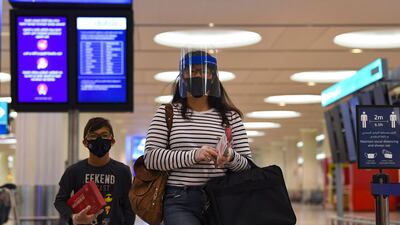
Passengers of an Emirates flight prepare to board a plan to Sydney at Dubai International Airport. AFP -
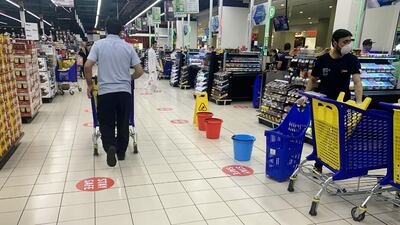
Systems put in place at a supermarket in Dubai to slow the spread of the coronavirus. AFP



