


Researchers have developed a method that could help to identify people who are at greater risk of developing Alzheimer’s disease before symptoms appear.
Experts suggest this could help to speed up formulating new treatments for the disease.
People with Alzheimer’s experience gradual loss of memory and other cognitive functions.
And while some therapies can ease symptoms, developing treatments that prevent or slow progression has been more challenging.
“We developed a genetic predictor of Alzheimer’s disease associated with both clinical diagnosis and age-dependent cognitive decline," senior author Dr Amit Khera said.
“By studying the circulating proteome of healthy individuals with very high versus low inherited risk, our team nominated new biomarkers of neurocognitive disease.”
iPad test could detect dementia - in pictures
-

Dr Sina Habibi has developed a rapid iPad AI test that can detect early signs of dementia. All photos: Chris Whiteoak / The National -
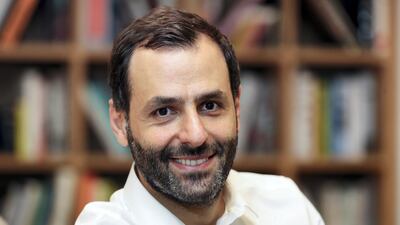
Dr Habibi says thousands of people have already completed successful trials in South London and Maudsley NHS trusts. -

He says a rapid screen test on the iPad checks the speed and accuracy of a person's thinking by asking them to select pictures with animals from a series of images. -
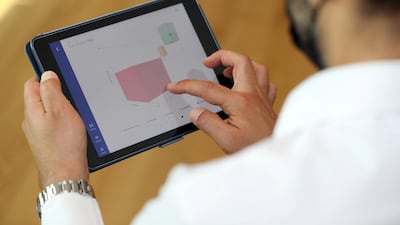
The Integrated Cognitive Assessment test delivers a score out of 100 to test if someone is healthy, at risk or impaired. -

Response accuracy can be measured to assess healthy brain function, allowing doctors to prescribe relevant steps to delay the potential onset of dementia as we age. -

Dr Habibi says the programme is in the trail stage and thousands have taken it the UK.


Some trials may have been unsuccessful because they involved patients whose disease was too advanced to be treated, experts suggest.
Better methods to identify people at high risk of developing the condition could aid treatment research.
In the new study, Manish Paranjpe of the Broad Institute of MIT and Harvard in the US, and colleagues, analysed data on 7.1 million common DNA variants – alterations to the standard DNA sequence – from an earlier study that included tens of thousands of people with or without Alzheimer’s.
How a three-minute iPad test could diagnose dementia - video
Using this data they developed a novel method that predicts a person’s risk of Alzheimer’s, depending on which DNA variants the person has.
The method was refined and validated with data from more than 300,000 additional people.
Researchers say their DNA-based method is unlikely to be suitable for doctors to predict a patient’s risk of Alzheimer’s because it may be less accurate for non-European populations.
The findings are published in Plos Genetics.

