


Being overweight or obese has reached “epidemic proportions” in Europe, causing more than 1.2 million deaths every year, a major report says.
The study, from the World Health Organisation, found that excess body fat leads to premature death and is a leading risk factor for disability.
The Covid-19 pandemic has made things worse, including for children in the UK, because of less exercise and increased “consumption of foods high in fat, sugar and salt”, the report said.
Across Europe, being overweight or obese affects 59 per cent of adults and 8 per cent of children under 5, and one in three children of school age.
Of all the countries in Europe, the UK ranks fourth for having the most overweight and obese adults, behind Israel, Malta and Turkey, the study said. It is second only to Malta on obesity.
“Alarmingly, there have been consistent increases in the prevalence of overweight and obesity in the WHO European region and no member state is on track to reach the target of halting the rise in obesity by 2025," the report said.
The research said obesity was associated with many diseases, including musculoskeletal complications, Type 2 diabetes, heart disease and at least 13 types of cancer.
“Across the WHO European region, obesity is likely to be directly responsible for at least 200,000 new cancer cases annually, with this figure projected to rise in the coming decades,” it said.
“For some countries within the region, it is predicted that obesity will overtake smoking as the main risk factor for preventable cancer in the coming decades.”
NHS figures for England show that two thirds of adults in England in 2018 – the most recent data available – were overweight or obese (63 per cent).
In 2019-2020, there were just over one million hospital admissions in England where obesity was a factor, a 17 per cent rise on 2018-2019.
Meanwhile, NHS Digital data for children shows that obesity prevalence among 4 and 5-year-olds in reception class rose from 9.9 per cent in 2019-2020 to 14.4 per cent in 2020-2021.
Among Year 6 pupils, who are aged 10 and 11, obesity increased from 21 per cent in 2019-2020 to just over a quarter in 2020-2021.
-

Health experts have long warned of the dangers of using the internet to find medical advice instead of seeing a GP - a trend referred to as "Doctor Google". -

Researchers researchers from Boston's Brigham and Women's Hospital suggest searching the web for a diagnosis.may be less harmful than medical professionals believe. Photo: Scott Eisen/Bloomberg via Getty Images -

Participants in the study of 5,000 people demonstrated modest improvements in reaching an accurate diagnosis after looking up symptoms online. -
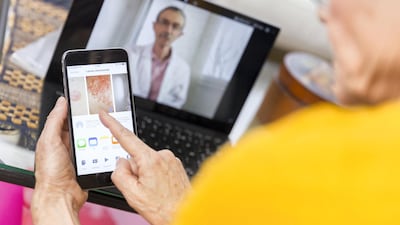
For the next phase, David Levine, managing director of general internal medicine and primary care at the Brigham, intends to investigate further the ability of AI to help people diagnose their own condition correctly. (Photo by: BSIP/Universal Images Group via Getty Images)


“Obesity knows no borders,” said Dr Hans Kluge, WHO regional director for Europe. “The countries in our region are incredibly diverse but every one is challenged to some degree.
“By creating environments that are more enabling, promoting investment and innovation in health, and developing strong and resilient health systems, we can change the trajectory of obesity in the region.”
The report said “obesity is a disease, not only a risk factor” and its causes are more complex than just an unhealthy diet and physical inactivity.
It said that “environmental factors unique to living in modern Europe’s highly digitalised societies are also drivers of obesity”, such as the digital marketing of unhealthy food products to children, apps to order unhealthy meals and the “proliferation of sedentary online gaming”.
But the study also said digital platforms could “provide opportunities for the promotion and discussion of health and wellbeing".
Among its calls for action, the report said there needs to be high-level political commitment to tackling obesity, alongside measures such as sugar taxes on sugary drinks, or subsidies on healthy food.
It called for unhealthy food marketing to children to be stopped, improvements in the way people access weight-management services, and efforts to improve diet and physical activity across people’s lives.
Other measures include limiting “the proliferation of takeaway outlets in low-income neighbourhoods” and combining food voucher schemes with behavioural interventions to “optimise the diet of vulnerable people during pregnancy”.
Baby food must also be properly labelled, breastfeeding recommended, and nutritional food standards in settings such as nurseries put into law, the study said.
One possibility aimed at teenagers is to describe “healthy eating as a strategy to achieve collective action against climate change”, while workplaces should also offer well-being programmes to help people improve their physical health.
“Years of ineffective policy has shown that shaming people doesn’t work, and education and awareness campaigns can’t compete with the flood of sugary and high-fat foods saturating our lives," said Caroline Cerny, leader at the Obesity Health Alliance.
“New rules from government to take junk food out of the spotlight by limiting marketing are an important step in the right direction.
“Next, the government should incentivise food companies to make their products healthier, as this proved to be an effective measure with the soft drinks tax and sugary drinks.”

