


Analysis of thousands of tumours has unveiled a treasure trove of clues about the causes of cancer, representing a significant step towards the personalisation of treatment, a study suggests.
Researchers say that for the first time it is possible to detect patterns – called mutational signatures – in the DNA of cancers.
These provide clues including about whether a patient has had past exposure to environmental causes of cancer, such as tobacco smoke or UV light.
This is significant because these signatures allow doctors to look at each patient’s tumour and match it to specific treatments.
But these patterns can be detected only through the analysis of the vast amounts of data unearthed by whole-genome sequencing – identifying the genetic make-up of a cell.
Principal author Prof Serena Nik-Zainal is a professor of genomic medicine and bioinformatics at the University of Cambridge and an honorary consultant in clinical genetics at Cambridge University Hospitals.
“It’s like looking at a very busy beach with thousands of footprints in the sand,” she said.
“To the untrained eye, the footprints appear to be random and meaningless.
“But if you are able to study them closely, you can learn a lot about what’s been going on, distinguish between animal and human prints, whether it’s an adult or child, what direction they’re travelling in, etc.
“It’s the same thing with the mutational signatures.
“The use of whole genome sequencing can identify which ‘footprints’ are relevant/important and reveal what’s happened through the development of the cancer.”
-

Actress Sofia Vergara had thyroid cancer when she was 28 years old. AFP -
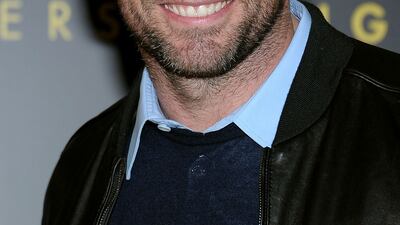
Hugh Jackman has been diagnosed with basal cell carcinoma, a malignant type of skin cancer, several times. AFP -

US comedian Kathy Griffin was recently declared cancer free after having half her left lung removed. RB/Bauer-Griffin/GC Images -

Michael C Hall had Hodgkin's lymphoma while filming hit TV series 'Dexter'. AFP -

Former NBA star Kareem Abdul-Jabbar has had both prostate cancer and chronic myeloid leukemia. AFP -
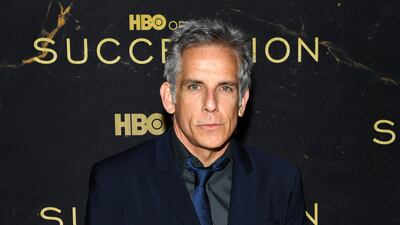
Actor Ben Stiller was treated for prostate cancer in 2014. AFP -

Bollywood actress Sonali Bendre had metastatic cancer in her abdomen. AFP -

Nepalese actress Manisha Koirala had ovarian cancer in 2012. AFP -

British TV personality Sharon Osbourne was diagnosed with colon cancer in 2002, and also had a double mastectomy in 2012 after finding out she had the gene that increases risk of getting breast cancer. AFP -

Khloe Kardashian has been treated for skin cancer in the past. AFP -

Lebanese singer Elissa has famously discussed her journey with breast cancer. AFP -
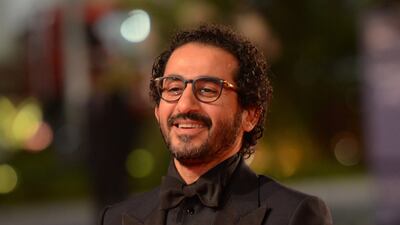
Egyptian actor Ahmed Helmy underwent treatment for cancer while his wife, Mona Zaki, was pregnant with their child. AFP -

From left: Ahmed Helmy, Khloe Kardashian and Manisha Koirala have all opened up about their cancer journeys. Photos: Front Row, AP Photo, AFP


Researchers analysed the complete genetic make-up or whole-genome sequences of more than 12,000 National Health Service cancer patients.
They were able to spot 58 new mutational signatures, suggesting that there are additional causes of cancer that are not yet fully understood.
“The reason it is important to identify mutational signatures is because they are like fingerprints at a crime scene. They help to pinpoint cancer culprits,” said Prof Nik-Zainal.
“Some mutational signatures have clinical or treatment implications – they can highlight abnormalities that may be targeted with specific drugs or may indicate a potential ‘Achilles heel’ in individual cancers.”
“Whole-genome sequencing gives us a total picture of all the mutations that have contributed to each person’s cancer,” said Dr Andrea Degasperi, research associate at the University of Cambridge and first author.
“With thousands of mutations per cancer, we have unprecedented power to look for commonalities and differences across NHS patients, and in doing so we uncovered 58 new mutational signatures and broadened our knowledge of cancer.”
The findings are now being incorporated into the NHS as researchers and clinicians now have the use of a digital tool called FitMS that will help them to identify the mutational signature and potentially manage cancer more effectively.
This research was supported by Cancer Research UK and published in the journal Science.
The genomic data was provided by the 100,000 Genomes Project, an England-wide clinical research programme to sequence 100,000 whole genomes from about 85,000 patients affected by rare disease or cancer.
“This study shows how powerful whole-genome sequencing tests can be in giving clues into how the cancer may have developed, how it will behave and what treatment options would work best,” said Michelle Mitchell, chief executive of Cancer Research UK.
“Mutational signatures are an example of using the full potential of WGS,” said Prof Matt Brown, chief scientific officer of Genomics England.
“We hope to use the mutational clues seen in this study and apply them back into our patient population, with the ultimate aim of improving diagnosis and management of cancer patients.”

