



Abu Dhabi's Hope Consortium will help to deliver 65 ultra-cold freezers to Africa for the storage of Covid-19 vaccines.
The global logistics centre will work with Unicef to ensure vaccines donated by the US are safely supplied to the continent.
The initiative is in line with the Covax project, led by the World Health Organisation, to ensure people in all parts of the world are immunised against Covid-19.
The consortium, made up of Department of Health Abu Dhabi, Etihad Cargo, Abu Dhabi Ports, Maqta Gateway, Rafed, and SkyCell, was established last year with the mission to distribute billions of vaccine doses around the world.
The freezers are essential to plans to deliver vaccines – which must be kept at extremely low temperatures – to 21 countries in Africa.
Assistance will be provided to nations including Cameroon, Gambia, Ivory Coast, Liberia, Mauritania, Niger and Zambia.
“The UAE remains committed to doing our part to mitigate the effects of the pandemic by helping countries overcome the logistical and technical challenges associated with the delivery of large-scale vaccination programmes," said Sultan Al Shamsi, Assistant Minister of Foreign Affairs and International Co-operation for International Development Affairs.
"Our partnership with Unicef plays a vital role in helping implement an effective global response to Covid-19, particularly in Africa. We are proud to support international efforts such as Covax by dedicating the unique services of the Hope Consortium.”
-

A 19,000 square metre temperature-controlled warehouse facility in Khalifa Industrial Zone, Abu Dhabi, is key to the global fight against Covid-19. Courtesy: Abu Dhabi Ports -
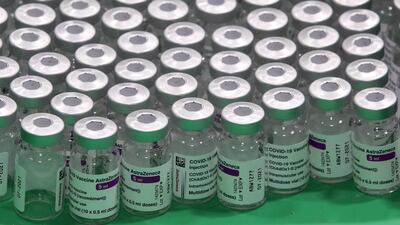
Abu Dhabi’s Hope Consortium has the capacity to deliver enough Covid-19 vaccines for almost everyone on the planet. Reuters -
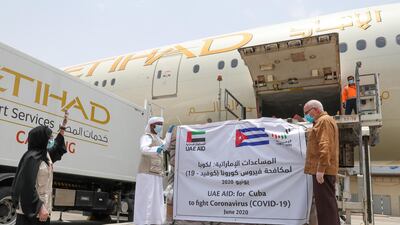
A shipment of UAE aid to tackle Covid-19 in Cuba is loaded on to an Etihad cargo aircraft. Wam -

The Hope Consortium stores and distributes Covid-19 vaccines across the world. Courtesy: Hope Consortium


Etleva Kadilli, director of Unicef's supply division, said the aid effort is key to ensuring vaccine equality as the world continues to fight the pandemic.
“These deliveries of ultra-cold freezers mark an important step towards equitable access to Covid-19 vaccines," she said.
"This critical infrastructure will boost the capacity of African countries to scale Covid-19 vaccine roll-out and will also support the management of other vaccines that may require ultra-cold storage temperatures."
Capt Mohamed Al Shamsi, chairman of the executive committee of the Hope Consortium and managing director of Abu Dhabi Ports Group, said the capital is in a prime position to support the global vaccination drive.
“Abu Dhabi’s strategic location as a medical and life sciences hub coupled with the Hope Consortium’s ultra-cold chain capabilities make us a natural partner to support Covax’s global mission," he said.
"Since no one is safe until everyone is safe, it is imperative to ensure that all nations across the world possess the capabilities required to store and administer a wide array of vaccines globally available.
"By working with Unicef, Etihad and our logistics partners together, we are committed to do our part in helping establish the necessary cold-chain infrastructure needed to deliver hope and the necessary supplies to communities in need and help chart a path towards a lasting recovery.”
Earlier this year, the Hope Consortium expanded a vast freezer farm set up to store Covid-19 vaccines at ultra-cold temperatures.
Abu Dhabi Ports took delivery of an additional 32 freezers at its Kizad storage facility, raising the number of units to 53.
The enormous warehouse was already central to the mission of the Hope Consortium.

