
Every Ramadan, poor Muslim families and low-wage workers in Saudi Arabia receive extra support from the many charities and non-profit organisations that become active during the holy month.
For the Tomooh Volunteer Group, the safeguards against the coronavirus pandemic presented an additional challenge this year.
“We came up with the idea of delivering hot meals during iftar instead of cold meals,” said Abeer Al Baz, who leads Tomooh. “We have distributed 42,000 hot meals during this year's Ramadan season to workers and poor families in Riyadh, Jeddah and the Eastern province."
Tomooh started small in Riyadh, the kingdom's capital, in 2015 but expanded its reach this year to Riyadh province, Jeddah in the west and Dammam in the east.
Tomooh's volunteers, both male and female, include both high school pupils and college students.
“We have participated in large numbers wherever we saw the need,” said Osama Faqihi, a supervisor with Tomooh.
“After Covid-19 we saw huge effects the pandemic had on many companies, huge effects on many societies, from the low-income groups onwards. People are in need of meals on a daily basis.”
There are 70 volunteers in Riyadh alone, and the numbers are growing. Each day, more than 3,000 hot meals are distributed in the Saudi capital.
The group begins its work each year in the middle of Shaaban – the month before Ramadan in the Hijri calendar – and continues until the middle of Shawwal, the month after Ramadan, donating food and other basic provisions to more than 1,600 families.
The challenges of Covid-19
The pandemic and subsequent restrictions have made Tomooh’s sixth year the most challenging one yet as volunteers must prepare and distribute food packages under the health ministry's Covid-19 safety guidelines.
In previous years, workers would visit Ramadan tents shortly before sunset to break their fast with food and drink donated by charities and individuals.
These tents would be set up across the kingdom, usually adjacent to a mosque, and would be financed by charity organisations or the mosque administration, in addition to individual contributions from royalty and businessmen.
“But owing to the new laws now, the tents are not available,” said Abdullah Al Rumaihi, a Tomooh volunteer. "So volunteers are giving out the meals."
Tomooh took on the task of visiting poor families and workers near their homes and providing them with meals of freshly cooked chicken and rice, dates, bottled water and healthy drinks. Each meal costs about 10 Saudi riyals ($2.66) to produce.
The volunteers meet a couple of hours before sunset at their headquarters in Riyadh and load all the meals, which are already packaged by the suppliers, into vans.
-
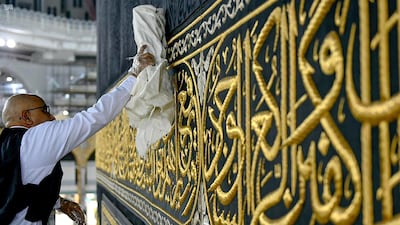
A worker cleans and sterilizes the Kaaba, following the outbreak of the coronavirus disease, ahead of the holy fasting month of Ramadan, in the Grand mosque in the holy city of Mecca, Saudi Arabia April 21, 2020. Reuters -
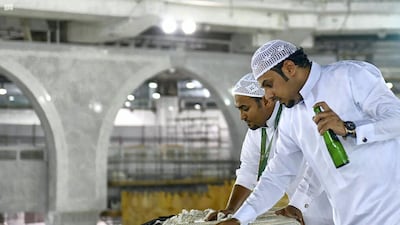
Workers clean and sterilise the roof of Kaaba, following the outbreak of the coronavirus disease, ahead of the holy fasting month of Ramadan, in the Grand mosque in the holy city of Mecca, Saudi Arabia April 21, 2020. Reuters -
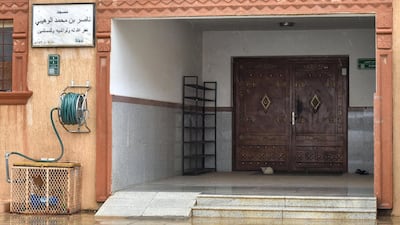
A mosque is closed in a bid to slow the spread of COVID-19 in the Saudi capital Riyadh on April 13, 2020, ahead of the holy Muslim fasting month of Ramadan. AFP -
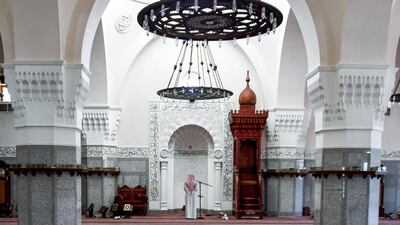
Imam Mohammed, muezzin of the Jaffali mosque in Saudi Arabia's Red Sea coastal city of Jeddah, announces the prayer call at the mosque which is closed due to a government decree as part of efforts to combat the COVID-19 coronavirus pandemic, during the Muslim holy month of Ramadan on April 28, 2020. AFP -

An aerial view shows the Grand Mosque and its surrounding, deserted on the first day of the Muslim fasting month of Ramadan, in the Saudi holy city of Mecca, on April 24, 2020, during the novel coronavirus pandemic crisis. AFP -
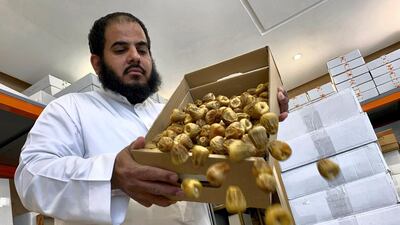
A Saudi seller pours dates into a box at his shop, during the 24-hours lockdown to counter the coronavirus disease outbreak, ahead of the holy fasting month of Ramadan, in Riyadh, Saudi Arabia April 20, 2020. Reuters -
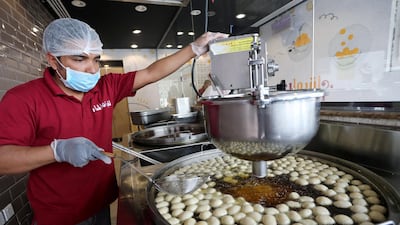
A worker wearing a protective face mask and gloves fries traditional Ramadan sweets following the outbreak of the coronavirus disease, during the holy month of Ramadan in Riyadh, Saudi Arabia April 30, 2020. Reuters -
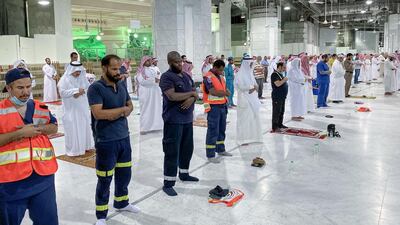
Muslim worshippers perform the "Tarawih" nightly prayer during the holy month of Ramadan, while keeping their distance amid the COVID-19 pandemic, at the Grand Mosque, Islam's holiest site, in the Saudi city of Mecca, late on May 8, 2020. AFP -

A Saudi security guard stands guard as worshippers perform Isha prayer next to the Kaaba in Mecca's Grand Mosque, Islam's holiest site on April 27, 2020. AFP -
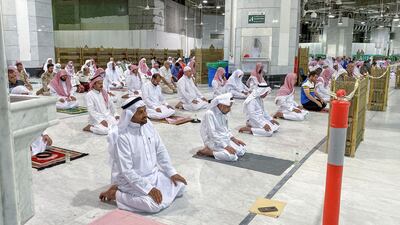
Muslim worshippers perform the "Tarawih" nightly prayer during the holy month of Ramadan, while keeping their distance amid the COVID-19 pandemic, at the Grand Mosque, Islam's holiest site, in the Saudi city of Mecca, late on May 8, 2020. AFP -
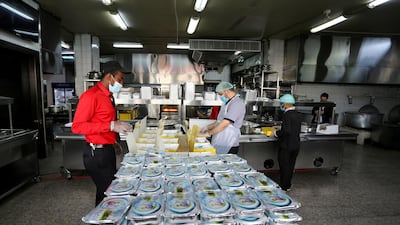
Kitchen staff wear protective face masks and gloves, following the outbreak of the coronavirus disease, as they prepare Ramadan meal orders for takeaway and delivery at a restaurant in Riyadh, Saudi Arabia, April 26, 2020. Reuters -

Workers pass through a self-sterilisation gate set up at an entrance of the Kaaba and the Grand Mosque, as a preventive measure amid the the COVID-19 pandemic during the Muslim month of Ramadan in the Saudi holy city of Mecca, on May 8, 2020. AFP -

Men passing through a self-sterilisation gate set up at an entrance of Kaaba and the Grand Mosque as a protective measure against the COVID-19 coronavirus during the holy fasting month of Ramadan in the Saudi holy city of Mecca, May 7, 2020. AFP


They then head to the districts where most of the low-wage workers live. The workers queue in the street wearing face masks, wait to receive the meals, along with water and dates, to break their fast.
Saudi Arabia has more than 10 million foreigners working in low-paying blue-collar jobs.
"All the people waiting in the queue like myself are getting help, for sure,” said Mohammed Annas, a labourer.

