


Scientists in Saudi Arabia have found that mutations in coronavirus could be helping the virus to reproduce – which could lead to the creation of new drugs or vaccines.
A team of researchers, several from King Abdullah University of Science and Technology near Jeddah, found that two mutations in a part of the coronavirus called the nucleocapsid were often associated with a larger viral load in patients.
The two mutations can affect how these viral proteins interact with key proteins in human cells — and could increase the risk of death from an excessive immune response.
The two mutations tend to be found together.
While the latest study looked at the nucleocapsid, a lot of research on the coronavirus has tended to be on the spike protein, which forms spikes that project from the virus and help it enter human cells.
“The spike proteins [are what] people have looked at mostly because they potentially and do affect vaccine efficacy and infectivity,” said Dr Andrew Freedman, an infectious diseases specialist at Cardiff University in the UK, who was not connected with the study.
“[But] there are going to be all sorts of mutations. It wouldn’t be a surprise if mutations in the nucleocapsid led to increased replication and viral turnover and increased viral load.”
Covid-19 vaccines have tended to generate protection by helping the immune system to recognise the spike protein.
The Saudi Arabian study, published last month, was based on the analysis of 892 viral samples collected in the country between March and August 2020.
It did not find a statistically significant link between the nucleocapsid mutations and mortality, but the authors noted that other studies have indicated that higher viral load increases the risk of death.
The researchers found that the mutations may cause particular immune responses in Covid-19 patients to become overactive, potentially sparking a “cytokine storm” – the severe reaction to infection that has been associated with increased mortality.
By identifying complex biochemical changes associated with the mutations, the work also highlighted potential targets for drugs that could treat people with Covid-19.
Prof John Oxford, emeritus professor of virology at Queen Mary University of London and co-author of the textbook Human Virology, said “internal” proteins, such as those of the nucleocapsid, may be suitable as targets for next-generation Covid-19 vaccines.
Research has indicated that combining spike-based vaccines with nucleocapsid-based vaccines could improve protection.
Easing of Covid restrictions in the Mena region - in pictures
-

Workers remove social-distancing signs at the Grand Mosque in the Muslim holy city of Mecca, Saudi Arabia. AP Photo -

Egyptian craftsmen produce Ramadan lanterns, called Fanous, at a workshop in Cairo. EPA -

Muslim pilgrims gather at the tomb of Prophet Hud - known in Arabic as Qabr Nabi Hud - in Yemen's central Hadramawt governorate, during the four-day pilgrimage which precedes Ramadan. AFP -

Libyans buy fresh fish at a market as residents of the capital Tripoli get ready for the beginning of Ramadan. AFP -
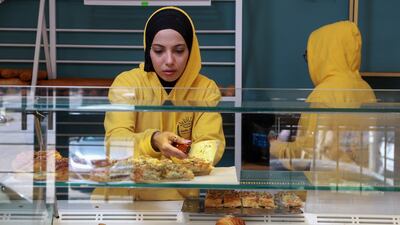
A Tunis bakery. Since the Russian invasion of Ukraine, both wheat suppliers for Maghreb countries, prices of flour and semolina have soared, amplified by a buying frenzy ahead of Ramadan. AFP -

A view of Al Sayeda Zeinab Mosque in Cairo, Egypt. EPA -

Women and children choose ornaments at a market in Syria's north-eastern city of Hasakeh. AFP -

Muslim pilgrims pray at the Grand Mosque during the minor pilgrimage, known as Umrah, in Mecca, Saudi Arabia. AP Photo


Since nucleocapsid proteins are inside the virus, the genes that code for them may be less likely to mutate, Prof Oxford said, which could make them more suitable as vaccine targets.
“Most of the pressure for Covid-19 to mutate will be on the external spike protein,” said Prof Oxford, who was not linked to the new study.
“Because there’s less pressure on the internal proteins [to mutate], they will be more shared between different varieties of Covid.”
As the recent study indicated that mutations in the nucleocapsid affect the virulence of Sars-CoV-2, the virus that causes Covid-19, Prof Oxford said this part of the virus was a particularly suitable target for vaccines.
“If mutations there possibly increase the virulence, the conclusion is, let’s incorporate that into a new vaccine and we might be able to enhance the protective effect,” he said.
“We’re at the stage now where everyone has been immunised with the spike proteins. I suppose the next opportunity, the next vaccine, we’ll go with will include the nucleocapsid or other proteins.”
Other researchers have also found that the nucleocapsid mutations are associated with greater infectivity and virulence, such as a team from China who analysed virus samples collected between December 2019 and March 2021. Their findings were released in December in the journal Cell Host and Microbe.

