
Bahrain aims to reach net-zero carbon emissions by 2060 to address the challenges of climate change and protect the environment, the state news agency reported on Sunday.
The announcement came a day after Saudi Arabia said it planned to reach net-zero by the same date.
Bahrain's Cabinet said it welcomed the Saudi Green Initiative – an ambitious environmental plan for Saudi Arabia, that includes the net-zero target.
The net-zero initiative highlights the importance of developing green sectors and making efforts in various fields in order to overcome the problem of climate change, said Dr Mohammed bin Daina, Bahrain's special envoy for climate affairs and chief executive of the supreme council for the environment.

He stressed the importance of redoubling efforts to transform global cities into more sustainable areas through initiatives that contribute to reducing negative environmental and climate impacts.
These includes the use of clean technologies and creating new and creating more sustainable jobs, said Mr bin Daina.
Saudi Arabia announced on Saturday that it will follow a framework for managing and reducing emissions known as the “circular carbon economy approach".
The closed-loop system involves reducing, reusing, recycling and removing carbon from the environment.
Riyadh said it also plans to more than double its target of reducing annual carbon emissions to 278 million tonnes by 2030. This compares to a previous target of 130m tonnes.

Delegations from across the Middle East, plus US climate envoy John Kerry, are meeting in Riyadh on Monday to discuss the region’s environment and strategies to meet the impact of climate change, as well as cut emissions.
The news comes days before world leaders travel to the UK for the Cop26 UN Climate Conference to discuss action towards the Paris Climate Agreement.
That aims to limit temperature rises to less than 2°C above pre-industrial levels, and ideally less than 1.5°C above above pre-industrial levels.
Climate change research in Saudi Arabia - in pictures
-
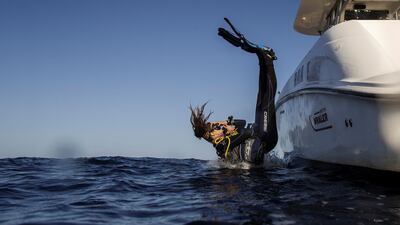
Researcher Michelle Havlik of Australia dives into the water during a research trip in the Red Sea, offshore of the King Abdullah University of Science and Technology, near Jeddah, Saudi Arabia. Reuters -
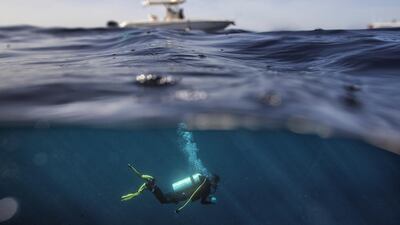
Researcher Nathan Geraldi of the US dives during a research trip in the Red Sea, offshore of the King Abdullah University of Science and Technology, near Jeddah, Saudi Arabia. Reuters -

Scientists at KAUST are working on a new technology to help restore coral globally. Reuters -
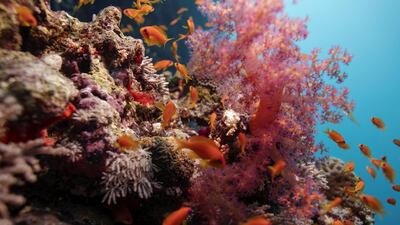
If it succeeds, KAUST's experiment may allow coral from Saudi Arabia to be transplanted to other parts of the world. Reuters -
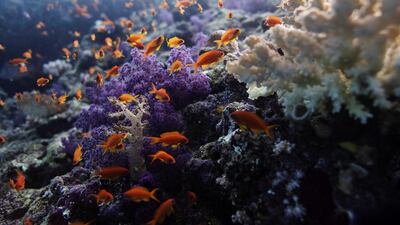
The Red Sea is warmer than almost any other large body of water in the world. Reuters -

Red Sea coral has adapted, over hundreds of thousands of years, to the higher temperatures. Reuters -

KAUST scientists are developing techniques that will grow reefs in a few years rather than hundreds of years. Reuters -
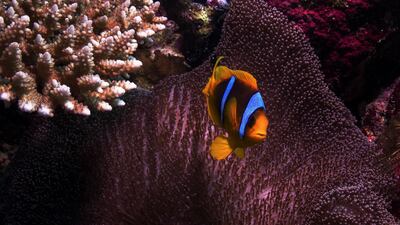
Experts plan to place hundreds of similar tanks in public places, such as airports and resorts, that will allow tiny corals to grow until they're large enough to be transplanted into the wild. Reuters -
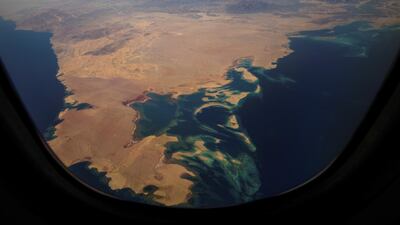
Another Saudi project is the planned fossil-fuel-free Neom City on the Red Sea near Egypt and Israel, and bordering Jordan. Reuters -
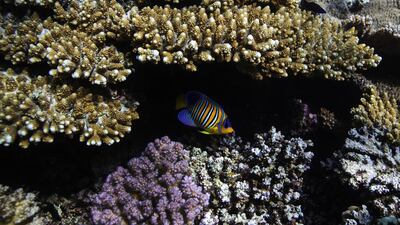
The Saudis hope these embryonic projects will spur tourism and put the country at the fore of renewable-energy generation, carbon-sequestration technology and solar-powered production of hydrogen gas. Reuters -
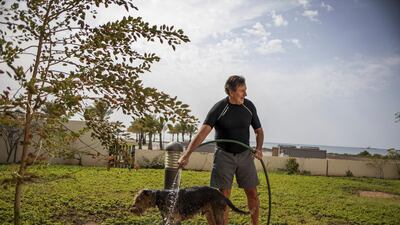
Carlos Duarte, professor of Marine Science and Tarek Ahmed Juffali Research Chair in Red Sea Ecology at KAUST, washes his dog at his home at the campus. Reuters -
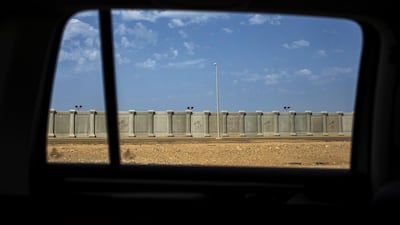
A view of the security wall at KAUST. Reuters -
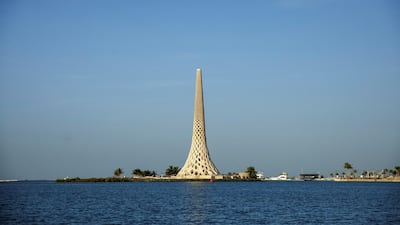
A beacon rises above the harbour at KAUST. Reuters -
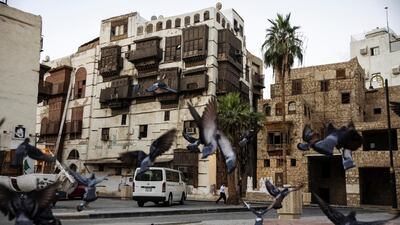
Wooden shutters and balconies adorn the front of a building in the Old City of Jeddah. Reuters
Paris%20Agreement
The Cockroach
(Vintage)
Ian McEwan
Best Academy: Ajax and Benfica
Best Agent: Jorge Mendes
Best Club : Liverpool
Best Coach: Jurgen Klopp (Liverpool)
Best Goalkeeper: Alisson Becker
Best Men’s Player: Cristiano Ronaldo
Best Partnership of the Year Award by SportBusiness: Manchester City and SAP
Best Referee: Stephanie Frappart
Best Revelation Player: Joao Felix (Atletico Madrid and Portugal)
Best Sporting Director: Andrea Berta (Atletico Madrid)
Best Women's Player: Lucy Bronze
Best Young Arab Player: Achraf Hakimi
Kooora – Best Arab Club: Al Hilal (Saudi Arabia)
Kooora – Best Arab Player: Abderrazak Hamdallah (Al-Nassr FC, Saudi Arabia)
Player Career Award: Miralem Pjanic and Ryan Giggs
Seven%20Winters%20in%20Tehran
Sholto Byrnes on Myanmar politics
In numbers: PKK’s money network in Europe
Germany: PKK collectors typically bring in $18 million in cash a year – amount has trebled since 2010
Revolutionary tax: Investigators say about $2 million a year raised from ‘tax collection’ around Marseille
Extortion: Gunman convicted in 2023 of demanding $10,000 from Kurdish businessman in Stockholm
Drug trade: PKK income claimed by Turkish anti-drugs force in 2024 to be as high as $500 million a year
Denmark: PKK one of two terrorist groups along with Iranian separatists ASMLA to raise “two-digit million amounts”
Contributions: Hundreds of euros expected from typical Kurdish families and thousands from business owners
TV channel: Kurdish Roj TV accounts frozen and went bankrupt after Denmark fined it more than $1 million over PKK links in 2013
Ten tax points to be aware of in 2026
1. Domestic VAT refund amendments: request your refund within five years
If a business does not apply for the refund on time, they lose their credit.
2. E-invoicing in the UAE
Businesses should continue preparing for the implementation of e-invoicing in the UAE, with 2026 a preparation and transition period ahead of phased mandatory adoption.
3. More tax audits
Tax authorities are increasingly using data already available across multiple filings to identify audit risks.
4. More beneficial VAT and excise tax penalty regime
Tax disputes are expected to become more frequent and more structured, with clearer administrative objection and appeal processes. The UAE has adopted a new penalty regime for VAT and excise disputes, which now mirrors the penalty regime for corporate tax.
5. Greater emphasis on statutory audit
There is a greater need for the accuracy of financial statements. The International Financial Reporting Standards standards need to be strictly adhered to and, as a result, the quality of the audits will need to increase.
6. Further transfer pricing enforcement
Transfer pricing enforcement, which refers to the practice of establishing prices for internal transactions between related entities, is expected to broaden in scope. The UAE will shortly open the possibility to negotiate advance pricing agreements, or essentially rulings for transfer pricing purposes.
7. Limited time periods for audits
Recent amendments also introduce a default five-year limitation period for tax audits and assessments, subject to specific statutory exceptions. While the standard audit and assessment period is five years, this may be extended to up to 15 years in cases involving fraud or tax evasion.
8. Pillar 2 implementation
Many multinational groups will begin to feel the practical effect of the Domestic Minimum Top-Up Tax (DMTT), the UAE's implementation of the OECD’s global minimum tax under Pillar 2. While the rules apply for financial years starting on or after January 1, 2025, it is 2026 that marks the transition to an operational phase.
9. Reduced compliance obligations for imported goods and services
Businesses that apply the reverse-charge mechanism for VAT purposes in the UAE may benefit from reduced compliance obligations.
10. Substance and CbC reporting focus
Tax authorities are expected to continue strengthening the enforcement of economic substance and Country-by-Country (CbC) reporting frameworks. In the UAE, these regimes are increasingly being used as risk-assessment tools, providing tax authorities with a comprehensive view of multinational groups’ global footprints and enabling them to assess whether profits are aligned with real economic activity.
Contributed by Thomas Vanhee and Hend Rashwan, Aurifer
HEADLINE HERE
- I would recommend writing out the text in the body
- And then copy into this box
- It can be as long as you link
- But I recommend you use the bullet point function (see red square)
- Or try to keep the word count down
- Be wary of other embeds lengthy fact boxes could crash into
- That's about it
Tomorrow 2021
Recommended
Women are on the front line of the coronavirus fight, and we should all remember that by Phumzile Mlambo-Ngcuka
Coronavirus: How the world can end the pandemic by Bill Gates
Famine on the rise in the Middle East and North Africa
Inside the UN's Dubai aid facility delivering support to people in need across the globe
E-cigarettes report
Important questions to consider
1. Where on the plane does my pet travel?
There are different types of travel available for pets:
- Manifest cargo
- Excess luggage in the hold
- Excess luggage in the cabin
Each option is safe. The feasibility of each option is based on the size and breed of your pet, the airline they are traveling on and country they are travelling to.
2. What is the difference between my pet traveling as manifest cargo or as excess luggage?
If traveling as manifest cargo, your pet is traveling in the front hold of the plane and can travel with or without you being on the same plane. The cost of your pets travel is based on volumetric weight, in other words, the size of their travel crate.
If traveling as excess luggage, your pet will be in the rear hold of the plane and must be traveling under the ticket of a human passenger. The cost of your pets travel is based on the actual (combined) weight of your pet in their crate.
3. What happens when my pet arrives in the country they are traveling to?
As soon as the flight arrives, your pet will be taken from the plane straight to the airport terminal.
If your pet is traveling as excess luggage, they will taken to the oversized luggage area in the arrival hall. Once you clear passport control, you will be able to collect them at the same time as your normal luggage. As you exit the airport via the ‘something to declare’ customs channel you will be asked to present your pets travel paperwork to the customs official and / or the vet on duty.
If your pet is traveling as manifest cargo, they will be taken to the Animal Reception Centre. There, their documentation will be reviewed by the staff of the ARC to ensure all is in order. At the same time, relevant customs formalities will be completed by staff based at the arriving airport.
4. How long does the travel paperwork and other travel preparations take?
This depends entirely on the location that your pet is traveling to. Your pet relocation compnay will provide you with an accurate timeline of how long the relevant preparations will take and at what point in the process the various steps must be taken.
In some cases they can get your pet ‘travel ready’ in a few days. In others it can be up to six months or more.
5. What vaccinations does my pet need to travel?
Regardless of where your pet is traveling, they will need certain vaccinations. The exact vaccinations they need are entirely dependent on the location they are traveling to. The one vaccination that is mandatory for every country your pet may travel to is a rabies vaccination.
Other vaccinations may also be necessary. These will be advised to you as relevant. In every situation, it is essential to keep your vaccinations current and to not miss a due date, even by one day. To do so could severely hinder your pets travel plans.
Source: Pawsome Pets UAE
More from Rashmee Roshan Lall
COMPANY PROFILE
How to become a Boglehead
Bogleheads follow simple investing philosophies to build their wealth and live better lives. Just follow these steps.
• Spend less than you earn and save the rest. You can do this by earning more, or being frugal. Better still, do both.
• Invest early, invest often. It takes time to grow your wealth on the stock market. The sooner you begin, the better.
• Choose the right level of risk. Don't gamble by investing in get-rich-quick schemes or high-risk plays. Don't play it too safe, either, by leaving long-term savings in cash.
• Diversify. Do not keep all your eggs in one basket. Spread your money between different companies, sectors, markets and asset classes such as bonds and property.
• Keep charges low. The biggest drag on investment performance is all the charges you pay to advisers and active fund managers.
• Keep it simple. Complexity is your enemy. You can build a balanced, diversified portfolio with just a handful of ETFs.
• Forget timing the market. Nobody knows where share prices will go next, so don't try to second-guess them.
• Stick with it. Do not sell up in a market crash. Use the opportunity to invest more at the lower price.


