



Qatar's World Cup organisers have unveiled camps in the desert for football fans from across the globe.
A live portal on Monday showed booking was available for prefabricated cabins in special 'fan villages' in three locations.
The cost of a two-person cabin starts at $207, with two single beds or one double on offer. They feature a bathroom, fridge, Wi-Fi and housekeeping, with restaurants and takeaways available in the village.
The camps, in Zafaran, Ras Bu Fontas and Rawdat Al Jahhaniya, are outside the city.
"Fan villages are located on the outskirts of Doha but are still accessible via public transport or rideshares, keeping you in easy reach of all of popular cultural attractions, as well as Fifa World Cup stadiums and activations," Qatar's Accommodation Agency said.
The camps have been billed as a low-cost alternative to hotels and Airbnb accommodation, which have been quickly snapped up by major sponsors, broadcasters and thousands of foreign officials.

The total price of a stay for two people throughout the full tournament could amount to $5,598, the portal shows, though few travelling fans are expect to stay for more than a few days.
Zafaran is the farthest from Doha International Airport to the far north, outside Lusail City, where Qatar's government built a complex from scratch for the World Cup.
Ras Bu Fontas is to south of the city, behind the airport and close to the Gulf coast. It has a stop on Doha's main metro line.
Rawdat Al Jahhaniya is to the west of Doha towards the desert. It is a 20-minute drive from the Corniche, but close to an hour on a public bus.
Last month, Fifa president Gianni Infantino said he expects Abu Dhabi and Dubai to be among the Gulf cities to score a tourism boost as some fans stay there and fly into Doha for matches.
Fans with tickets struggle to find accommodation
Tickets for the 2022 World Cup in Qatar are some of the most sought after in the tournament’s history, with 804,186 allocated in the first round of applications from 17 million requests.
A second sales window closed on April 28 at noon.
In total, slightly more than 3 million tickets were made available, but 1 million have been reserved for Fifa and its partners.
England fan Laura Roxburgh, who lives in Dubai, had high hopes of attending her second World Cup, but problems booking accommodation and flights have left her struggling to plan her trip.
“Most places are a three-night minimum stay for accommodation on the accredited Fifa site, other options are on cruise ships but they are expensive too – a cabin with no windows for around $350 a night,” she said.
-
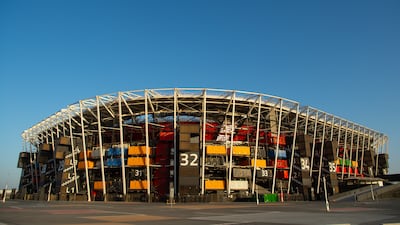
The 974 Stadium, which will host matches during the World Cup in Qatar. All photos: Getty -
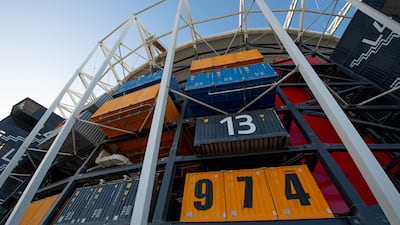
Nine hundred and seventy-four shipping containers have been used in the construction of the 974 Stadium. -
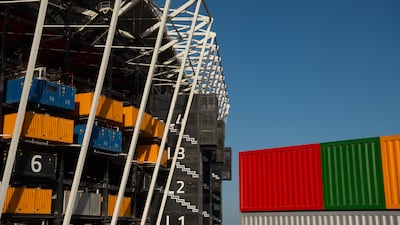
Seven matches will be played there. -
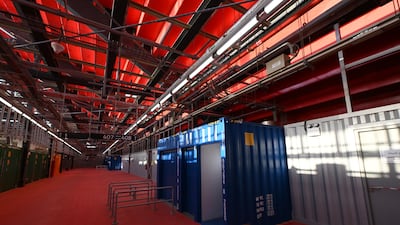
The concourse of the 974 Stadium, where shipping containers have been used in the construction. -
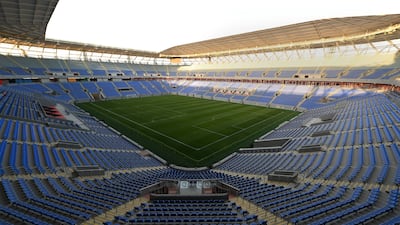
Inside the empty stadium, where the cheers of fans will soon ring out. -

Ahmad bin Ali Stadium is another Qatar venue for teams to battle it out on the pitch. -
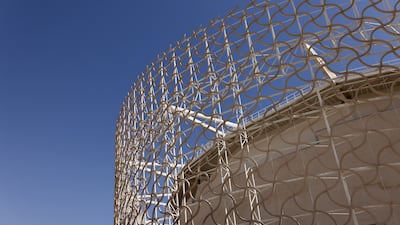
It will also host seven World Cup matches. -
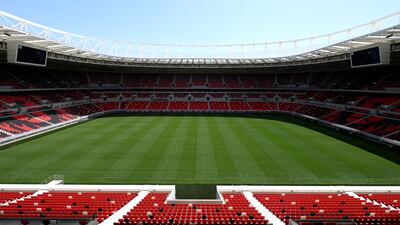
Seats waiting to be filled with cheering supporters at the Ahmad bin Ali Stadium in Doha. -
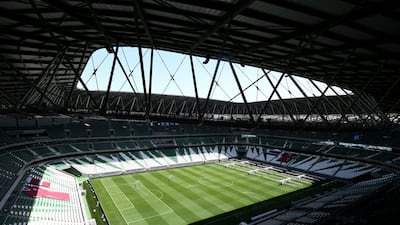
The Education City Stadium in Qatar.


“Apartment blocks show availability but it is hard to know where they are, how safe they are and if they are even completed – even those rooms are costing $450 a night.
“I haven’t booked anywhere yet as I don’t want to rush into book to stay in an area I don’t know.”
Ms Roxburgh, a PE teacher in Dubai, secured a semi-final ticket in the ballot, along with four friends, for $500 each.
So far, she said the process has been a lot more complicated and considerably more expensive than her trip to Russia for the World Cup in 2018.
"The flight prices are astronomical, around £800 [$1,000] for a return flight from Dubai to Doha seems to be the average, so we are thinking of driving,” said Ms Roxburgh, who has been in the UAE for six years.
“In Russia, I got semi-final tickets for England v Croatia after they came up on the resale market and got an indirect flight from Manchester to Moscow and it was easy to get accommodation.
“Here, we are just 40 minutes away and it is proving very difficult to book anything that is affordable."
A three-night stay on an MSC cruise ship to catch the opening games from November 21 will cost $347 per person, per night.
The MSC World Europa cruise ship hotel is a new vessel, with six swimming pools, 14 ocean-view Jacuzzis and a Balinese-style wellness centre. It also has 13 restaurants on board.
The ship will be moored at Doha's Grand Terminal, only a few minutes away from tourist spots such as Souq Waqif and the Museum of Islamic Art by shuttle bus.
Hotels are likely to be allocated to qualified teams before they are advertised for paying supporters, as many are already booked out for the tournament's duration.
Airbnb accommodation is another option for fans, although prices more than quadruple from the start to the end of the tournament.
A three-bed town house with marina views in the Pearl Quarter is currently available for $147 a night - but during the first week of the World Cup in November, such apartments are advertised for $1,600 a night.
A Hayya card gives fans in possession of a match ticket a visa to enter Qatar, stadium access and free public transport. But to register, they need to provide their accommodation details.

