

Yemen's new presidential council is aiming to rebuild vital public services and provide security across Aden and the liberated areas of the country, the body’s deputy head told The National.
Days after the presidential council was sworn in to replace Abdrabu Mansur Hadi, the body's deputy head Major General Aidaroos Al Zubeidi said a new era had begun but the challenges were significant.
“There are many priorities,” he said. “First, we need to start providing state services, pay salaries [to civil servants] and establish peace and security across the capital Aden.”
He said the council has been in “open-ended” consultations with the Yemeni cabinet about drawing up a plan of action and the means to start implementing plans.
“We have always taken the concerns and suffering of our peoples into consideration during the different stages of negotiations and today it is time to turn our words into actions.”
Maj Gen Al Zubeidi, who heads the powerful Southern Transitional Council – the faction's forces have been vital in pushing the Iran-backed Houthi rebels back – admits the dire economic state of one of the world’s poorest nations will hamper the new administration's abilities. However, he said through austerity, fighting administrative corruption and rationing state spending on the most vital areas would allow them to make progress.
“Of course, we also count heavily on many of our brothers in the Arab coalition to provide financial aid to revive the economic situation. We also rely on our friends, the international donors, to provide humanitarian support to the Yemeni people,” he said, adding that the government would look to rally international support.
“Our message to the regional and international communities is that we are moving forward to establish peace, security and stability in the region and combat terrorism, but we will fight the Houthi militia if it continues its intransigence and rejection of calls for peace,” he said.
The new council will launch bodies to audit and oversee spending in a bid to crack down on corruption in the liberated areas of Yemen, he said, explaining this had been a major point of discussion in forming the leadership body.
-

Gen Rashad Al Alimi, pictured at Sanaa airport on June 13, 2012. AFP -

Marib Governor Sultan Al Aradah, pictured on June 7, 2016. Reuters -

Maj Gen Tariq Saleh, a nephew of former Yemeni president Ali Abdullah Saleh, pictured in Sanaa on January 10, 2011. Reuters -
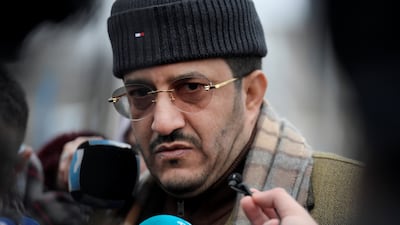
Othman Mujali, a Yemeni MP and former minister. Reuters -
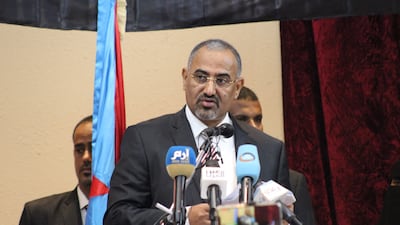
President of the Southern Transitional Council, Brig Aidrous Al Zubaidi, pictured in February 16, 2019. AFP -
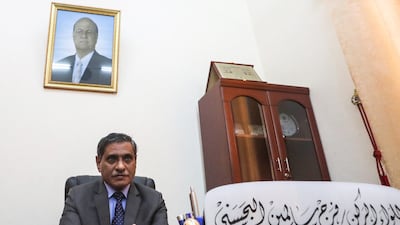
Gen Faraj Salmain Al Bahsani, governor of Hadramawt province, pictured in August 2018 at his office in Mukalla. AFP -
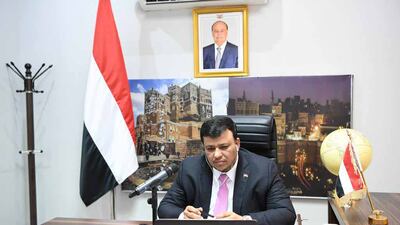
Abdullah Al Alimi Bawazeer, a senior aide to President Abdrabu Mansur Hadi. Photo: Marib Governorate


“We will also punish anyone who engages in corruption immediately,” he said.
Maj Gen Al Zubeidi affirmed the path towards peace with the Houthi rebels in Sanaa was through the UN process but he added that while the “option of peace is the priority, the option of war is also on the table if the Houthis continue their intransigence and their rejection of peace calls”.
Little progress has been made in moving towards lasting peace since the last round of talks in Sweden in 2019 and as he left office the now-former UN envoy Marin Griffiths, who spent years shuttling back and forth trying to get the groundwork for more dialogue, said the opportunity was slipping away.
However, hopes have been renewed with a ceasefire halting bloody offensives and the agreement to allow flights into and out of the rebel-held Sanaa for the first time since 2015. The Houthis have also agreed to a UN plan to unload oil from an ageing tanker off the coast of Yemen that experts and officials say is a ticking environmental time bomb.
-
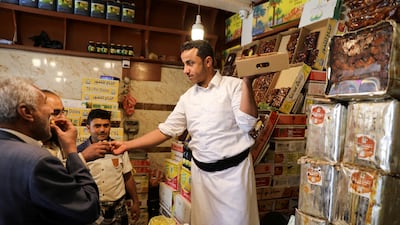
A vendor gives dates to customers to taste in preparation for the fasting month of Ramadan, as food prices soar in Sanaa, Yemen. All photos: Reuters -
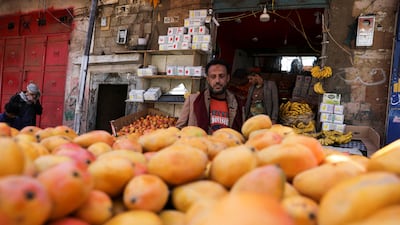
A man looks at mangoes in a street stall in Sanaa. -
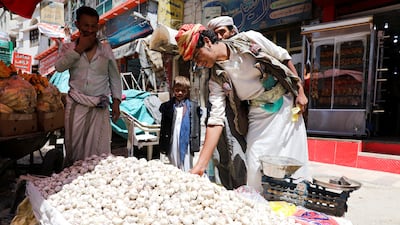
A vendor selling garlic waits for customers on a street in Sanaa. -
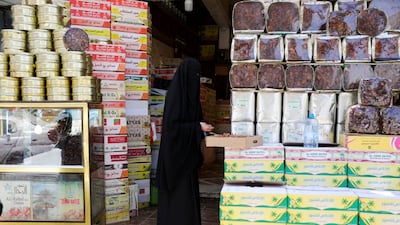
A woman checks dates at a shop. -
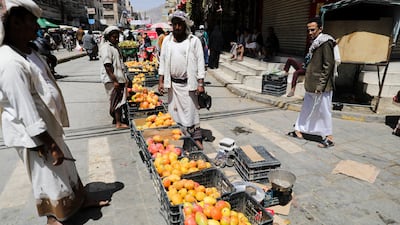
Vendors selling mangoes wait for customers. -

A vendor shows a date at his shop. -

A vendor displays dates at his shop. -
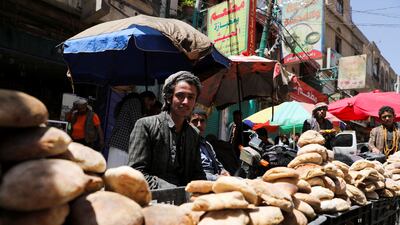
Vendors selling bread wait for customers. -
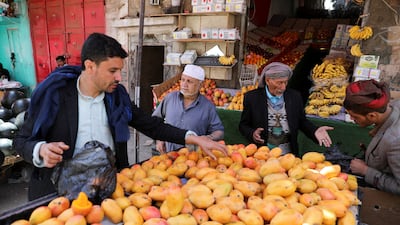
People buy mangoes from a street stall. -
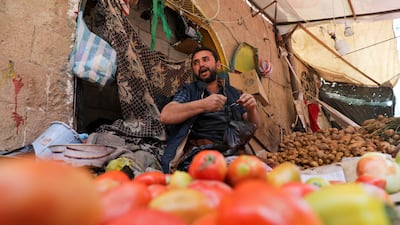
A vendor waits for customers at his vegetable stall.


“We are committed to the truce at all levels, and just as we have the ability to exercise restraint, we also have the ability to confront any escalation by the Houthi militia,” said Maj Gen Al Zubeidi.
However, he said terrorism was on the rise again despite efforts to stamp out groups like Al Qaeda in the Arabian Peninsula and ISIS.
“Terrorism has recently re-emerged in the governorates of Abyan and Shabwa as the Houthi militias begin to change their strategies through co-ordination with terrorist organisations (ISIS and Al Qaeda),” he said.
While combatting this was key, Maj Gen Al Zubeidi also said securing international shipping lanes was important and the Yemeni presidential council would welcome any international effort in this regard.
Houthi rebels have tried to target shipping with bomb-laden boats and hijackings in recent years, causing a threat to the major international waterway.
“We need naval equipment, weapons, boats, training and rehabilitation for soldiers and officers to carry out their tasks professionally in securing the shipping lanes in the Red Sea, Gulf of Aden and Bab Al Mandeb,” Maj Gen Al Zubeidi said.

