
Oman will allocate 200 million rials ($500 million) in its 2022 budget to repair damages caused by Cyclone Shaheen in November, the finance minister said on Tuesday.
“Rebuilding the areas worst hit by Cyclone Shaheen will cost about 200 million rials,” Sultan Salim Al Habsi told Oman TV.
Most of the destruction was in the Batinah region, in the towns of Al Musannah, Suwaiq, Saham, Khabourah and Sohar, which were hit by 110-kilometre-an-hour winds and 12-metre waves.
On October 6, Sultan Haitham bin Tarek ordered his Cabinet to form a committee to assess the extent of the damage.
“The committee was led by the minister of finance and now it has concluded how much is needed to put right the widespread damages. Not only for the public properties, but houses affected by the storms to support homeowners and private businesses,” an official told The National.
Cyclone Shaheen, with winds at times reaching 150kph, killed 12 people in Oman and two in Iran. It destroyed homes, damaged infrastructure and forced more than 5,000 people into temporary accommodation.
Days after the storm, about 20,000 volunteers, Omanis and expatriates, removed tonnes of mud, debris, rubble, dead animals, fallen trees and damaged cars from the wadis in what they said at the time was like "a UN task force" in a show of national solidarity.
The floods damaged more than 1,000 houses.
Last month, Oman’s Ministry of Housing and Urban Planning said it was planning to build 328 houses for families who lost their properties in the storm.
An official at the ministry of housing on Tuesday said that the process to build the houses for citizens who had their homes destroyed has already begun.
“These houses will be built on higher ground and not in areas prone to storms and flooding. We are already mobilising the process of the construction of the houses and we expect to finish them towards the end of next year,” the official told The National.
Omanis whose houses were destroyed said they were happy that the government is speeding up the process to build them new homes.
“We were taken to the place where the new homes will be and we are happy with the location. We are also happy that the process has already begun – to start the construction – and hopefully we will be in our new homes before the year 2022 has ended,” Nasser Al Saadi, 67, a retired bank cashier, told The National.
-
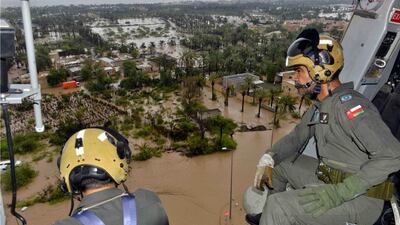
An Oman Air Force helicopter flies over Khaburah in Al Batinah district to assess damage caused by Cyclone Shaheen in October 2021. The government later said $500 million was required to repair infrastructure and homes. Photo: AP -
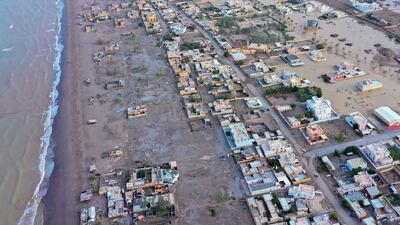
Cyclone Shaheen caused widespread flooding and landslides in Oman. Climate change is predicted to make such weather events more frequent. Photo: AFP -
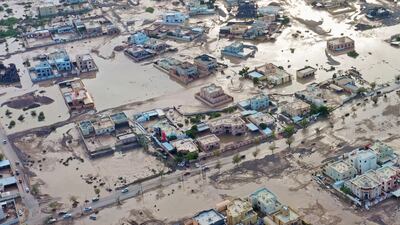
In total 14 people in Oman died as a result of the cyclone. Photo: AFP -
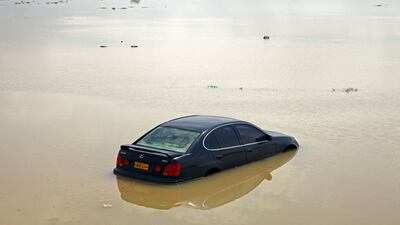
A car is stranded in flooded street in the Omani capital, Muscat. Photo: AFP -
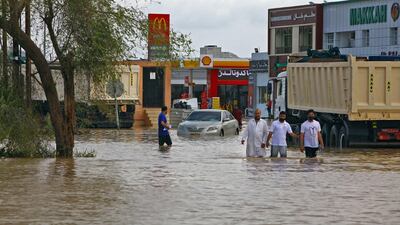
People wade through a flooded street in Muscat. Photo: AFP -
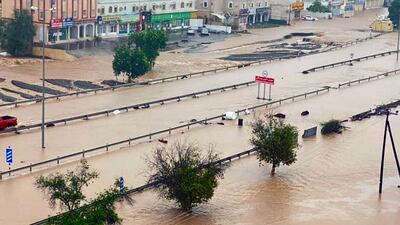
A flooded street in Al Khaburah. Photo: AP -
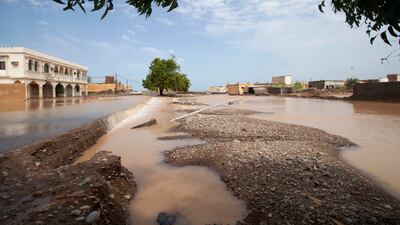
Flooded streets in Al Khaburah, one day after Cyclone Shaheen brought wind speeds of up to 116 kilometres an hour. Photo: EPA -
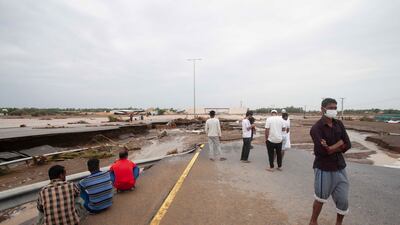
Gloomy skies in Muscat. Photo: EPA -
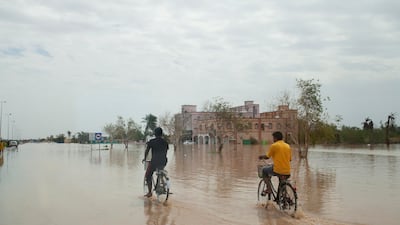
People cycle along a waterlogged road in Al Khaburah. Photo: EPA -
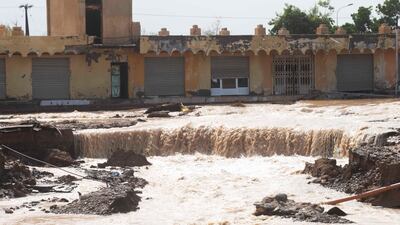
A torrent of floodwater runs through Al Khaburah. Photo: EPA -
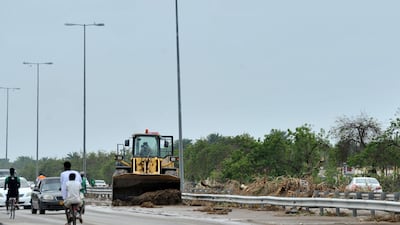
Workers in Al Musanna repair damage caused by Cyclone Shaheen. Photo: Reuters -
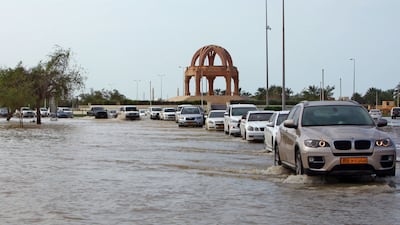
Vehicles make their way along a flooded street in the aftermath of Cyclone Shaheen in Muscat. Photo: AFP
Abdul Jabar Qahraman was meeting supporters in his campaign office in the southern Afghan province of Helmand when a bomb hidden under a sofa exploded on Wednesday.
The blast in the provincial capital Lashkar Gah killed the Afghan election candidate and at least another three people, Interior Minister Wais Ahmad Barmak told reporters. Another three were wounded, while three suspects were detained, he said.
The Taliban – which controls much of Helmand and has vowed to disrupt the October 20 parliamentary elections – claimed responsibility for the attack.
Mr Qahraman was at least the 10th candidate killed so far during the campaign season, and the second from Lashkar Gah this month. Another candidate, Saleh Mohammad Asikzai, was among eight people killed in a suicide attack last week. Most of the slain candidates were murdered in targeted assassinations, including Avtar Singh Khalsa, the first Afghan Sikh to run for the lower house of the parliament.
The same week the Taliban warned candidates to withdraw from the elections. On Wednesday the group issued fresh warnings, calling on educational workers to stop schools from being used as polling centres.
While you're here
Samanth Subramanian: Imposing Hindi could undermine India's linguistic diversity
Phil Mercer: Aboriginal musicians are struggling to be heard
Gavin Esler: What we lose when we allow languages to die
Mission%3A%20Impossible%20-%20Dead%20Reckoning%20Part%20One
Analysis
Members of Syria's Alawite minority community face threat in their heartland after one of the deadliest days in country’s recent history. Read more
Mercer, the investment consulting arm of US services company Marsh & McLennan, expects its wealth division to at least double its assets under management (AUM) in the Middle East as wealth in the region continues to grow despite economic headwinds, a company official said.
Mercer Wealth, which globally has $160 billion in AUM, plans to boost its AUM in the region to $2-$3bn in the next 2-3 years from the present $1bn, said Yasir AbuShaban, a Dubai-based principal with Mercer Wealth.
“Within the next two to three years, we are looking at reaching $2 to $3 billion as a conservative estimate and we do see an opportunity to do so,” said Mr AbuShaban.
Mercer does not directly make investments, but allocates clients’ money they have discretion to, to professional asset managers. They also provide advice to clients.
“We have buying power. We can negotiate on their (client’s) behalf with asset managers to provide them lower fees than they otherwise would have to get on their own,” he added.
Mercer Wealth’s clients include sovereign wealth funds, family offices, and insurance companies among others.
From its office in Dubai, Mercer also looks after Africa, India and Turkey, where they also see opportunity for growth.
Wealth creation in Middle East and Africa (MEA) grew 8.5 per cent to $8.1 trillion last year from $7.5tn in 2015, higher than last year’s global average of 6 per cent and the second-highest growth in a region after Asia-Pacific which grew 9.9 per cent, according to consultancy Boston Consulting Group (BCG). In the region, where wealth grew just 1.9 per cent in 2015 compared with 2014, a pickup in oil prices has helped in wealth generation.
BCG is forecasting MEA wealth will rise to $12tn by 2021, growing at an annual average of 8 per cent.
Drivers of wealth generation in the region will be split evenly between new wealth creation and growth of performance of existing assets, according to BCG.
Another general trend in the region is clients’ looking for a comprehensive approach to investing, according to Mr AbuShaban.
“Institutional investors or some of the families are seeing a slowdown in the available capital they have to invest and in that sense they are looking at optimizing the way they manage their portfolios and making sure they are not investing haphazardly and different parts of their investment are working together,” said Mr AbuShaban.
Some clients also have a higher appetite for risk, given the low interest-rate environment that does not provide enough yield for some institutional investors. These clients are keen to invest in illiquid assets, such as private equity and infrastructure.
“What we have seen is a desire for higher returns in what has been a low-return environment specifically in various fixed income or bonds,” he said.
“In this environment, we have seen a de facto increase in the risk that clients are taking in things like illiquid investments, private equity investments, infrastructure and private debt, those kind of investments were higher illiquidity results in incrementally higher returns.”
The Abu Dhabi Investment Authority, one of the largest sovereign wealth funds, said in its 2016 report that has gradually increased its exposure in direct private equity and private credit transactions, mainly in Asian markets and especially in China and India. The authority’s private equity department focused on structured equities owing to “their defensive characteristics.”
PROFILE OF SWVL
Started: April 2017
Founders: Mostafa Kandil, Ahmed Sabbah and Mahmoud Nouh
Based: Cairo, Egypt
Sector: transport
Size: 450 employees
Investment: approximately $80 million
Investors include: Dubai’s Beco Capital, US’s Endeavor Catalyst, China’s MSA, Egypt’s Sawari Ventures, Sweden’s Vostok New Ventures, Property Finder CEO Michael Lahyani
Hajj 2019
Other workplace saving schemes
- The UAE government announced a retirement savings plan for private and free zone sector employees in 2023.
- Dubai’s savings retirement scheme for foreign employees working in the emirate’s government and public sector came into effect in 2022.
- National Bonds unveiled a Golden Pension Scheme in 2022 to help private-sector foreign employees with their financial planning.
- In April 2021, Hayah Insurance unveiled a workplace savings plan to help UAE employees save for their retirement.
- Lunate, an Abu Dhabi-based investment manager, has launched a fund that will allow UAE private companies to offer employees investment returns on end-of-service benefits.
COMPANY%20PROFILE
While you're here
Monster Hunter: World
Capcom
PlayStation 4, Xbox One
Learn more about Qasr Al Hosn
In 2013, The National's History Project went beyond the walls to see what life was like living in Abu Dhabi's fabled fort:
- Life in the royal residences with Sheikha Osha bint Nahayan
- Sheikha Mahra and Sheikha Sabha recall their time spent in Al Hosn
- A place where problems were solved
- How the fort's rise tracked Abu Dhabi's development
- Meet Frauke Heard-Bey - the fort's historian for 30 years
- In Pictures: Story of a fort
The specs
Engine: 2.0-litre 4-cyl turbo
Power: 201hp at 5,200rpm
Torque: 320Nm at 1,750-4,000rpm
Transmission: 6-speed auto
Fuel consumption: 8.7L/100km
Price: Dh133,900
On sale: now
In The Heights
Directed by: Jon M. Chu
Stars: Anthony Ramos, Lin-Manual Miranda
Rating: ****
The%20specs
Sole survivors
- Cecelia Crocker was on board Northwest Airlines Flight 255 in 1987 when it crashed in Detroit, killing 154 people, including her parents and brother. The plane had hit a light pole on take off
- George Lamson Jr, from Minnesota, was on a Galaxy Airlines flight that crashed in Reno in 1985, killing 68 people. His entire seat was launched out of the plane
- Bahia Bakari, then 12, survived when a Yemenia Airways flight crashed near the Comoros in 2009, killing 152. She was found clinging to wreckage after floating in the ocean for 13 hours.
- Jim Polehinke was the co-pilot and sole survivor of a 2006 Comair flight that crashed in Lexington, Kentucky, killing 49.
Kanye%20West
The%20specs
Who was Alfred Nobel?
The Nobel Prize was created by wealthy Swedish chemist and entrepreneur Alfred Nobel.
- In his will he dictated that the bulk of his estate should be used to fund "prizes to those who, during the preceding year, have conferred the greatest benefit to humankind".
- Nobel is best known as the inventor of dynamite, but also wrote poetry and drama and could speak Russian, French, English and German by the age of 17. The five original prize categories reflect the interests closest to his heart.
- Nobel died in 1896 but it took until 1901, following a legal battle over his will, before the first prizes were awarded.
Saudi National Day
What can victims do?
Always use only regulated platforms
Stop all transactions and communication on suspicion
Save all evidence (screenshots, chat logs, transaction IDs)
Report to local authorities
Warn others to prevent further harm
Courtesy: Crystal Intelligence
Ten tax points to be aware of in 2026
1. Domestic VAT refund amendments: request your refund within five years
If a business does not apply for the refund on time, they lose their credit.
2. E-invoicing in the UAE
Businesses should continue preparing for the implementation of e-invoicing in the UAE, with 2026 a preparation and transition period ahead of phased mandatory adoption.
3. More tax audits
Tax authorities are increasingly using data already available across multiple filings to identify audit risks.
4. More beneficial VAT and excise tax penalty regime
Tax disputes are expected to become more frequent and more structured, with clearer administrative objection and appeal processes. The UAE has adopted a new penalty regime for VAT and excise disputes, which now mirrors the penalty regime for corporate tax.
5. Greater emphasis on statutory audit
There is a greater need for the accuracy of financial statements. The International Financial Reporting Standards standards need to be strictly adhered to and, as a result, the quality of the audits will need to increase.
6. Further transfer pricing enforcement
Transfer pricing enforcement, which refers to the practice of establishing prices for internal transactions between related entities, is expected to broaden in scope. The UAE will shortly open the possibility to negotiate advance pricing agreements, or essentially rulings for transfer pricing purposes.
7. Limited time periods for audits
Recent amendments also introduce a default five-year limitation period for tax audits and assessments, subject to specific statutory exceptions. While the standard audit and assessment period is five years, this may be extended to up to 15 years in cases involving fraud or tax evasion.
8. Pillar 2 implementation
Many multinational groups will begin to feel the practical effect of the Domestic Minimum Top-Up Tax (DMTT), the UAE's implementation of the OECD’s global minimum tax under Pillar 2. While the rules apply for financial years starting on or after January 1, 2025, it is 2026 that marks the transition to an operational phase.
9. Reduced compliance obligations for imported goods and services
Businesses that apply the reverse-charge mechanism for VAT purposes in the UAE may benefit from reduced compliance obligations.
10. Substance and CbC reporting focus
Tax authorities are expected to continue strengthening the enforcement of economic substance and Country-by-Country (CbC) reporting frameworks. In the UAE, these regimes are increasingly being used as risk-assessment tools, providing tax authorities with a comprehensive view of multinational groups’ global footprints and enabling them to assess whether profits are aligned with real economic activity.
Contributed by Thomas Vanhee and Hend Rashwan, Aurifer
MATCH INFO
Uefa Champions League final:
Who: Real Madrid v Liverpool
Where: NSC Olimpiyskiy Stadium, Kiev, Ukraine
When: Saturday, May 26, 10.45pm (UAE)
TV: Match on BeIN Sports
THE SPECS
Cadillac XT6 2020 Premium Luxury
Engine: 3.6L V-6
Transmission: nine-speed automatic
Power: 310hp
Torque: 367Nm
Price: Dh280,000
White hydrogen: Naturally occurring hydrogen
Chromite: Hard, metallic mineral containing iron oxide and chromium oxide
Ultramafic rocks: Dark-coloured rocks rich in magnesium or iron with very low silica content
Ophiolite: A section of the earth’s crust, which is oceanic in nature that has since been uplifted and exposed on land
Olivine: A commonly occurring magnesium iron silicate mineral that derives its name for its olive-green yellow-green colour



