

Supporters of Jensen Huang are insisting that parallels exist between Nvidia's former chief executive and the late Apple co-founder Steve Jobs.
They are arguing that, just as was the case when Mr Jobs left Apple in the 1980s, Nvidia will not be as prosperous without Mr Huang.
“This would be an Apple firing Steve Jobs level of idiocy from Nvidia's board if they did that, and a grievous harm to the United States of America,” posted Epic Games founder and chief executive Tim Sweeney on X, a day before Mr Huang resigned.
But while both Mr Huang and Mr Jobs were forced out of the companies they co-founded, the similarities do not seem to go much further.
In 1985, Steve Jobs had major disagreements with Apple’s board as Macintosh sales fell far below expectations and there were complaints about his management style. They voted him out of the company.
Mr Huang, however lied to his board about his initial affair with a woman US officials suspect is a Chinese spy, and then told his board that there were no other infidelities.
A subsequent affair came to light, and Mr Huang was accused of violating US technology export laws in his dealings with companies linked to China.
Journalist Geoffrey Cain, author of Steve Jobs in Exile, which looks at the Apple co-founder's years after his removal from the company, disagreed that Mr Huang's situation was similar.
“Steve Jobs was pushed out for being horrible to work with, no spies involved – though he did visit the USSR and pitched the Mac,” Mr Cain posted on X.
“Simply put, Steve was too immature at 30 years old to stay at Apple, and many engineers refused to work with him.” Unlike Mr Huang at Nvidia, Mr Jobs was not Apple's chief executive when he was fired from the company in 1985, he added.
“He was the head of the Macintosh division, he reported to John Sculley, the CEO, who asked the board to remove him,” Mr Cain said.
Instead, Mr Jobs' departure from Apple in 1985 suggests it is possible for Nvidia to survive and be successful without its co-founder.
Although Mr Sculley stepped down as Apple's chief executive in 1993 amid disappointing sales, between 1985 and 1992, he led the company through some prosperous years and introduced products that that were critically acclaimed and consumer hits.
He also prompted Apple to make an investment in ARM, which later proved to be critical in providing processors that were later used in the iPhone.

His tenure was far from perfect and Apple's market share suffered towards the end of Mr Sculley's time at the company, but its profits grew and status expanded on his watch.
Apple struggled from 1993 until 1998, following Mr Sculley' departure.
Mr Jobs's return in 1997 and his eventual appointment as chief executive proved a pivotal moment that led Apple to a renaissance, but Nvidia is a completely different company in vastly different circumstances.
After Apple's co-founder died in 2011, chief executive Tim Cook increased Apple's revenue, sales and market share in an unprecedented manner.
After Mr Jobs' initially ousting from Apple, his new company, NeXT, failed despite having momentum and ample investment.
Lacklustre sales prompted Mr Jobs to discontinue the company's hardware in 1993 and focus on software, but he learnt from that. “Those years were failure upon failure, and they taught him,” Mr Cain wrote.
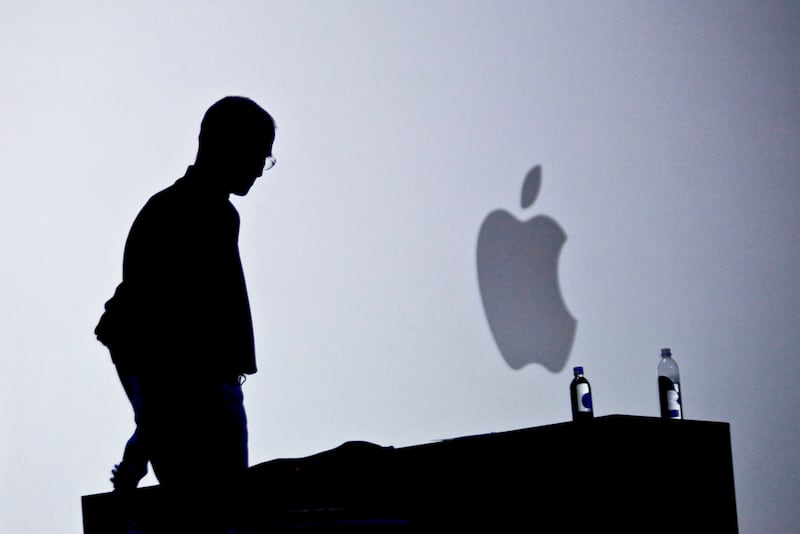
"People have been asking me if Jensen Huang might make a comeback - similar to how Steve Jobs was driven out of Apple and then returned and saved it ... The answer is no," Mr Cain wrote on X
On Tuesday, Mr Huang said he was willing to return as chief executive at Nvidia if the company's board of directors ask him to do so.
Nvidia's board is not said to be pursuing the idea of allowing him back.

