
While investments in AI and future tech remain a top priority for most nations, concentration of funding in the sector is creating challenges for poorly resourced countries.
With the digital divide widening rapidly, investors need to move in unison in channelling their investment flows better, ministers and policymakers told the AIM Congress in Dubai on Tuesday. This applies in terms of sectors as well as geographies, especially in less developed parts of the world.
“More than 40 per cent of global investment is going to a very few sectors like AI and digital economy, while in traditional manufacturing it is declining,” James X Zhan, executive chairman of the World Investment Conference, said.

Even within the advanced technology sector investments, the share of developing countries is “a fragment, a fraction”, of what is being channelled into developed economies, Mr Zhang, former chief adviser to the secretary general of UN Trade and Development (Unctad), told a ministerial round-table.
Global investment in AI and advanced technologies has surged to record levels in 2026, with AI-related capital expenditure and venture funding set to exceed $1 trillion this year, Goldman Sachs said in a report in August.
While US tech giants are largely driving AI and advanced technology investment push, venture capital deal activity in the sector has also picked up pace, reaching over $430 billion in the first half of 2026 alone, according to EY.

Investment in AI data centre infrastructure alone will hit an aggregate of $31.6 trillion through to the middle of this century, starting at roughly $800 billion to $1 trillion annually in 2026, PwC said in estimates released earlier this month.
However, Unctad in May said that the growing concentration of investments in fewer countries constitutes a major global developmental divide with immediate repercussions for smaller, less-resourced countries.
Even within FDI flows to developing economies, around 75 per cent are concentrated in just 10 countries, including large economies such as China, Brazil, Mexico, Indonesia and India, “leaving most developing countries – and nearly all of the least developed countries – struggling to attract capital”, Unctad said in its latest report.
Digital colonisation
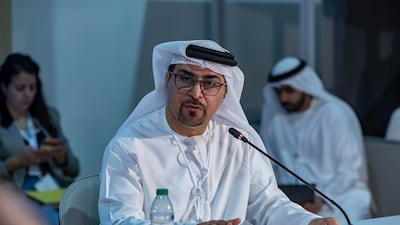
While the UAE is keen to build its economy of the future on pillars of manufacturing as well as AI and advanced technologies, it strongly supports the efforts to avoid “digital colonisation”, Fahad Al Gergawi, undersecretary of UAE Ministry of Foreign Trade, and former chief executive of Dubai FDI, said.
The Arab world's second-largest economy is investing heavily within the country to build its industrial and advanced tech base. It is also investing globally through partnerships to democratise AI and advance tech for countries with fewer resources, Mr Gergawi said.
“We look at the digital divide and [we believe] it is very important to bridge it,” he said. “It is vital that the benefits of AI are distributed evenly and not concentrated among a handful of capital-rich nations.”
The need to address the issue of divergence has become even more urgent given the uncertain global economic conditions as well as the fluidity of the interest rate environment, Dr Ahmed Rostom, Egypt’s Minister of Planning and Economic Development, said on Tuesday.
These are “quite challenging prospects” for the emerging and developing economies and necessitate policy incentives and participation of the private sector as well as collaboration at a regional and broader global level.
While Egypt is pushing for two-thirds of its investments to come from the private sector, it is also looking at the “quality of foreign direct investment that we're trying to attract”, the minister said.
“Yes, we welcome FDI, but we would like to welcome quality FDI as well, and that's where we are providing a number of incentives to promote this,” he added.