

Amid the friction caused by US officials using Signal to plan military strikes in Yemen, National Security Adviser Mike Waltz's use of technology has come under the microscope following reports he has also used Gmail to discuss government business.
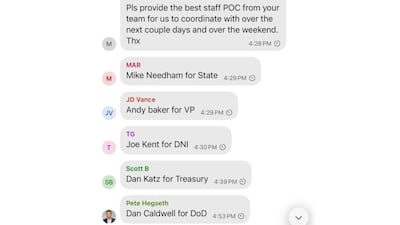
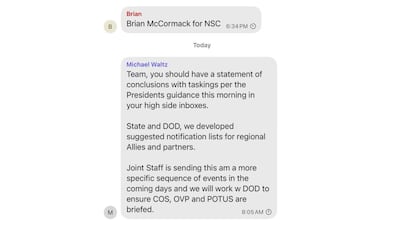
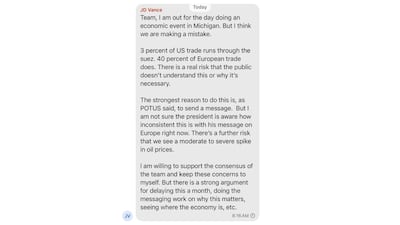
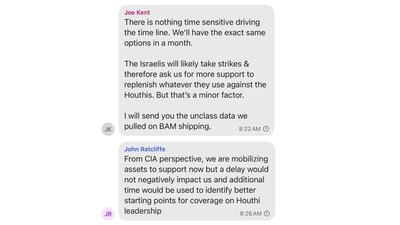
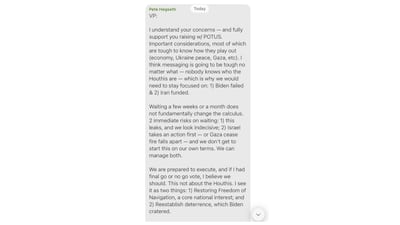
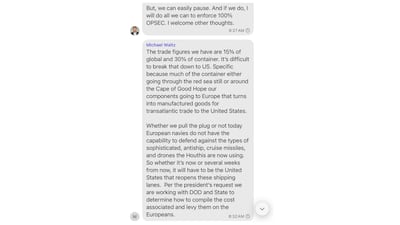
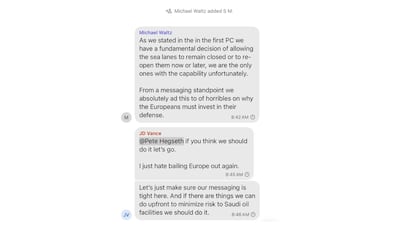
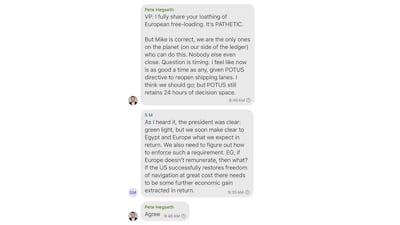
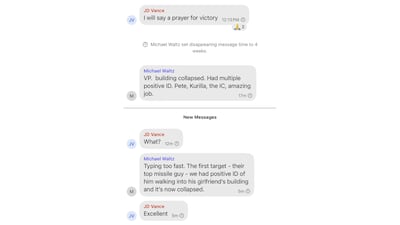
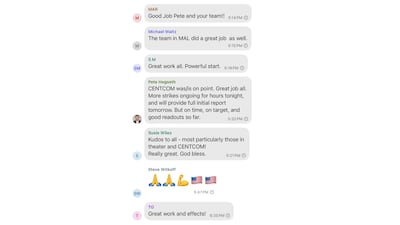
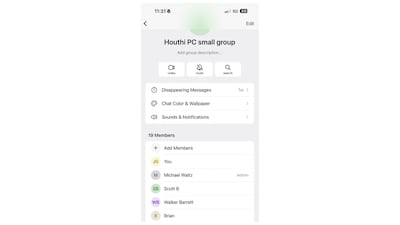
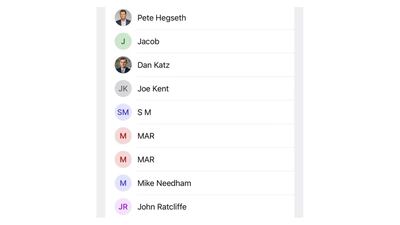
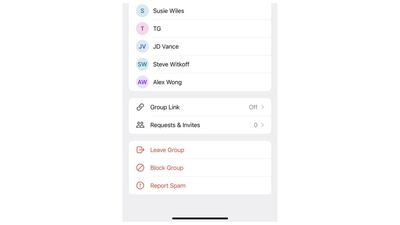
In what has become known as “Signalgate”, Jeffrey Goldberg, the editor-in-chief of The Atlantic magazine, reported late last month that he had inadvertently learnt details of US plans for attacks on Houthi rebels in Yemen after he was added to a group chat on the popular messaging app Signal. Mr Waltz was involved in that chat and was reportedly the one who added Goldberg.
The controversy was further stoked by a story published last week in The Washington Post, which claimed that Mr Waltz had also used Gmail for government communications.
Much like the fallout from the Signal revelations, security experts expressed shock that someone in such a prominent US government role would use conventional email to communicate about policy decisions.
-
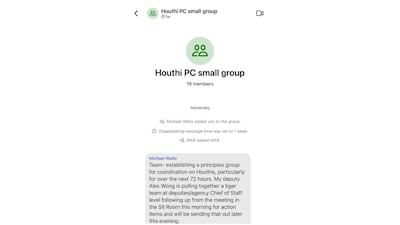
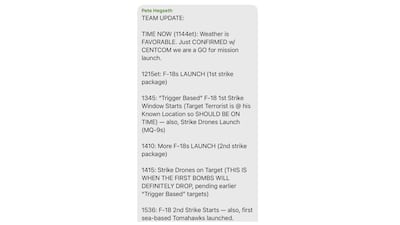
US Defence Secretary Pete Hegseth shared a detailed timeline on Signal about how Central Command would attack the Houthi rebels in Yemen. All photos: The Atlantic -
-
-
-
-
-
-
-
-
-

-
-

-
-
-
-


“The big problem is that Gmail is not end-to-end encrypted,” Robert Graham, chief executive of Atlanta-based cyber security company Errata Security, told The National.
He said that “essentially, Google reads all the emails”, referring to default settings that allow the company to target advertising to users of Gmail.
The platform does offer an encryption setting, but it only works if other users have that particular setting activated as well, creating a security loophole.
Mr Graham has also been critical of US officials using Signal to discuss military operations, despite the app's encryption features.
“Often the defence department will urge against using these apps for secure communication because humans will be humans and they can't be trusted to use it correctly,” he said. “That was verified by this whole story – a journalist was accidentally added to the group.”
Military analysts, former defence officials and technology experts have expressed concern and confusion over Signal being used in the sharing of sensitive military information.
Peter Yacobucci, a political science and constitutional law professor at Buffalo State University, told The National that President Donald Trump and his advisers are continuing a trend from his first term in office in breaking with precedent on information related to national security.
“The Waltz story is more of the same,” he said. “It also suggests that they see state secrets and classified information not as something that needs to be guarded but as private commodities to be utilised for private capital gain.
“I have always thought Trump and his team would sell the nuclear codes at the drop of a hat if they got a price they like.”
Timothy Kneeland, a history and political science professor at Nazareth College in upstate New York, echoed those sentiments, adding the Trump administration's claims that the information in the Signal chats was not technically classified pushed credulity.
“Even if there was no classified information available, sometimes the most routine information can be useful,” he said, referring to the potential for the Houthis to intercept the Signal chat information.
“For example, the schedule could be used by an intelligence agency outside the United States to determine who the secretary was meeting with and draw conclusions about future actions of the US government.”

In addition to Mr Waltz, pressure has been high on Defence Secretary Pete Hegseth. “The purpose of this memorandum is to notify you that we are initiating the subject evaluation,” read a letter sent last Thursday from the acting US Inspector General to Mr Hegseth.
Although Democrats in Congress have pushed for Mr Hegseth to resign, he does not seem to be bowing to that pressure, insisting he did nothing wrong.
He also has the backing of Mr Trump, who has called the criticism “a witch hunt”.
As for Mr Waltz, several days after the Signal messages were made public, he went on Fox News and took “full responsibility” for the incident, but said he had no idea how the journalist was added to the Signal group chat.
As of April 7, the Gmail revelations are limited to Mr Waltz.
Meanwhile, Signal Messenger is also trying to clear up what it describes as misinformation about the platform that is the focus of so much discussion.
“Right now, there are a lot of new eyes on Signal, and not all of them are familiar with secure messaging and its nuances,” Signal posted to X, referring to a government memo which referred to “vulnerabilities” related to phishing attempts in Signal.
“Phishing isn’t new, and it’s not a flaw in our encryption or any of Signal’s underlying technology … Signal remains the gold standard for private, secure communications.”

Yet as the situation involving the Trump administration shows, all the security technology in the world would not have helped when a journalist was accidentally added to a Signal group chat.
For ultimate security, Mr Graham points out that sensitive compartmented information facilities, SCIFs, should always be used.
“You have to get into the habit of 'We need to have a conversation, let's go to a SCIF'. There's a high principle here in that the area is secure and you don't need to worry about journalists because the endpoints are secure.”

