


For a certain kind of Englishman or woman, an England-France football game is a re-run of the 15th-century Battle of Agincourt when an English king overcame the odds to defeat the French forces.
At Doha’s All Thumama stadium on Saturday, England again start as underdogs in the battle for a World Cup semi-final. For many the most interesting observation is that both countries' squads are drawn from very diverse backgrounds.
Gareth Southgate and Didier Deschamps will field a talented collection of players ranging from Kylian Mbappe, the tournament’s top scorer with five goals, to Marcus Rashford and Bukayo Saka who have three apiece.
Those three players all have roots far from their countries’ shores. Mbappe was born in Paris to Cameroonian and Algerian parents. Saka’s parents settled in west London as economic migrants from Nigeria, while Manchester-born Rashford’s working-class origins include a grandmother from the West Indies island of St Kitts, ruled in colonial times by both Britain and France.
The ethnic mix of both national sides, and the clubs that play in each country’s top flight, the Premier League and Ligue 1, is a striking and sometimes - because pockets of racism persist - contentious feature of recent years
When France beat Brazil to win the 1998 World Cup at the Stade de France on the outskirts of Paris, the achievement was marked by two catchy slogans: un-deux-trois-zero to recall the surprisingly emphatic 3-0 scoreline, black-blanc-beur illustrating the black, white and Maghrebin composition of the French squad.
Mbappe exemplifies a 2022 edition with its own richly varied cultural make-up.

In France’s previous game, the 3-1 win against Poland in the round of 16, the starting line-up included Jules Kounde, of Beninese/French parentage; Raphael Varane (father from the French Caribbean department of Martinique); Dayot Upamecano, one of whose ancestors was a village king in the small West African state of Guinea-Bissau; Aurelien Tchouameni (Cameroonian origin); Ousmane Dembele (with family roots combining Mali, Senegal and Mauritius) and a smattering of non-French European blood among the others.
England began their round of 16 game against Senegal with fewer team members of non-British pedigree. The highly-rated young attacking midfielder Jude Bellingham has African as well as English and Irish roots, but Saka and Kyle Walker, the Sheffield-born son of Jamaican and British parents, were the only other black players in the starting 11.
In both camps, however, Anglo-French rivalries will count for less than the desire to win regardless of the opposition.
It is a twist to an already long history where the two countries have enjoyed being allies as well as being deadly neighbours.
History tells us that the bloody fighting at Agincourt, 75km south of Calais, was just a spectacular example of centuries of intermittent conflict.
Even in peacetime, the scope for bitter disagreement prevails. Rishi Sunak’s predecessor as British prime minister, Liz Truss, said during her campaign to follow Boris Johnson into 10 Downing Street that the “jury is out” on whether French President Emmanuel Macron was friend or foe. Not until she began her short-lived premiership did she bow to diplomatic necessity and declare him a friend.
A series of squabbles ― on issues including Covid travel restrictions, fishing rights and migrant traffic between northern France and Britain ― has dogged post-Brexit relations.
England in training- in pictures
-
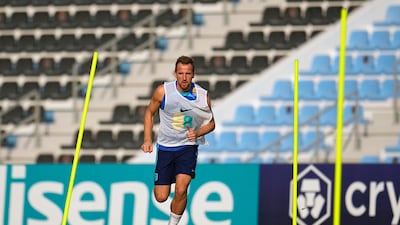
England's Harry Kane takes part training at the Al Wakrah Sports Complex on Wednesday, December 7, 2022. AP -
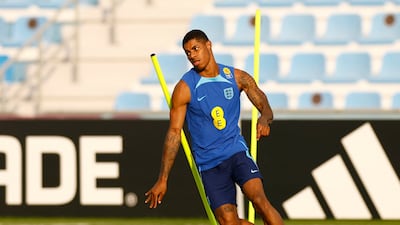
England's Marcus Rashford during training in Al Wakrah. Reuters -
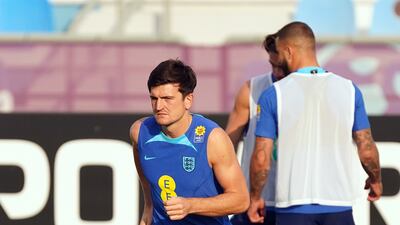
England's Harry Maguire warms up during training in Qatar ahead of the quarter-final against France. PA -

England's Jordan Henderson stretched during training. PA -
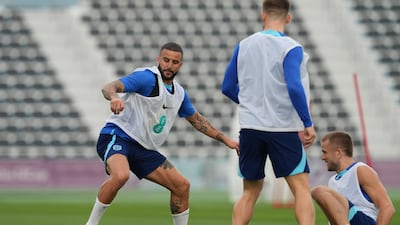
England's Kyle Walker trains in Al Wakrah with teammates. PA -
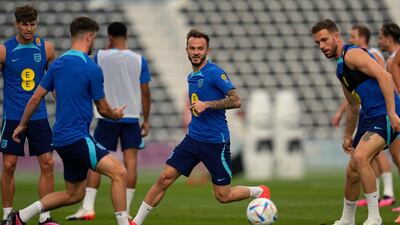
England's James Maddison, middle, takes part in drills during training session at the Al Wakrah Sports Complex. AP -

Bukayo Saka and Mason Mount during training. Reuters -
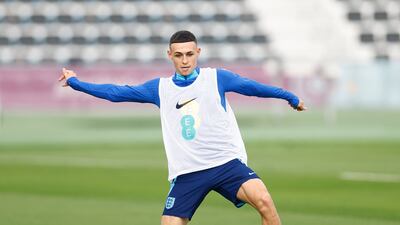
England's Phil Foden trains for the World Cup quarter-final against France. Reuters -
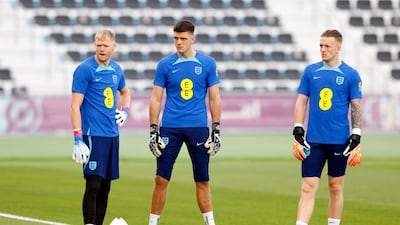
England's Aaron Ramsdale, Nick Pope and Jordan Pickford during training. Reuters -
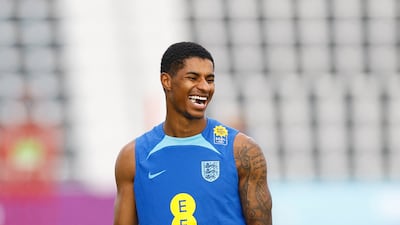
Marcus Rashford has a laugh during training. Reuters -
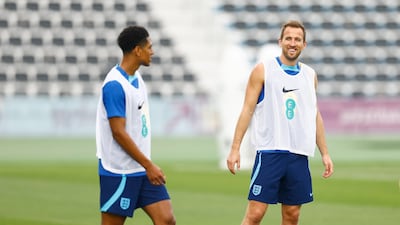
England's Harry Kane and Jude Bellingham during training. Reuters -

England manager Gareth Southgate oversees training in Al Wakrah. PA -
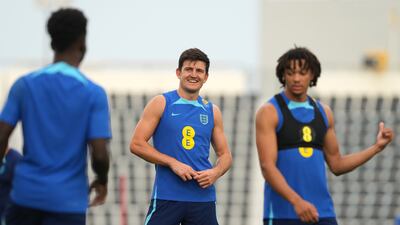
England's Harry Maguire during training session with teammates. PA -

England's Phil Foden and Kyle Walker during training. Reuters -
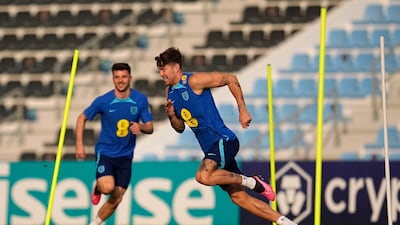
England's John Stones, right, takes part in drills during training. AP -
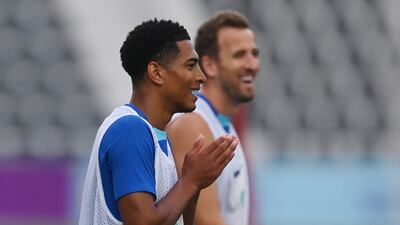
Jude Bellingham and Harry Kane train on Wednesday. EPA -

England players train for their World Cup 2022 quarter-final against France. EPA


The French press has had its spot of fun, putting aside republican principles to present the World Cup clash in royal terms, headlines pitting their King Kylian against England’s Prince Harry.
The former represents the genius of Mbappe. The England captain Harry Kane is cast as Prince Harry, evoking the concluding line of the fictitious Agincourt rallying speech attributed by Shakespeare to Henry V: “Cry ‘God for Harry, England and Saint George'.”
Six centuries after that battle, Marc Lievremont, coach of the French rugby union team at the time, made clear where he stood before a 2011 Six Nations international at Twickenham. He declared affinity with “our Italian cousins” and “the convivial Celts”, but none with the English.
“We don’t like them and it’s better to say that than be hypocritical,” he said. “We respect them ― well I do ― but you couldn’t say we have the slightest thing in common.”
Whether or not fired by his unfriendly words, England beat France in that game and went on to win the tournament.
A promising omen for England after all those more recent departures from neighbourliness? Not if the Battle of Agincourt offers a much older historical precedent: France recovered from humiliating defeat and, four decades later, won the 100 Years’ War of which it was part.

