



On the eve of the World Cup, the most medalled footballer from Africa showered his fellow Africans with anticipated prizes. Samuel Eto’o, the former Cameroon, Barcelona, Internazionale, Real Madrid and Chelsea striker who now presides over his country’s Football Federation, forecast a grand slam.
“All five African teams will reach the knockout rounds,” Eto’o predicted. He went further. He imagined three nations out of Ghana, Cameroon, Senegal, Morocco and Tunisia would top their groups and even that two countries from his continent might be in the final. Eto’o is never shy of making grand claims but even by his standards a clean sweep was excessively optimistic.
Yet, there is still the possibility that a significant new landmark for African presence in the later stages may be set.
In no previous World Cup - a tournament with at least five starters from the Confederation of African football since 1998 - have more than two from the continent survived the group stage.
Ghana and Cameroon can set an improvement on that on Friday, although the Ghanaians, second in Group H, will target progress from a more promising position - in their highly-charged fixture against bottom-placed Uruguay - than Cameroon, who take on Brazil from third position in Group G.
Both nations have known, in previous generations, what it is to reach a quarter-final, as have Senegal, who will take on England for a place in the last eight on Sunday.
Significantly, the coaches of Ghana, Senegal and Cameroon have all experienced as players for those countries the anxieties of a make-or-break eliminator at a World Cup. Qatar 2022 is a rarity: Each of the five African countries arriving there are coached by a citizen of that country.
It’s a striking contrast with the first 32-team World Cup, in France in 1998, when all the African squads were managed by foreigners, reflecting a long-term habit of federations, and leading African clubs, to turn repeatedly to coaches from abroad, mostly from Europe.
In 2010, when the World Cup was hosted in Africa for the first and only time, there were two Swedes, a Frenchman, a Brazilian and a Serbian in charge of countries supposedly celebrating African football’s coming-of-age.
Senegal beat Ecuador to qualify for last 16
-
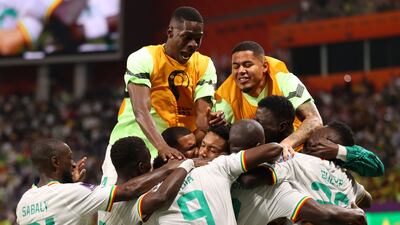
Senegal's Kalidou Koulibaly celebrates with teammates after scoring their second goal in the 2-1 Group A win against Ecuador at Khalifa International Stadium on November 29, 2022, in Doha. Getty -
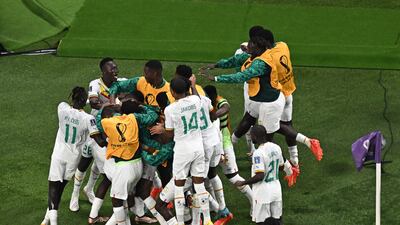
Ismaila Sarr celebrates his penalty with teammates. AFP -
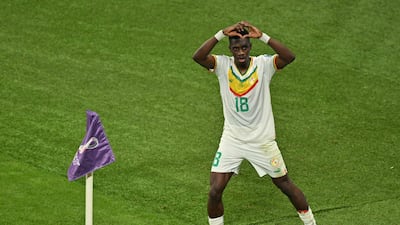
Ismaila Sarr celebrates scoring his team's first goal. AFP -
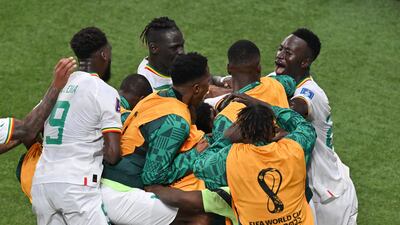
Ismaila Sarr celebrates with teammates. AFP -
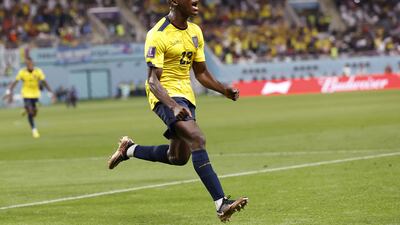
Moises Caicedo of Ecuador celebrates after levelling at 1-1. EPA -

Moises Caicedo celebrates with teammates after scoring. AP -
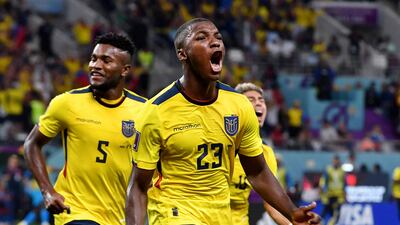
Ecuador's Moises Caicedo celebrates. Reuters -
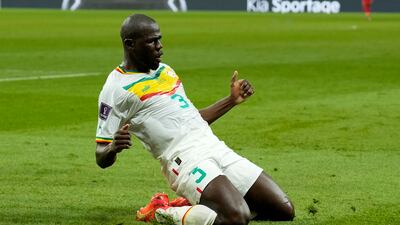
Senegal's Kalidou Koulibaly celebrates scoring the winner. AP -
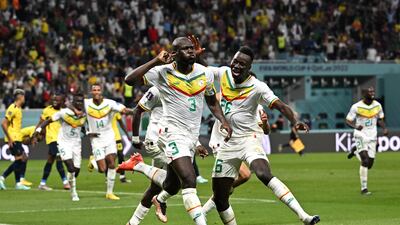
Kalidou Koulibaly celebrates scoring their second goal. Reuters


Ghana, managed in 2010 by Milovan Rajevac, at least thrived that year, reaching the quarter-finals, where they were cruelly knocked out when Uruguay’s Luis Suarez deliberately used his hand to prevent a match-winning shot from crossing the line. Suarez was sent off, Ghana’s Asamoah Gyan failed to convert the subsequent penalty and Uruguay progressed via shoot-out.
Otto Addo, who as a player had been part of Ghana’s thrilling journey to the last 16 at the previous World Cup, was watching that night, as agonised as any Ghanaian. But speaking on Thursday as coach of Ghana, whose staff he joined from a management position at Borussia Dortmund, Addo defused the rancour around Suarez and Uruguay.
“I watched [the 2020 semi] and felt so sad,” he recalled, “but it’s about perspective. It’s normal for a player to do everything he can to be in a World Cup semi-final. For us, it’s not a big topic. We look forward.”
So does Aliou Cisse, the Senegal coach, who captained his country to the quarter-finals at the 2002 World Cup. In the last 11 months he has overseen his country’s first triumph at an Africa Cup of Nations and the successful negotiation, via wins over Qatar and Ecuador, of World Cup Group A.
His status as a player has a bearing on his current job, but so does his connection to the country, says Cisse. “If you don’t understand a country’s past, it’s difficult to talk about its future.” A hero from that past was made very present in the crucial win over Ecuador, tributes paid to Cisse’s former midfield partner Papa Bouba Diop, who died, aged 42, two years earlier. Cisse has also skilfully managed a major setback, the withdrawal with injury of Sadio Mane, on the eve of the tournament.
Meanwhile Rigobert Song, the former Cameroon captain who played in four World Cups, will deliver the rousing speech designed to make his players believe a victory against Brazil - which would need to be coupled with Switzerland dropping points against Serbia for Cameroon to progress - is possible. Song has made bold decisions in his short period as head coach, notably dropping star goalkeeper, Andre Onana, during this World Cup.
Beating Brazil looks a tall order. But this is already a World Cup of eye-catching results. Walid Regragui guided Morocco to a 2-0 defeat of Belgium and Jalel Kadri, of Tunisia, to Wednesday’s win over champions France. Africa’s own coaches have already made their mark in Qatar.

