


A plan for passengers coming from China to be tested for Covid before departure has the backing of an "overwhelming majority" of the EU's 27 member countries, the European Commission said on Tuesday.
EU Health Ministry officials met in Brussels on Tuesday and reached the consensus.
The ministers will hold a crisis meeting on Wednesday to decide what co-ordinated measures will be applied across the bloc.
The gatherings were called after China decided to lift its "zero-Covid" policy, which has sparked massive demand for flights abroad by Chinese citizens and residents who had been grounded for nearly three years.
The EU fears a sudden influx of passengers from China could bring Covid variants that may be able to evade current vaccines.
There are also concerns that China's data on infections is incomplete and insufficient.
China Covid latest - in pictures
-
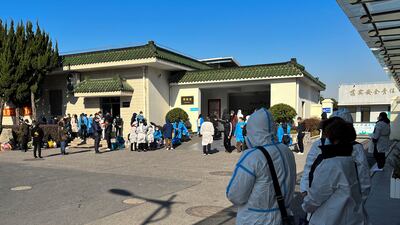
People stand outside a funeral home in Shanghai, as cases of Covid-19 surge in China. Reuters -
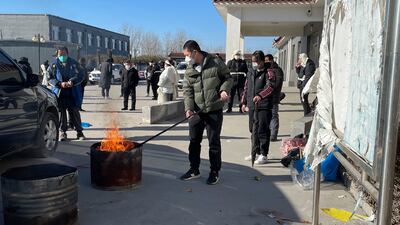
Relatives burn paper offerings for a relative who died, at the Gaobeidian Funeral Home in northern China's Hebei province. AP -
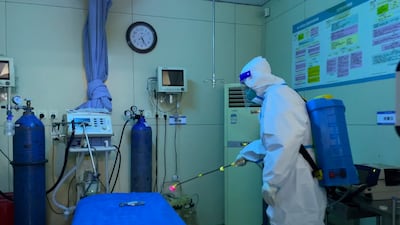
A worker disinfects a bed in the emergency department of a hospital in Baigou, Hebei province. AP -
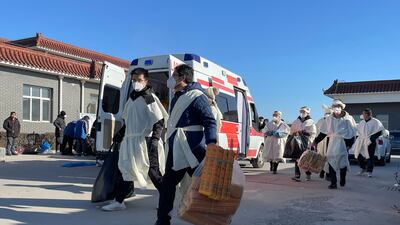
Cities across the country have struggled to cope as the surge in cases has emptied pharmacy shelves, filled hospital wards and appeared to cause backlogs at crematoriums and funeral homes. AP -
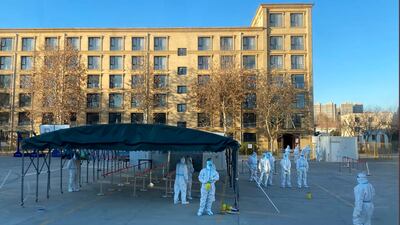
It comes after China dismantled key pillars of its zero-Covid strategy. AP -
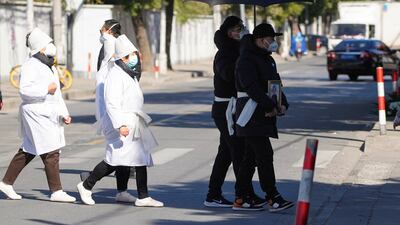
Authorities have lifted snap lockdowns, lengthy quarantines and travel curbs in a reversal of the country's hallmark containment strategy. Reuters -
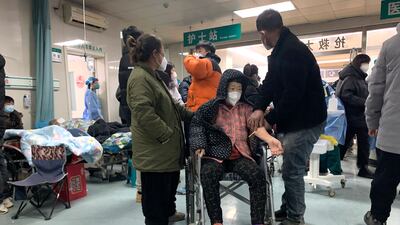
Relatives attend to a patient. AP -
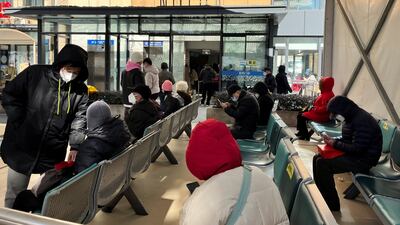
People wait outside a fever clinic at a hospital in Shanghai. Reuters


EU health commissioner Stella Kyriakides said the officials also agreed to recommend increased monitoring of wastewater from flights and at airports to detect traces of the coronavirus, and for member states to boost surveillance.
Ms Kyriakides stressed the need for EU "unity" at the meeting to take place on Wednesday.
Several EU countries including France, Spain and Italy have already imposed testing requirements on arrivals from China pending a bloc-wide approach.
Earlier on Tuesday, the commission said an "offer stands" for the EU to provide Covid-19 vaccines and expertise to China.
A spokesman said Ms Kyriakides had repeated the vaccine offer recently and that any supply of them was dependent on Beijing's reaction.
Many EU countries have a surplus of mRNA vaccines — especially the one made by BioNTech/Pfizer — that scientific studies have shown to be more effective against severe Covid than the inactivated-virus drugs China has developed and uses.
Italy starts testing for Covid-19 among travellers from China - in pictures
-
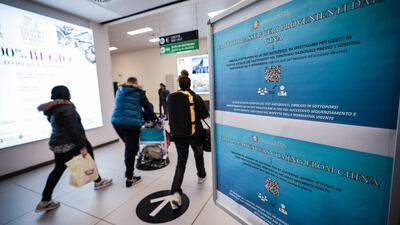
A notice for travellers arriving from China to undergo mandatory Covid tests at Caselle airport, in Turin, Italy. EPA -
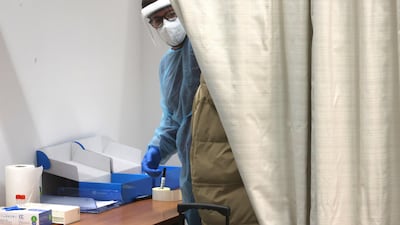
Italy on December 29, 2022, became the first European country to officially start testing for Covid-19 among people arriving from China. EPA -
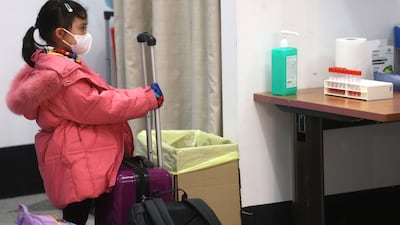
The move came after China's announcement it was set to open its borders, as new variants of coronavirus surged in the Asian country. -
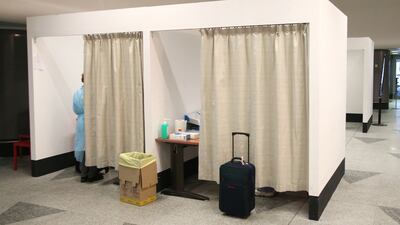
Travellers arriving from China are tested for Covid at Malpensa Airport, in Milan. EPA -

Italy has urged the rest of the EU to follow its lead and test travellers from China, but most of the bloc's members have said they see no need to do so. EPA -
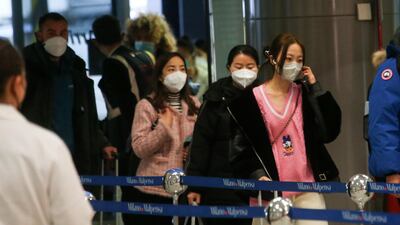
The European Centre for Disease Prevention and Control says it does not currently recommend measures on travellers from China. EPA -
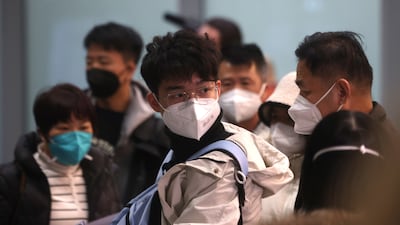
Travellers arriving from China line up for Covid testing in Malpensa Airport, in Milan. EPA -
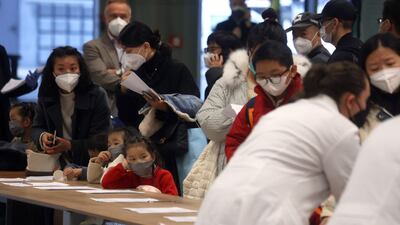
Travellers arriving from China line up for Covid testing in Malpensa Airport, in Milan. EPA -
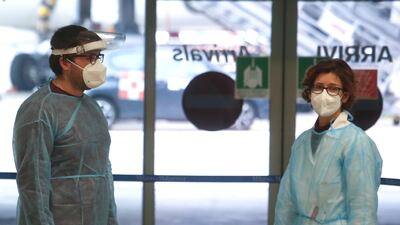
Health workers at Malpensa Airport, in Milan. EPA


Austria to test wastewater from flights from China
Austria will start monitoring wastewater from aircraft from China and in top Chinese tourist attractions, the government said Tuesday.
"Starting next week, Austria will examine samples from the wastewater from aircraft from China," Austria's Health Ministry said.
It said wastewater from the sewage plant in the picturesque village of Hallstatt — a top Chinese tourist destination — would also be analysed.
This is in addition to testing wastewater in the cities of Vienna and Salzburg, which is already being monitored as part of a national programme launched at the start of last year.
"With this, some places frequently visited by tourists from China are regularly examined," the ministry said.
"This makes it possible to discover new virus variants, even if visitors from China have not entered the country with direct flights."
Covid patients fill ICUs in China's hospitals - video
Tests on passengers 'unacceptable', says China
China on Tuesday called the increasing international restrictions on travellers from its territory "unacceptable".
China's steep rise in infections comes after Beijing abruptly lifted years of hardline restrictions last month, with hospitals and crematoriums quickly overwhelmed.
But Beijing has pushed ahead with a long-awaited reopening, last week announcing an end to mandatory quarantine on arrival in a move that prompted Chinese people to plan trips abroad.
"Some countries have taken entry restrictions targeting China," foreign ministry spokeswoman Mao Ning said.
"This lacks scientific basis and some practices are unacceptable.
Ms Mao said that China could "take counter-measures based on the principle of reciprocity".
Covid symptoms - in pictures
-
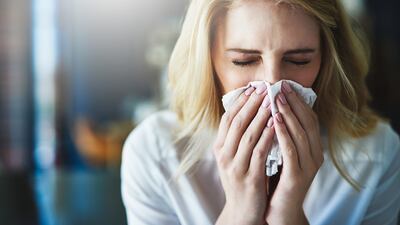
New research shows that a patient's Covid-19 symptoms can depend on what vaccinations they have received. Getty -

Fully vaccinated people most commonly reported a sore throat, persistent cough, runny or blocked nose and headaches. Getty -

The study also indicated a decline in reports of shortness of breath and loss of taste and smell. Those were two key symptoms in the early stage of the pandemic. Photo: Getty -
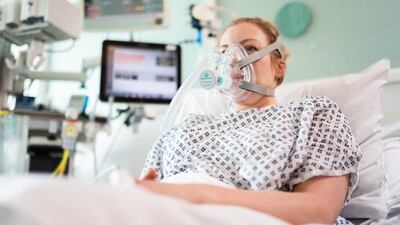
In the early stage of the pandemic, breathing difficulty was a common Covid symptom. Photo: UCL


The US replied that it had acted in response to the "lack of adequate and transparent" data from China, and concerns that the heavy caseload could give birth to new variants.
"This is an approach that is based solely and exclusively on science," State Department spokesman Ned Price said in Washington.
France's Prime Minister, Elisabeth Borne, defended the new rules.
"I think we're performing our duty in asking for tests," Ms Borne told franceinfo radio. "We will continue to do it."
The rules affect all travellers coming from China, not just Chinese nationals, while Beijing continues to restrict inbound visitors and not issue visas for tourists or international students.

