


Live updates: follow the latest news on Omicron
The UK has recorded 438 further deaths from coronavirus — the highest number of daily fatalities since February 2021.
The country also reported a further 94,432 cases, down from 120,821 a week ago, but higher than at the weekend, when infections hit their lowest levels in a month.
Tuesday’s figures are often higher due to a lag in reporting.
A total of 19,450 people were in hospital with Covid-19 in the UK as of January 17, the latest government figures show.
This is down 2 per cent week-on-week, though the total has risen slightly in the most recent two days.
During the second wave of the disease, the number of hospital patients peaked at 39,254 on January 18, 2021.
There were 1,892 Covid-19 hospital admissions on January 14, the latest UK-wide figure available, down 5 per cent week-on-week.
Admissions during the second wave peaked at 4,583 on January 12, 2021.
The latest Covid death and infection figures come as Britain’s health secretary says the wave of Omicron infections in England has passed its peak.
Sajid Javid said he was “cautiously optimistic” that the Plan B measures will be “substantially reduced” next week in light of data showing falling case numbers and hospital admissions.
Government ministers are expected to meet over the coming days to review the situation before a final decision is announced, with Plan B set to expire on January 26.
Global health leaders also said on Tuesday that the Omicron wave may have peaked in some countries.
But the World Health Organisation (WHO) said that “no country is out of the woods yet” and it is not time to “give up and wave the white flag”.
-
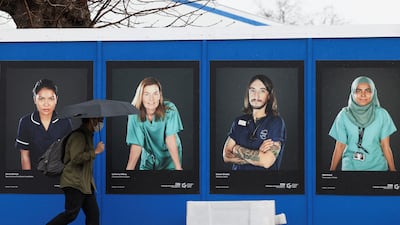
Images of NHS workers displayed on hoardings outside a temporary field hospital at St George's Hospital in London. The UK declared 141,472 new Covid-19 cases on Sunday, a sharp reduction from the more than 200,000 reported daily over the Christmas and New Year period. Reuters -
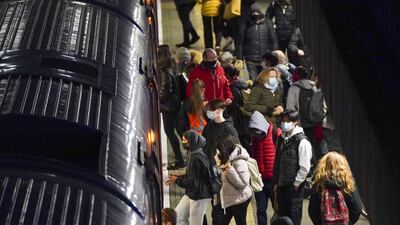
Commuters wait to catch a London-bound train in Bracknell, Berkshire. Workers are returning to offices in the first full working week of 2022 even though guidance under England’s current plan B measures is to work from home. PA -
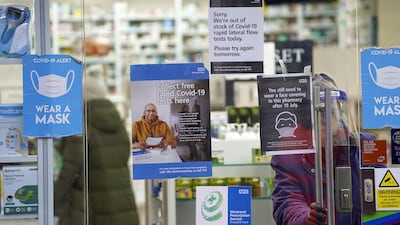
No lateral flow tests are available at this pharmacy in Chertsey, Surrey. PA -
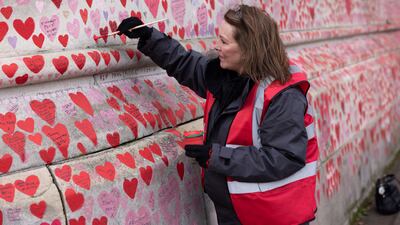
A woman adds hearts to the National Covid Memorial Wall near St Thomas' Hospital in London. Getty Images -
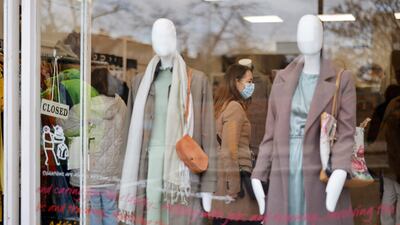
A shopper wearing a face covering browses clothes in a charity shop in north London. AFP -
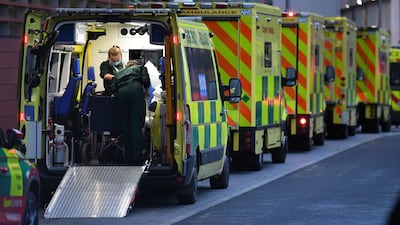
Ambulances parked outside the Royal London Hospital in east London. AFP -
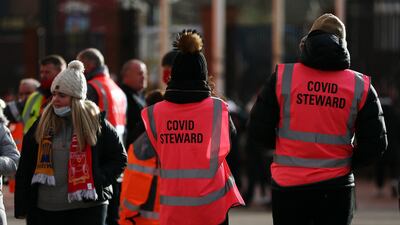
Fans show their coronavirus passes for checking outside Anfield stadium before the FA Cup tie between Liverpool and Shrewsbury Town, which the home side won 4-1. Reuters -

People take part in the so-called Freedom Rally, an anti-vaccine demonstration organised by campaign group Scotland Against Lockdown, in Glasgow city centre. PA -
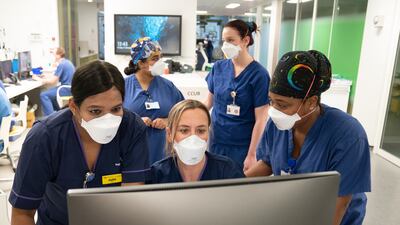
Staff working at a Covid-19 intensive care unit at Kings College Hospital in south London. PA


Dr Tedros Adhanom Ghebreyesus, director general of the WHO, also said that the pandemic is “nowhere near over” and added that new variants are likely to emerge.
“Omicron continues to sweep the world, last week, there were over 18 million reported cases,” Dr Tedros told a press briefing.
“The number of deaths remains stable for the moment but we are concerned about the impact Omicron is having on already exhausted health workers and overburdened health systems.
“In some countries, cases seem to have peaked, which gives hope that the worst of this latest wave is done with, but no country is out of the woods yet.
“I remain particularly concerned about many countries that have low vaccination rates, as people are many times more at risk of severe illness and death if they are unvaccinated.
“Omicron may be less severe, on average, but the narrative that it is a mild disease is misleading, hurts the overall response and costs more lives.”
He stated that Omicron is still causing hospitalisations and deaths, and even less severe cases are causing issues for health facilities.
“The virus is circulating far too intensely with many still vulnerable,” he said.
“For many countries, the next few weeks remain really critical for health workers and health systems and I urge everyone to do their best to reduce risk of infection so that you can help take pressure off the system."

