

More than a third of nurses working in the UAE during the coronavirus pandemic showed signs of post-traumatic stress disorder, a study has shown.
It revealed that healthcare workers experienced unwanted memories and nightmares as a result of their experiences on the front lines.
Issues that made nurses more likely to develop stress symptoms were experiencing Covid-19 deaths, and a lack of management recognition, along with two non-work factors – not exercising and being a smoker.
The findings lay bare the reality of life in Covid-19 wards and highlight, the scientists behind the study said, the need for officials to prioritise the support of staff who may be under stress.
deputy chief nursing officer, Abu Dhabi Health Services Company (Seha)
“Policymakers must expand healthcare policies to address frontline nurses’ mental health as a priority during the pandemic,” they wrote in the journal International Nursing Review.
The researchers, from the University of Sharjah, University Hospital in Sharjah, Sheikh Khalifa General Hospital in Umm Al Quwain and universities in Jordan and Brunei, received responses from 370 nurses who cared for Covid-19 patients at UAE government hospitals.

How the survey was completed
Recruited to the study between November 2020 and January 2021, each nurse answered a standard 20-question post-traumatic diagnostic scale questionnaire, which is widely used to detect PTSD.
Each question relates to a particular symptom, such as experiencing unwanted memories, reliving traumatic events, having a lack of positive feelings and finding it difficult to concentrate.
The respondent scores herself or himself between zero and four for each, with zero representing no symptoms, and four indicating that the symptom was experienced at least six times a week.
The researchers found that 36.2 per cent of respondents had symptoms associated with a probable PTSD diagnosis, which means a score of 28 or more out of the maximum possible, 80.
Unwanted memories were experienced by 62.2 per cent of respondents two to three times a week, while 12.7 per cent of nurses had them four to five times a week. Nightmares or bad dreams were experienced by 11.4 per cent four to five times a week.
Key factors that motivated the nurses at work were availability of personal protective equipment and support from management or family.
Poor lifestyle habits
Issues that made nurses more likely to develop PTSD symptoms were experiencing Covid-19 deaths, a lack of management recognition, and two non-work factors – not exercising and being a smoker.
“Those with poor lifestyle habits may have negative perceptions of their health status and greater fear of infection, and may therefore be more likely to develop PTSD,” the researchers wrote.
“Nurses must be trained in health promotion practices to minimise the negative feelings and potential development of PTSD in situations such as pandemics.”
In further advice, the authors of the new study, “Post-traumatic stress disorders and influencing factors during the Covid-19 pandemic: A cross-sectional study of frontline nurses,” said managers could consider “small practical interventions”, such as telephone calls or debriefing sessions, to help staff.
The study also said it was important that nurses were consulted on what policies and guidelines were needed to safeguard their mental health. The UAE government has implemented a range of initiatives to promote the mental well-being of medical staff, including the introduction of a free phone-counselling service. The Frontline Heroes Office was also established in 2020 to applaud those working on the front lines.
-
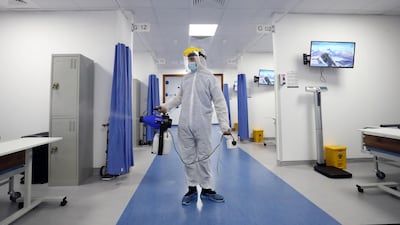
A health care worker disinfects a ward during a visit to the Mohamed bin Zayed Field Hospital - Ajman, operated by Abu Dhabi Health Services Company (Seha). Photos by Chris Whiteoak / The National -
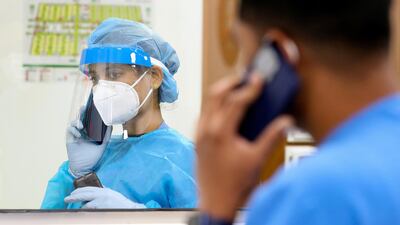
Staff nurses discuss patient care in the ICU ward at the Mohamed bin Zayed Field Hospital - Sharjah. -

Dr Yousuf Alattar, chief executive of the field hospital in Sharjah, says field hospitals work to help regular hospitals return back to normal activity and alleviate pressure on normal services. -

Medical equipment is in abundance at all the field hospitals constructed under Seha, including ventilators, vital signs devices, portable oxygen tanks, X-ray machines and CT scanners. -
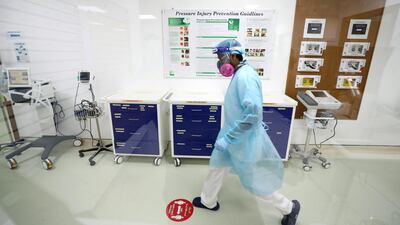
All staff are required to wear PPE when on the wards and there are several PPE donning rooms situated throughout the building. -
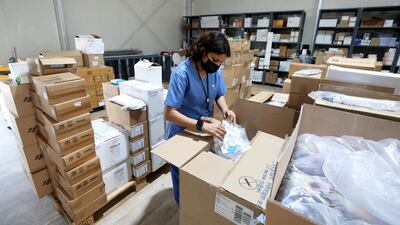
Elizabeth Mathew, nurse manager, visits the store room at the Sharjah field hospital where thousands of medical equipment and items are kept on-site including syringes, face masks and gloves. -
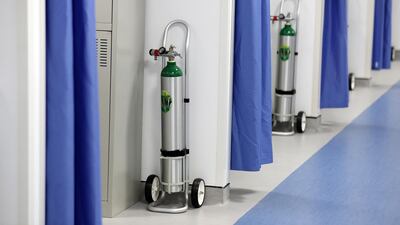
The field hospital in Ajman opened on March 14. The average age of patients treated on-site over the past six weeks is 40-years-old. -
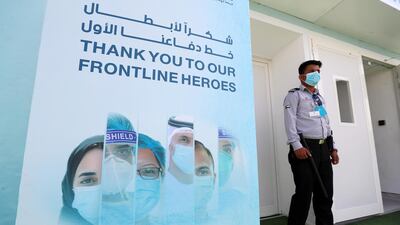
There is signage located throughout the hospitals urging medical staff and security staff to keep at social distance at all times. -
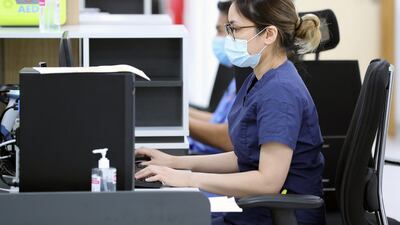
Staff have been supplied by Seha from facilities including Tawam Hospital and Al Ain Hospital, as well as from healthcare organisations such as VPS Healthcare and Interhealth Canada. -

The field hospital in Ajman opened on March 14 and has 231 nurses on site to care for patients as well as 75 physicians. -

Mohammed Shameer, Pharmacy technician, checks patient medication during a visit to the Seha field hospital in Ajman, which was constructed for Covid-19 patients. -

The 7,000 square metre hospitals in Ajman and Sharjah have two nurse stations located in the middle of the facility, where staff monitor patients via video surveillance. -

One year on from the Covid-19 outbreak being declared a pandemic, experts say some younger people are starting to become a bit lax in regards to safeguarding themselves from the virus. -
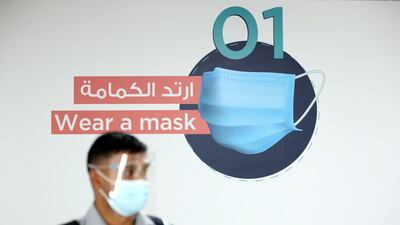
This year, Seha has opened several field hospitals across the UAE including Dubai, Sharjah, Ajman and Ras Al Khaimah. -
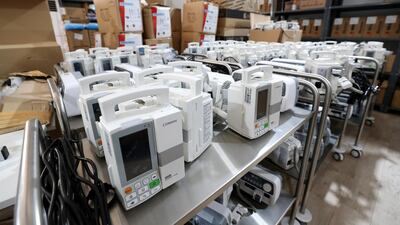
The field hospital in Sharjah could be operational for up to 20 years and could be used for other medical purposes once the Covid-19 pandemic has subsided. -
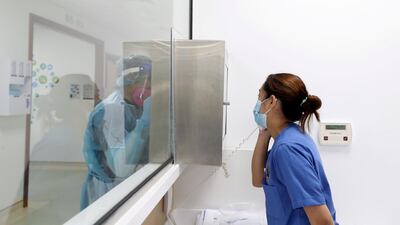
Staff speak to each other during a shift through a glass window dividing the ICU ward from the nurses station. -
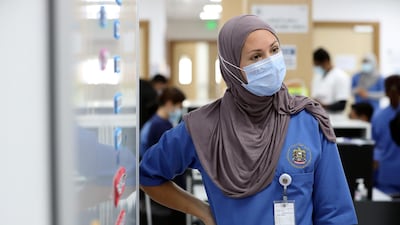
Jessica Rappu, Senior nurse, says symptoms have remained similar to what they were in the beginning, with no real change in how patients are presenting when admitted to hospital. -
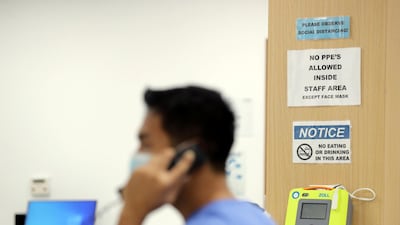
The Mohamed bin Zayed Field Hospital - Sharjah, located near Al Zahia Park, opened its doors on March 28 and currently has 21 patients being cared for by staff. -
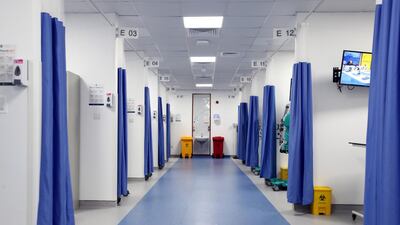
In total, the field hospital in Ajman has capacity for 204 patients, including 48 intensive care beds and 156 acute beds. -
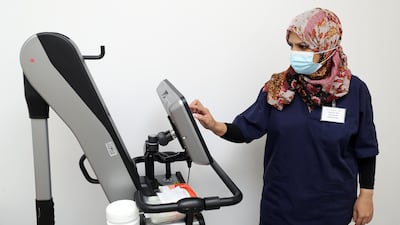
Syeda Zaidi, Radiology technologist, showing The National one of the portable X-ray machines at the field hospital in Ajman. -

Rashed Saeed, project supervisor for the Mohamed bin Zayed Field Hospital - Ajman.


Research in other countries also found high levels of PTSD symptoms, anxiety and related conditions in healthcare professionals during the pandemic, indicating that extra stress is not limited to the UAE.
For example, a study of intensive care staff working in hospitals in England in June and July last year found that 40 per cent probably met the criteria for PTSD. Smaller numbers had signs of severe anxiety or depression.
Increased workload
Dr Davinder Pal Singh, a cardiologist at NMC Royal Hospital in Dubai Investments Park, said medical staff had faced a workload that increased “quite significantly” during the pandemic.
“Sometimes there is a shortage of staff [in hospitals] because of how staff have to go into quarantine. It will increase the workload of staff quite significantly, and the number of patients increases,” he said.
Another doctor in the UAE, Ashar Jamal, an emergency doctor at Al Zahra Hospital in Sharjah, said the uncertainty about the outcome of Covid-19 patients was a particular stress.
“With other medical conditions, you usually know the pathway,” he said, but with Covid-19 it was different.
“We may see a very old patient recover and a very young one getting intubated [where a tube is inserted into the windpipe to aid breathing].”
Staff working during the pandemic, he said, also fear contracting the coronavirus, bringing it home and infecting a family member.
“There’s always a chance no matter how many times you wash your hands and [use] PPE. That’s adding more to the pressure,” he said.
Abu Dhabi's Seha group sets out support for nurses
Abu Dhabi's public hospital operator Seha told The National that the mental well-being of staff was more in focus now than ever before.
Samah Mahmoud, Seha's deputy chief nursing officer, said: "The fight against the coronavirus is regarded as the most difficult challenge for the healthcare system, having lasted nearly two years and it is expected to continue indefinitely.
“This adds to the [burden on the] already overworked healthcare workforce, particularly frontline nurses, both physically and mentally.”
The organisation holds weekly sessions for frontline workers to allow them to talk about the pressures they face, even now that the worst of the hospital admissions has passed.
"The process has included the implementation of weekly sessions on various topics to assist the teams, as well as the establishment of a special hotline that provides counselling to healthcare employees," Ms Mahmoud said.
"Seha is passionate about its involvement in various initiatives and programmes aimed at the mental health and well-being of frontline workers in these unprecedented times."
Four UAE hero medics who returned to the front line - in pictures
-
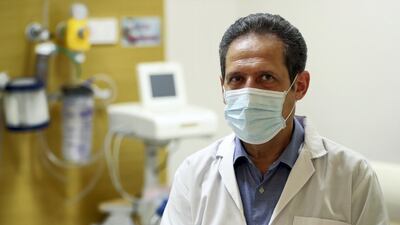
Dr Mohamad Karima, who works at Al Zahra Hospital, Sharjah. All those pictured have recovered and all photos by Chris Whiteoak / The National -
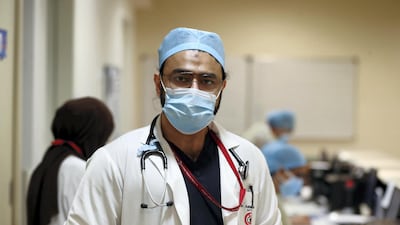
Dr Ashar Jamal, from Al Zahra Hospital, was in hospital for a week after his health deteriorated because of Covid-19. -
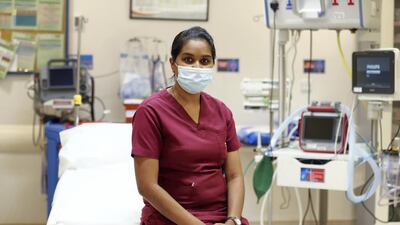
Renu Venugopal, who is a nurse at Al Zahra Hospital. The frontline staff at hospitals bore the brunt of the pandemic. -
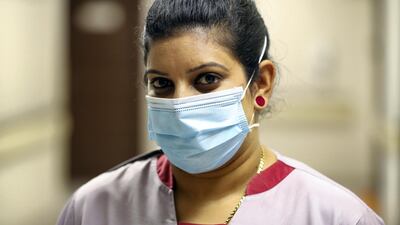
Seema Mary, a nurse at Medcare hospital, Sharjah. Her Covid-19 ordeal helped patients believe they too could recover, she said. -
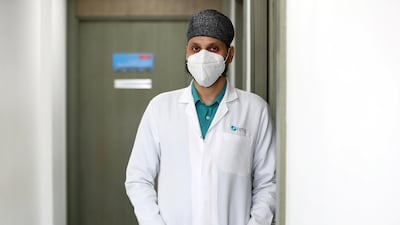
Dr Davinder Singh a cardiologist at the NMC Royal Hospital in Dubai. The first few days after being diagnosed were scary, he said. -
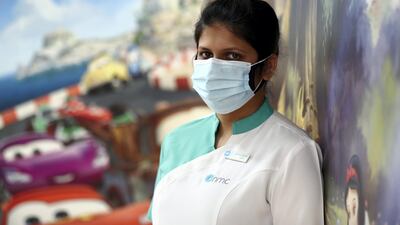
Joslin Coelho, who is a nurse at the NMC Royal Hospital in Dubai Investments Park. -
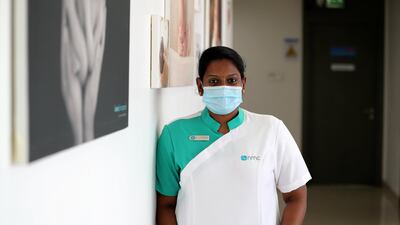
Silpa Suresh also a nurse at the NMC Royal Hospital. She has returned to work. -
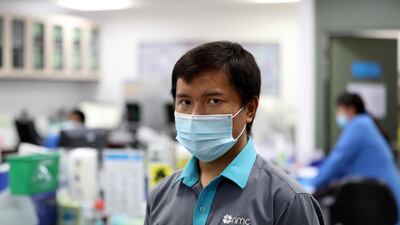
Keshar Bahadur a laboratory ward assistant at the NMC Royal Hospital, DIP. Hospitals filled with patients during the peak of the pandemic. -
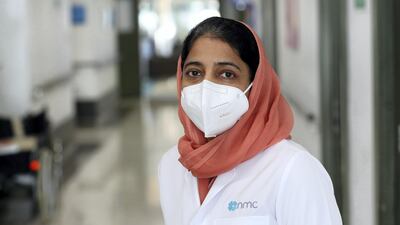
Dr Iffat Sultana, an internal medicine specialist at the NMC Royal Hospital, Dubai Investments Park. There was a lot of anxiety among hospital staff, she said. -
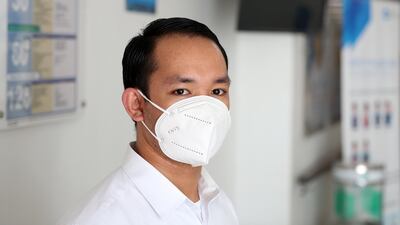
Aldrian Tomas, a customer care representative at the NMC Royal Hospital, Dubai Investments Park. -
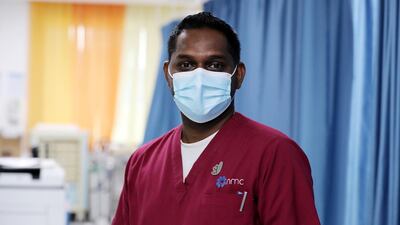
Jephy Antony, who also works as a nurse at the NMC Royal Hospital. Like his colleagues, Mr Antony has also gone back to work. -

Jomon Joy, a ward attendant at the NMC Royal Hospital. Hospitals have since seen a reduction in the number of patients. -
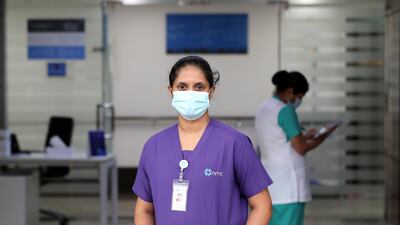
Biji Mathew, nursing supervisor at the NMC Royal Hospital. Staff knew early in the year the virus had a good chance of reaching the UAE. -
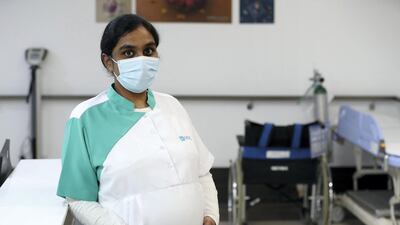
Ruth Kiruba, a nurse at the NMC Royal Hospital. She is back to work treating patients and expecting a child.



